If you’ve ever watched a butterfly drift through your garden and wished you could invite more of these delicate visitors, a plum tree for butterflies might be your secret weapon. These flowering beauties don’t just produce delicious fruit — they’re powerful pollinator magnets that transform your yard into a vibrant wildlife haven.
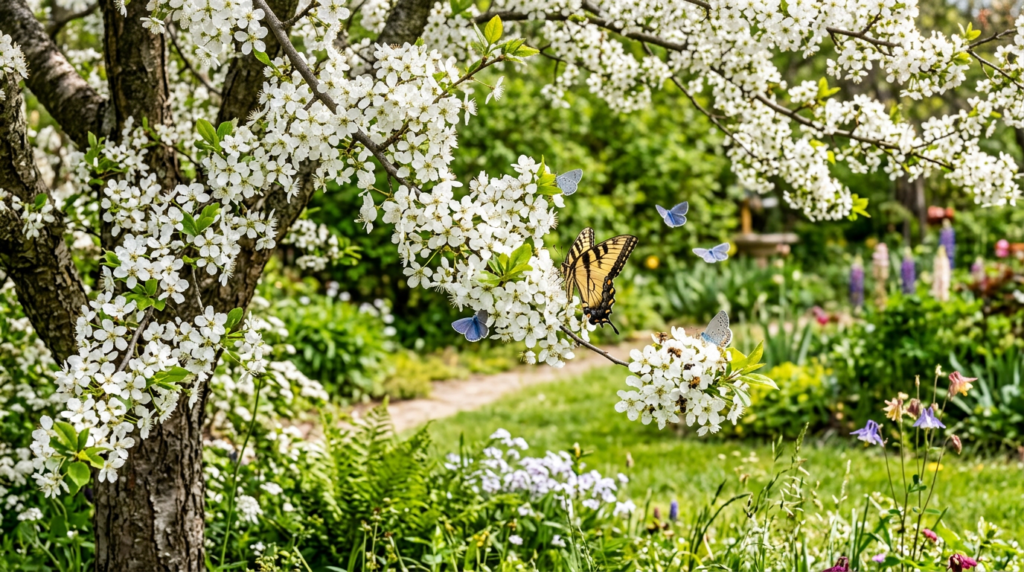
Why a Plum Tree for Butterflies Is a Garden Essential
Plum trees offer butterflies exactly what they crave: early spring nectar, fragrant blooms, and lush foliage that supports their entire lifecycle. Unlike ornamental plants that provide fleeting visual appeal, plum trees deliver lasting ecological benefits while adding structure and seasonal interest to your landscape.
When plum trees burst into bloom in early spring, they become one of the first reliable nectar sources for butterflies emerging from winter. Species such as the Eastern Tiger Swallowtail, Red-Spotted Purple, and Spring Azure are particularly drawn to these blossoms. The timing is critical — many native butterflies depend on early-flowering trees to fuel their reproduction cycle.
Beyond nectar, plum trees function as essential butterfly host plants trees. Female butterflies lay their eggs on the leaves, and once caterpillars hatch, they feed on the foliage before forming chrysalises. This makes plum trees a cornerstone of pollinator-friendly fruit trees that support butterflies from egg to adult.
Native plum varieties are especially valuable. Wild plum (Prunus americana) and Chickasaw plum (Prunus angustifolia) are native across much of the United States and adapted to regional climates. According to the Missouri Department of Conservation’s guide to wild plum, these native species thrive in diverse soil conditions and provide critical habitat for over a dozen butterfly and moth species.
Best Flowering Trees for Butterflies: Choosing Your Plum Variety
Not all plum trees offer the same benefits for butterflies. While ornamental plum tree wildlife appeal can be strong, native varieties generally support more caterpillar species and require less maintenance once established.
Top Native Plum Tree Varieties by Region
In the Midwest and Great Plains, American wild plum (Prunus americana) is your best bet. It’s hardy to USDA zones 3-8, tolerates drought, and produces fragrant white flowers that butterflies adore. This variety often forms thickets, creating dense habitat that shelters butterflies and other beneficial insects.
For Southern gardeners, Chickasaw plum (Prunus angustifolia) thrives in zones 5-9 and handles heat beautifully. Its early bloom time — often late February to March — provides nectar when few other sources are available. The shrubby growth habit makes it ideal for hedgerows and naturalized garden edges.
Western gardeners should consider Pacific plum (Prunus subcordata), native to California and Oregon. This species supports local butterfly populations adapted to drier climates and offers stunning spring blooms followed by small, edible fruit.
Eastern regions benefit from Beach plum (Prunus maritima), which tolerates sandy, coastal soils and salt spray while attracting a wide range of pollinators. Its compact size makes it perfect for smaller suburban gardens.
Caterpillar Species That Depend on Plum Trees
Understanding which caterpillars feed on plum trees deepens your appreciation for these trees’ ecological role. The Coral Hairstreak butterfly relies almost exclusively on wild plum and cherry species as larval host plants. Red-Spotted Purple caterpillars also favor plum foliage, along with willow and poplar.
Viceroy butterflies, which mimic Monarchs in appearance, frequently use plum trees as host plants. The caterpillars are cream and brown with spiny protrusions, and they overwinter in rolled leaves before emerging in spring. By planting native plum butterfly host trees, you’re directly supporting these fascinating species through their entire metamorphosis.
Several sphinx moth species also depend on plum trees. While moths might not have the same charisma as butterflies, they’re equally important pollinators and a vital food source for birds feeding nestlings.
How to Care for Plum Trees to Maximize Butterfly Attraction
Caring for your plum tree doesn’t have to be complicated, but a few strategic practices will boost both fruit production and butterfly appeal. The key is creating conditions that support the tree’s natural health while avoiding practices that harm beneficial insects.
Planting Techniques for Pollinator Success
Choose a planting site with full sun — at least six hours daily — and well-draining soil. Plum trees tolerate a range of soil types but perform best in slightly acidic to neutral pH (6.0-7.0). Before planting, amend heavy clay with compost to improve drainage and provide slow-release nutrients.
Dig a hole twice as wide as the root ball but no deeper. Position the tree so the root flare sits slightly above ground level. Backfill with native soil mixed with compost, water deeply, and apply a 3-inch layer of organic mulch around the base, keeping it a few inches away from the trunk. If you’re looking to create more garden space for additional pollinator plants, consider building vertical gardens to maximize your planting area.
Plant multiple plum trees if space allows. Cross-pollination increases fruit set, and clustered trees create a larger visual target for butterflies. Spacing trees 15-20 feet apart provides adequate airflow while forming a cohesive butterfly habitat.
Seasonal Flowering Care
Early spring is critical for butterfly-attracting blooms. Avoid heavy pruning in late winter, which can remove flower buds. Instead, prune plum trees in late summer after fruiting, focusing on removing dead or crossing branches and maintaining an open canopy that allows light penetration.
Water deeply during dry spells, especially in the tree’s first three years. Established native plums are fairly drought-tolerant, but consistent moisture during bloom time supports more abundant flowers and, consequently, more butterfly visitors. Epic Gardening’s guide to native flowering trees emphasizes that native species adapted to your region require far less intervention once their root systems are established.
Fertilize sparingly. Native plum trees rarely need supplemental nutrients if planted in reasonably healthy soil. Over-fertilizing promotes excessive leaf growth at the expense of flowers and can lead to weak, pest-prone branches. If your soil is particularly poor, apply a balanced organic fertilizer in early spring or topdress with compost.
Advanced Organic Pest Management
Plum trees can attract pests such as aphids, plum curculio, and Japanese beetles. However, harsh chemical pesticides harm butterflies and other beneficial insects. Instead, embrace integrated pest management strategies that protect pollinators.
Encourage natural predators by planting diverse flowering plants nearby. Ladybugs, lacewings, and parasitic wasps control aphid populations naturally. For plum curculio — a common weevil that damages fruit — spread a tarp under the tree in early morning and shake the branches gently. The beetles drop onto the tarp and can be collected and disposed of.
Japanese beetles are trickier but can be managed by handpicking in early morning when they’re sluggish. Drop them into soapy water. Avoid beetle traps, which attract more beetles than they catch and can increase damage.
Neem oil is a safer option if you must spray. Apply it in the evening when butterflies and bees are less active, and target only affected areas. Always follow label instructions and avoid spraying open blooms.
Building healthy soil is your best defense against pests. Enriching your garden with nutrient-dense compost supports robust tree growth and resilience. If you’re ready to make your own, check out this step-by-step guide to making DIY compost bins to get started.
Ecological Benefits Beyond Butterflies
While butterflies are the stars, plum trees support an entire ecosystem. Birds feast on the fruit and hunt caterpillars to feed their young. Native bees and other pollinators visit the blooms, increasing the health and productivity of your entire garden.
Plum trees also contribute to soil health. Their root systems prevent erosion, and fallen leaves decompose into rich organic matter. In naturalized settings, plum thickets provide nesting sites and cover for small mammals and ground-dwelling birds.
According to Abbott Tree Care’s overview of the best trees for pollinators, flowering fruit trees such as plums rank among the most valuable additions to pollinator-friendly landscapes. They offer multi-season interest, edible harvests, and unmatched ecological benefits.
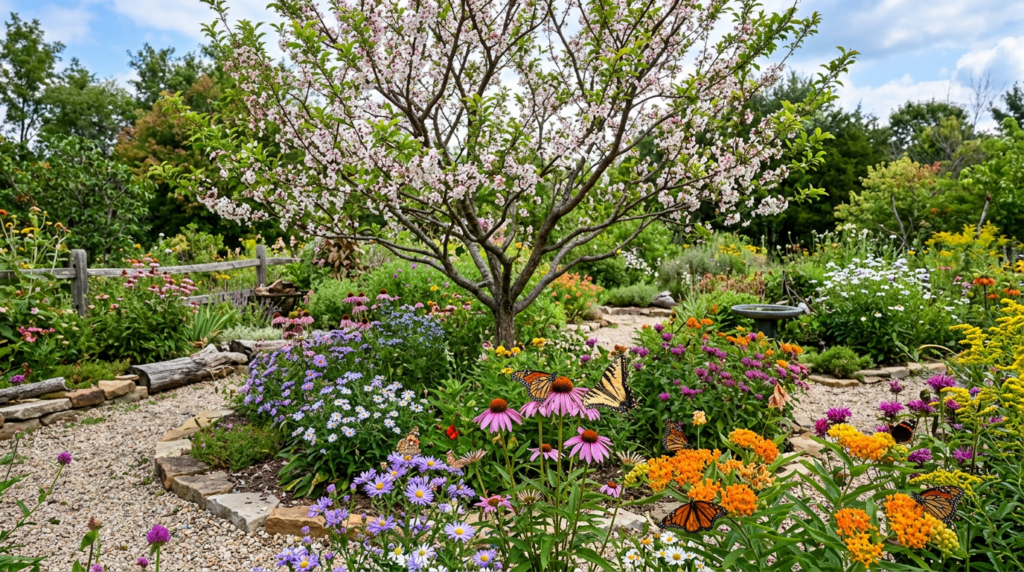
Creating a Butterfly-Friendly Garden with Native Plums
A single plum tree is a strong start, but integrating it into a broader native plant garden amplifies its impact. Pair your plum tree with other butterfly host plants trees such as native oaks, willows, and wild cherries. Underplant with wildflowers such as milkweed, asters, and coneflowers to provide nectar throughout the growing season.
Avoid the temptation to keep your garden too tidy. Leave some leaf litter and plant debris, as many butterfly species overwinter in dead stems and fallen leaves. Create a small brush pile near your plum tree to offer additional shelter for beneficial insects and wildlife.
Water sources are often overlooked but essential. A shallow dish filled with wet sand or pebbles provides butterflies a safe place to drink and gather minerals — a behavior called ‘puddling.’ Place it near your plum tree and refill regularly.
Consider expanding your sustainable gardening practices by exploring other DIY sustainable living projects for a greener home. Small changes compound into meaningful environmental impact.
Conclusion
Planting a plum tree for butterflies is one of the most rewarding decisions you can make for your garden and the environment. These trees offer beauty, bounty, and a vital lifeline for pollinators navigating increasingly fragmented habitats. By choosing native varieties, practicing organic care, and integrating your plum tree into a diverse, wildlife-friendly landscape, you’ll create a space that hums with life season after season. Your garden will become more than a retreat — it will be a sanctuary where butterflies thrive, and every bloom tells a story of connection and care.
