DIY wardrobe organization tips can transform your daily routine, saving you time, reducing stress, and helping you make the most of your clothing collection. However, achieving that picture-perfect closet doesn’t require expensive organizational systems or professional organizers. With creative DIY solutions and budget-friendly approaches, you can create a functional, tidy wardrobe using items you already have at home. This comprehensive guide will walk you through practical, step-by-step strategies to organize your closet efficiently, focusing on repurposing common household items and implementing sustainable organizational habits that will keep your wardrobe neat for years to come.
Understanding Your Wardrobe Woes: The First Step to Organization
Before diving into organizational solutions, it’s essential to identify what’s actually causing your wardrobe chaos. Common challenges include insufficient hanging space, cluttered shelves where items pile up and topple over, overstuffed drawers that make finding specific pieces nearly impossible, and the frustration of owning clothes you can’t locate when you need them. Many people also struggle with seasonal clothing transitions, accessories that get tangled or lost, and shoes that end up in disorganized heaps on the closet floor.
The psychological benefits of an organized closet extend far beyond aesthetics. Research from Cornell University research suggests that organized living spaces contribute to reduced stress levels, improved decision-making capabilities, and enhanced overall well-being. When your wardrobe is tidy, getting dressed becomes a pleasure rather than a chore, and you’ll likely discover pieces you’d forgotten you owned, effectively expanding your wardrobe without spending a penny.
The foundational step before implementing any organizational system is decluttering. No amount of creative storage solutions will help if you’re trying to organize more items than your space can reasonably accommodate. Decluttering creates breathing room in your closet, makes it easier to see what you actually own, and ensures that every item in your wardrobe earns its place. This preparatory step is non-negotiable for achieving lasting organizational success.
The Art of Decluttering: What to Keep, Donate, or Toss
Decluttering can feel overwhelming, but structured approaches make the process manageable and even satisfying. The KonMari method, developed by organizing consultant Marie Kondo, has gained worldwide recognition for its effectiveness. This approach involves removing every item from your wardrobe, holding each piece individually, and asking yourself whether it “sparks joy.” If an item doesn’t elicit a positive emotional response, it’s time to let it go with gratitude for its service.
Another practical strategy is the “one year rule,” which states that if you haven’t worn something in the past twelve months (accounting for seasonal variations), you’re unlikely to wear it in the future. Be honest with yourself about those “someday” pieces—the jeans you’re planning to fit into again or the uncomfortable shoes you’ve never actually worn. These items are taking up valuable space that could be better utilized.
The “love it or leave it” approach offers a simpler decision-making framework. For each garment, ask yourself three questions: Do I love how this looks on me? Is it in good condition? Does it fit my current lifestyle? If you answer “no” to any of these questions, it’s a candidate for donation or disposal. Create three distinct piles as you work through your wardrobe: keep, donate/sell, and discard. Items in good condition can find new life through donation centers, consignment shops, or textile recycling programs that support sustainable fashion practices.
Be particularly ruthless with duplicate items, clothes that no longer fit your personal style, pieces with permanent stains or damage beyond repair, and accessories you never reach for. Remember, the goal isn’t to have the least amount of clothing possible, but rather to curate a wardrobe where every item is valued and accessible
Maximizing Vertical Space: DIY Solutions for Every Corner
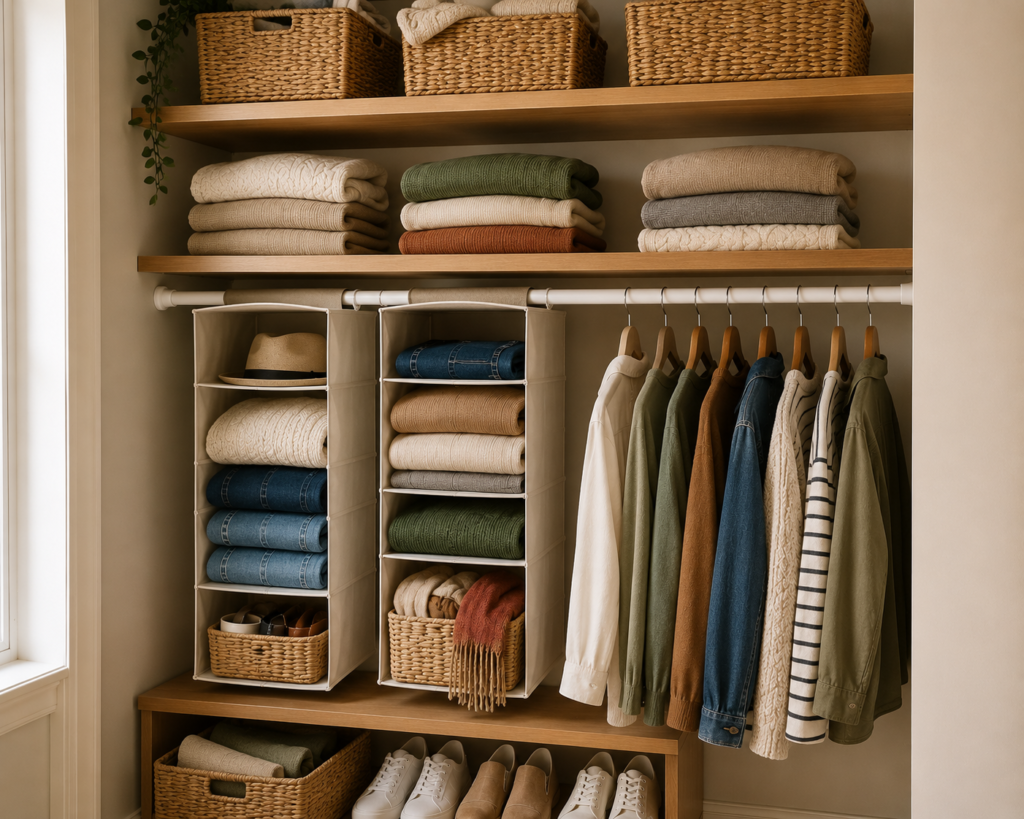
Once you’ve decluttered, it’s time to make the most of your available space, and thinking vertically is key. Most wardrobes have significant unused space above hanging clothes and below shelves that can be transformed into valuable storage areas with simple DIY solutions.
Old wooden crates or sturdy cardboard boxes can be stacked to create custom shelving units. Simply stack them in configurations that suit your needs—horizontally for wider shelves or vertically for cubby-style storage. For added stability, you can secure them together with zip ties or strong adhesive. These stacked organizers work beautifully for folded sweaters, jeans, handbags, or shoe storage.
Tension rods are inexpensive wardrobe game-changers that require zero installation skills. Purchase spring-loaded tension rods from any home goods store and install them at various heights in your closet. Use a lower tension rod to create double hanging space for shorter items like shirts and skirts, effectively doubling your hanging capacity. You can also install tension rods vertically in corners to hang scarves, belts, or ties. Another clever hack involves placing a tension rod near the floor to keep boots upright and prevent them from creasing.
For shoe organization, PVC pipes offer a creative and sturdy solution. Purchase PVC pipes from a hardware store (the 4-inch diameter works well for most shoes), cut them to equal lengths of about 12-14 inches, and arrange them honeycomb-style on your closet floor or a low shelf. Each pipe becomes a cubby for one shoe, keeping pairs organized and visible. This system works especially well for flats, sneakers, and sandals.
Over-the-door organizers maximize often-wasted space on the back of closet doors. While you can purchase these, you can also create your own using a sturdy piece of fabric, several pockets cut from old jeans or sturdy material, and fabric glue or basic stitching. Hang these DIY organizers using adhesive hooks to store accessories, small folded items, or cleaning supplies.
Shelf dividers prevent stacks of clothing from toppling over, and you can create these in minutes using large binder clips attached to the shelf edge or by repurposing old cutting boards standing on their sides. These simple solutions keep your neatly folded piles separated and accessible.
Creative Storage Solutions: Repurposing Household Items
The most budget-friendly organizational solutions often come from items destined for the recycling bin. With a little creativity, common household objects can be transformed into highly functional wardrobe organizers that rival expensive retail versions.
Shoeboxes are organizational goldmines. Instead of discarding them, repurpose shoeboxes as drawer dividers for underwear, socks, accessories, or small clothing items. Simply remove the lids and cut the boxes to fit your drawer dimensions, creating customized compartments. For a more polished look, cover the boxes with smart closet organization decorative paper, fabric scraps, or wrapping paper before placing them in drawers. You can create various sizes of compartments based on what you’re storing—smaller sections for jewelry or watches, larger ones for bulky items like scarves or winter accessories.
Toilet paper rolls provide an ingenious solution for organizing scarves, belts, ties, and even charging cables that inevitably find their way into wardrobe drawers. Collect empty toilet paper rolls and stand them vertically in a drawer or shoebox. Thread scarves or belts through individual rolls, which keeps them wrinkle-free, untangled, and easy to see at a glance. This system also works wonderfully for thin belts that tend to slip off hangers. To create a complete organizational tray, arrange 10-15 rolls tightly in a shallow box, and you’ll have a compartmentalized storage solution that costs nothing.
Hanger clips offer unexpected versatility beyond their intended purpose. Purchase inexpensive skirt hangers with clips, or repurpose ones you already own, to organize tall boots. Clip the hanger to the boot’s pull tab and hang it in your closet, preventing creases and saving valuable floor space. This method works particularly well for knee-high and over-the-knee boots that are difficult to store otherwise.
Magazine holders or file organizers make excellent storage solutions for clutches, small handbags, and fold-over bags. Stand them on a closet shelf and slide one bag into each holder, keeping them upright, visible, and protected from dust. This simple system prevents the common problem of bags becoming nested inside each other, making it impossible to find the one you want. You can use cardboard magazine holders you already own or create your own from cereal boxes by cutting them at an angle and covering them with decorative paper.
Wire baskets from old filing systems or purchased inexpensively at dollar stores can be mounted on closet walls using basic hooks to create custom storage for accessories, workout clothes, or items you use frequently. Label each basket with masking tape and a marker for easy identification.
Coffee cans, oatmeal containers, or large food jars become attractive storage solutions when covered with fabric or paint. Use these to organize fashion belts, rolled scarves, or accessories on closet shelves. Clear jars work especially well for small items like hair accessories, allowing you to see contents at a glance.
DIY Drawer Dividers and Shelf Organizers on a Budget
Custom drawer dividers ensure that even your hidden storage spaces remain organized and functional. Creating your own allows you to customize dimensions perfectly to your specific drawer sizes and the items you’re storing.
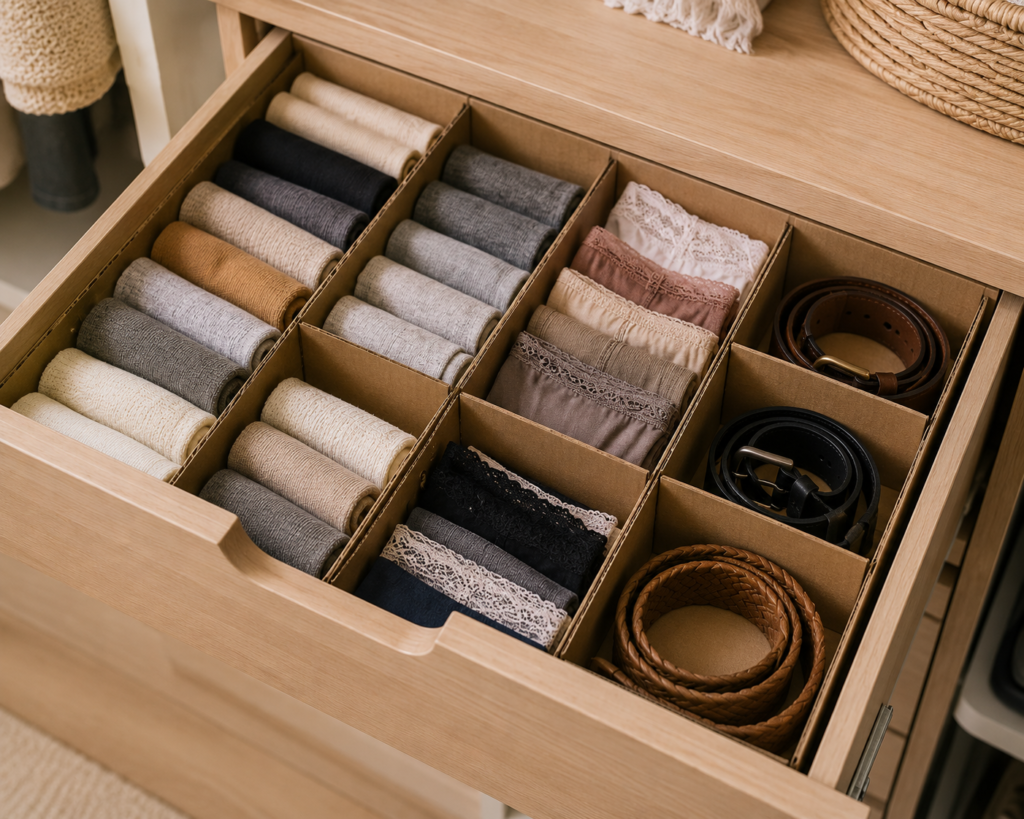
For sturdy, long-lasting drawer dividers, use foam board or cardboard from packaging materials. Measure your drawer’s interior dimensions carefully, including depth. Cut strips of foam board to the drawer’s depth, creating both horizontal and vertical dividers that intersect to form a grid pattern. To make them interlock, cut slits halfway down from the top edge on vertical pieces and halfway up from the bottom edge on horizontal pieces, then slide them together. This creates a stable grid system without requiring any adhesive. Adjust the spacing between dividers based on what you’re storing—smaller sections for underwear and socks, larger ones for pajamas or workout clothes.
If you prefer a softer option, create fabric-covered dividers using minimalist wardrobe guide cardboard as a base. Cut cardboard to size, wrap it with fabric scraps or old t-shirts, securing the fabric with hot glue or fabric glue on the edges you won’t see. These padded dividers are gentle on delicate fabrics like lingerie or silk scarves.
For adjustable shelf organizers, repurpose sturdy boxes or create custom boxes from cardboard. Cut boxes to uniform heights that maximize your shelf space—typically 4-6 inches tall works well. These boxes become pull-out bins for specific categories of clothing or accessories. Label the front of each box so you can quickly identify contents without pulling everything out. This system works particularly well for items like gym clothes, seasonal accessories, or special occasion wear that you don’t access daily.
Another effective shelf organization method involves creating vertical dividers for storing handbags, folded jeans, or sweaters. Cut pieces of cardboard or foam board to the height of your shelf and the depth from front to back. Stand these dividers vertically across the shelf, spacing them according to what you’re storing. This prevents the common problem of stacks toppling over when you remove items from the middle or bottom of a pile.
Maintaining Your Tidy Haven: Simple Habits for Lasting Organization
Creating an organized wardrobe is an achievement, but maintaining it requires establishing sustainable daily habits. The most effective maintenance strategy is the “one in, one out” rule: whenever you purchase or receive a new clothing item, remove one existing piece from your wardrobe. This prevents accumulation and ensures your closet never exceeds its optimal capacity.
Implement a daily two-minute tidy routine. Before bed each night, return any clothes to their proper places, hang up items you tried on but didn’t wear, and ensure everything is where it belongs. This renter friendly decor ideas small investment of time prevents the gradual chaos that leads to complete disorganization.
Seasonal wardrobe rotations help manage space limitations. When seasons change, pack away out-of-season clothes in labeled bins or vacuum-sealed bags, storing them under the bed, on high shelves, or in other storage areas. This keeps your active wardrobe manageable and makes getting dressed easier.
Schedule quarterly wardrobe evaluations to reassess your organizational system. What’s working well? What could be improved? Are there new problem areas? Regular check-ins allow you to make small adjustments before issues become overwhelming. During these evaluations, also identify any items that no longer serve you and remove them promptly.
Frequently Asked Questions
How do I start organizing a very messy wardrobe?
Begin with a complete emptying of your wardrobe—remove everything so you’re starting with a blank canvas. Clean the empty space thoroughly, then sort items into categories (tops, bottoms, dresses, etc.) before decluttering each category. Only return items you’re keeping, implementing organizational systems as you go. Breaking the project into categories makes it less overwhelming than trying to organize everything simultaneously.
What are the cheapest DIY ways to organize my clothes?
The most budget-friendly solutions involve repurposing items you already own: shoeboxes as drawer dividers, toilet paper rolls for scarf organization, tension rods for additional hanging space, and cardboard boxes as shelf organizers. These cost-free solutions are often just as effective as expensive retail organizational products.
How can I prevent my wardrobe from becoming cluttered again?
Establish the “one in, one out” rule, maintain a daily two-minute tidy routine, and regularly evaluate your wardrobe to remove items you’re no longer wearing. The key is addressing small messes immediately rather than allowing them to accumulate into overwhelming disorganization.
Can old shoeboxes really be used for effective storage?
Absolutely! Shoeboxes are sturdy, uniform in size, and perfect for creating drawer compartments or storing small items on shelves. They’re particularly effective when covered with decorative paper or fabric for a more polished appearance. Many professional organizers recommend them as a zero-cost solution.
What’s the best way to store seasonal clothing in a small space?
Use vacuum-sealed bags to compress bulky seasonal items, reducing their volume by up to 75%. Store these bags under beds, on high closet shelves, or in other underutilized spaces. Always clean items before storing them seasonally, and label bags clearly so you know what’s inside without opening them. Rotate seasonal items twice yearly to keep your active wardrobe manageable.
Conclusion
Transforming your wardrobe from chaotic to organized doesn’t require a substantial budget or professional help—just creativity, dedication, and the willingness to repurpose everyday items into functional storage solutions. By implementing these DIY wardrobe organization tips, from decluttering strategies to innovative storage hacks using household items, you can create a closet system that works specifically for your needs and space constraints.
Remember that organization is an ongoing process rather than a one-time project. With the sustainable habits outlined in this guide, your newly organized wardrobe will remain a tidy, functional space that simplifies your daily routine and helps you make the most of your clothing collection. Start with one section today, and before long, you’ll have a completely transformed wardrobe that brings joy and efficiency to your life.
