10 Natural Hair Masks for Dry and Damaged Hair
Natural hair mask for dry hair solutions can help restore moisture and softness using simple ingredients you probably already have in your kitchen. Dry, brittle hair can feel like a constant battle, but the solution might be sitting right in your kitchen. Natural hair masks offer an affordable, chemical-free approach to restoring moisture and vitality to parched strands. Unlike commercial products laden with synthetic ingredients, DIY hair masks harness the power of nutrient-rich foods to nourish your hair from root to tip. Whether you’re dealing with heat damage, environmental stress, or naturally dry hair, these ten kitchen-staple remedies can transform your locks without breaking the bank.
Why Hair Becomes Dry
Understanding the root causes of dry hair is essential for selecting the right treatment. Hair becomes dry when the outer protective layer, known as the cuticle, is damaged or when your scalp fails to produce enough natural oils to keep hair moisturized. Several factors contribute to this condition, including excessive heat styling with flat irons and blow dryers, chemical treatments like coloring and perming, environmental exposure to sun and wind, and over-washing that strips away natural oils.
The structure of your hair also plays a role. Curly and textured hair types are naturally more prone to dryness because the oils from the scalp have difficulty traveling down the twists and turns of each strand. Additionally, as we age, our scalps produce less sebum, leading to drier hair overall. Nutritional deficiencies, particularly in essential fatty acids and proteins, can also manifest as dry, lackluster hair. By addressing these underlying causes with targeted natural treatments easy DIY hair mask recipes, you can restore your hair’s natural moisture balance and improve its overall health.
Coconut Oil Hair Mask
Coconut oil stands as one of the most effective natural remedies for dry hair, thanks to its unique molecular structure that allows it to penetrate the hair shaft rather than merely coating the surface. Rich in lauric acid and medium-chain fatty acids, coconut oil reduces protein loss and strengthens hair from within.
Ingredients:
Application Steps: 1. Warm the coconut oil in your palms until it liquefies (if solid) 2. Section your hair into four parts for easier application 3. Apply the oil generously from mid-length to ends, focusing on the driest areas 4. Gently massage any remaining oil into your scalp using circular motions 5. Twist your hair into a bun and cover with a shower cap 6. Leave on for 30 minutes to 2 hours for regular treatment 7. Wash out with a gentle shampoo, possibly requiring two washes
Frequency: Use once or twice weekly for normal to thick hair. Those with fine hair should apply sparingly and use once every two weeks to avoid weighing hair down.
Hair Type Recommendations: This mask works exceptionally well for thick, coarse, and curly hair types. Fine-haired individuals should focus application primarily on the ends rather than roots.
Avocado and Honey Mask
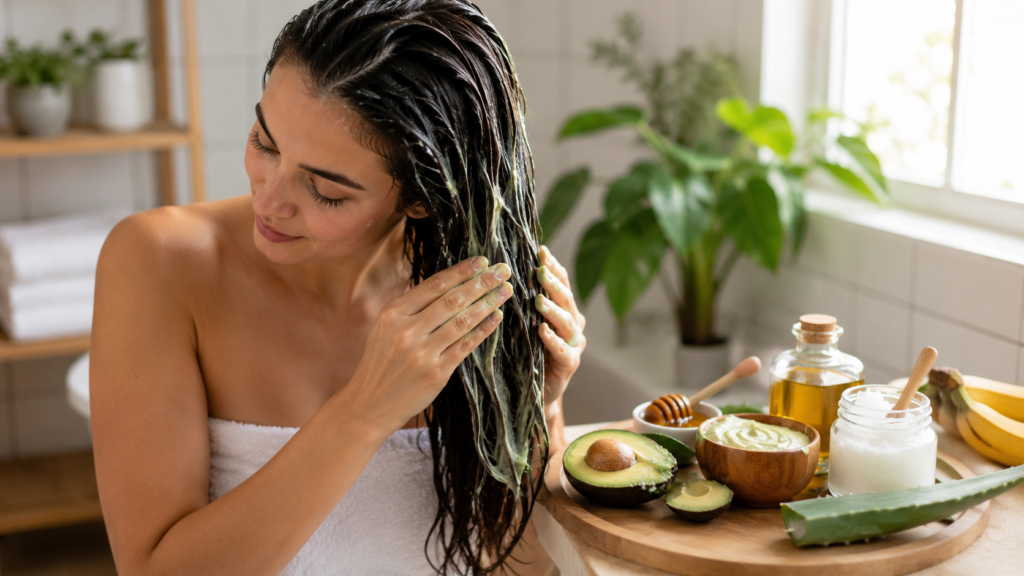
Avocados are nutritional powerhouses for both your body and your hair. According to research from the Linus Pauling Institute at Oregon State University, avocados contain vitamins E, B, and essential fatty acids that promote hair health. Combined with honey’s humectant properties, this mask provides deep conditioning and moisture retention.
Ingredients:
Application Steps: 1. Mash the avocado in a bowl until no lumps remain 2. Mix in honey and oil until you achieve a creamy consistency 3. Apply to damp, towel-dried hair from roots to ends 4. Pay extra attention to damaged or split ends 5. Cover with a shower cap or plastic wrap 6. Leave on for 30-45 minutes 7. Rinse thoroughly with lukewarm water, then shampoo as usual
Frequency: Apply once weekly for dry to normal hair, twice weekly for extremely dry or damaged hair.
Hair Type Recommendations: This mask is ideal for all hair types, particularly medium to thick hair. The creamy texture makes it especially beneficial for wavy and curly hair patterns.
Banana Hair Mask
Bananas contain silica, a mineral that helps your body synthesize collagen and may make your hair stronger and thicker. They’re also rich in potassium, natural oils, and vitamins that improve hair elasticity and prevent breakage.
Ingredients:
Application Steps: 1. Blend bananas in a food processor or blender until completely smooth (no chunks to avoid tangles) 2. Add honey and oil, blending until fully incorporated 3. Apply to clean, damp hair in sections 4. Work through hair with your fingers or a wide-tooth comb 5. Cover with a processing cap 6. Leave on for 20-30 minutes 7. Rinse with cool water first, then wash with shampoo
Frequency: Use once weekly for best results.
Hair Type Recommendations: Best for straight to wavy hair. Those with very curly or textured hair should ensure the banana is completely pureed to avoid pieces getting caught in curls.
Aloe Vera Treatment
Aloe vera gel contains proteolytic enzymes that repair dead skin cells on the scalp, promoting a healthy environment for hair growth. Its moisturizing properties help lock in hydration without leaving hair greasy, making it perfect for those who need moisture but have fine hair.
Ingredients:
Application Steps: 1. Mix all ingredients in a bowl until well combined 2. Apply to scalp and massage gently for 2-3 minutes 3. Work remaining mixture through the length of your hair 4. Leave on for 30 minutes 5. Rinse with cool water and follow with a mild shampoo
Frequency: Can be used 2-3 times weekly as it’s lightweight and won’t cause buildup.
Hair Type Recommendations: Excellent for fine to medium hair, oily scalps with dry ends, and sensitive scalps. Also beneficial for dandruff-prone hair.
Hair Masks for Curly Hair
Curly hair requires special attention due to its unique structure that makes it inherently drier than straight hair. The American Academy of Dermatology provides specific guidance for caring for textured hair, emphasizing the importance of moisture retention.
Egg and Olive Oil Mask for Curly Hair:
Ingredients:
Application: Beat eggs and oil together, apply to damp hair in sections, leave for 20 minutes, then rinse with cool water (hot water will cook the eggs). Use once weekly.
Shea Butter and Coconut Milk Mask:
Ingredients:
Application: Whip shea butter until fluffy, incorporate coconut milk and jojoba oil, apply generously to hair in sections, cover and leave for 45 minutes to 1 hour, then wash thoroughly. Ideal for 3C to 4C hair types, use once weekly.
Greek Yogurt and Honey Mask:
Ingredients:
Application: Mix all ingredients, apply to clean damp hair, focusing on mid-lengths to ends, leave for 30 minutes, rinse and shampoo lightly. Perfect for 2C to 3B curls, use once weekly.
Mayonnaise Deep Conditioning Mask:
Ingredients:
Application: Mix ingredients, apply to dry hair before washing, cover with a warm towel, leave for 20-30 minutes, then wash thoroughly. Use every two weeks for intense moisture.
How to Apply a Hair Mask
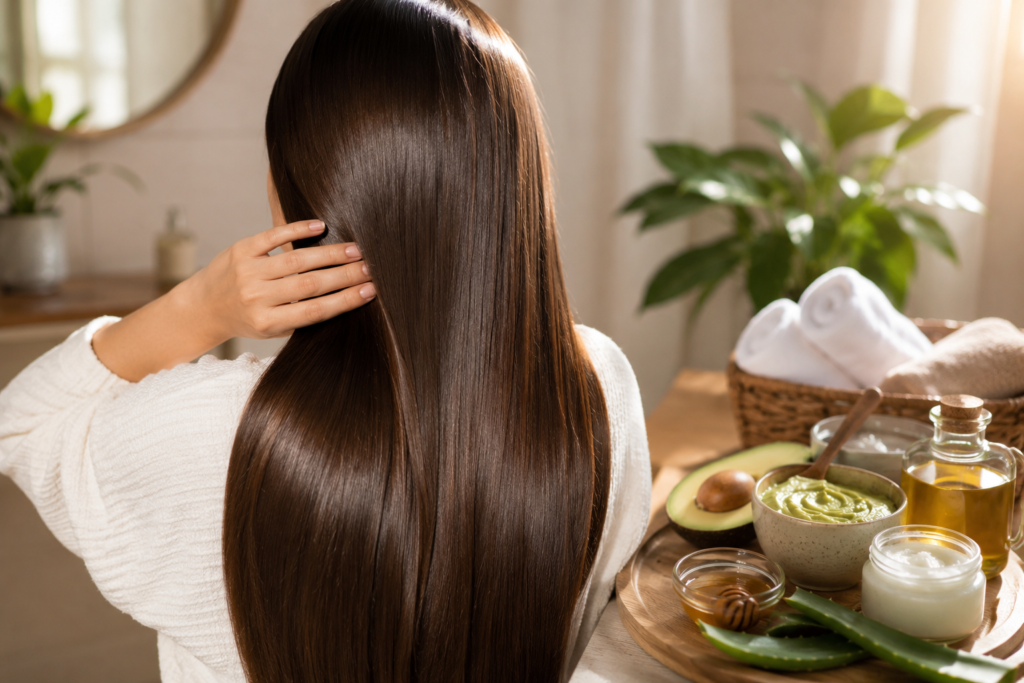
Proper application technique can significantly impact the effectiveness of your natural hair mask. Follow these steps for optimal results:
Preparation:
Application Process: 1. Section your hair into four to six parts depending on thickness 2. Apply the mask systematically to each section, starting from the ends and working toward the roots 3. For scalp treatments, massage the product directly into the scalp with fingertips 4. Use a wide-tooth comb to distribute the product evenly through your hair 5. Twist or clip each section after application 6. Cover your hair with a shower cap or plastic wrap 7. For deeper penetration, wrap a warm towel over the cap or use a heated cap
Timing:
Removal:
Common Mistakes
Avoiding these frequent errors will help you get the most from your natural hair mask treatments:
Using Hot Water: Hot water opens the hair cuticle, which can cause the beneficial ingredients to wash away too quickly and lead to frizz. Always rinse with lukewarm or cool water.
Applying to Soaking Wet Hair: While some masks work on damp hair, soaking wet hair won’t absorb ingredients properly. Towel-dry hair to remove excess water before application.
Skipping the Strand Test: Not all natural ingredients work for everyone. Always test a small amount on a small section of hair first, especially if you have color-treated or chemically processed hair that may react unpredictably.
Over-Application on Fine Hair: More isn’t always better. Fine hair can become weighed down and greasy with too much product. Use smaller quantities and focus on ends rather than roots.
Inconsistent Use: Natural treatments require consistency to show results build a hair care routine. Using a mask once a month won’t provide the cumulative benefits of regular weekly or bi-weekly treatments.
Not Adjusting for Hair Porosity: High porosity hair absorbs products quickly and may need protein-rich masks, while low porosity hair benefits from lighter, more liquid-based treatments. Understanding your hair’s porosity helps you select the right mask.
Leaving Masks on Too Long: While it might seem like leaving a mask on longer would increase benefits, some ingredients (particularly protein-rich ones like eggs) can actually make hair stiff and brittle if left on too long.
Using Ingredients at Wrong Temperatures: Applying very cold coconut oil or rinsing with hot water can reduce effectiveness. Room temperature or slightly warm ingredients work best for most masks.
Frequently Asked Questions
How often should I use a natural hair mask for dry hair?
For moderately dry hair, applying a natural hair mask once weekly is typically sufficient to restore and maintain moisture balance. If your hair is severely dry or damaged from chemical treatments or heat styling, you can increase frequency to twice weekly for the first month, then reduce to once weekly for maintenance. Fine hair types should limit use to once every 10-14 days to prevent product buildup and greasiness. Always assess your hair’s response and adjust accordingly—if your hair feels heavy or limp, reduce frequency; if it still feels dry, you may need more frequent treatments or should consider switching to a more intensive mask formula.
Can I leave a natural hair mask overnight?
While some natural hair masks can be left overnight, it’s not necessary or recommended for all types. Oil-based masks using coconut, olive, or jojoba oil can generally be left on overnight safely and may provide deeper conditioning. However, protein-rich masks containing eggs or yogurt should never be left overnight as they can make hair stiff and brittle. Similarly, masks with honey might become sticky and difficult to remove after extended periods. If you choose to sleep with a hair mask, always cover your hair with a shower cap and protect your pillow with a towel. For most masks, 30 minutes to 2 hours provides optimal benefits without the inconvenience or potential drawbacks of overnight application.
What natural ingredients should I avoid if I have a sensitive scalp?
If you have a sensitive scalp, avoid ingredients with high acidity or potential allergens. Lemon and lime juice, despite their popularity in DIY recipes, can be too harsh and cause irritation or even chemical burns when exposed to sunlight. Cinnamon and other spices can trigger allergic reactions and scalp sensitivity. Raw eggs pose an allergy risk for some individuals.
Essential oils, while natural, are highly concentrated and can cause contact dermatitis—if you choose to use them, always dilute properly and patch test first. Apple cider vinegar should be used in very diluted forms only. Stick to gentle, soothing ingredients like aloe vera, plain yogurt, avocado, and light oils such as jojoba or grapeseed oil. Always perform a patch test on your inner arm 24 hours before applying any new ingredient to your scalp.
Do natural hair masks really work as well as store-bought ones?
Natural hair masks can be equally effective as store-bought products, though they work differently. Commercial deep conditioners often contain synthetic ingredients designed for immediate cosmetic results—silicones that coat the hair for instant smoothness, for example. Natural masks work by nourishing hair with vitamins, minerals, and fatty acids that improve hair health over time rather than just coating it.
The key advantage of natural masks is that you know exactly what you’re applying to your hair, avoiding potential irritants, sulfates, parabens, and other controversial additives. However, natural masks require proper preparation, may have a shorter shelf life, and demand consistency to see results. For severely damaged hair, you might benefit from alternating between natural treatments and professional products. Many people find that natural masks work exceptionally well for maintenance and prevention look beautiful naturally tips, while intensive salon treatments help with severe damage repair.
How do I make my hair mask more effective?
Several techniques can enhance your hair mask’s effectiveness. First, apply heat during the treatment—wrap a warm towel around your shower cap or use a heat cap to open the hair cuticle and allow better ingredient penetration. Second, ensure proper preparation by clarifying your hair with a clarifying shampoo once a month to remove buildup that blocks moisture absorption. Third, customize your mask based on your hair’s current needs rather than using the same formula repeatedly.
Fourth, take your time with application, working in small sections to ensure even coverage. Fifth, use the right amount—too little won’t provide adequate treatment, while too much can be wasteful and difficult to rinse. Sixth, maintain consistency with your treatment schedule, as natural ingredients provide cumulative benefits over time. Finally, support your external treatments with proper nutrition, adequate hydration, and protective styling to minimize damage between mask applications.
Conclusion
Transforming dry, damaged hair doesn’t require expensive salon treatments or products filled with chemicals you can’t pronounce. These ten natural hair masks harness the power of kitchen-staple ingredients to deliver moisture, strength, and shine to your locks. From the deep conditioning properties of coconut oil to the vitamin-rich benefits of avocado and the soothing effects of aloe vera, nature provides everything your hair needs to thrive.
The key to success with natural hair masks lies in understanding your specific hair type, choosing appropriate ingredients, and maintaining consistency with your treatments. Whether you have fine, straight hair that needs lightweight moisture or thick, curly hair requiring intensive hydration, there’s a natural solution that fits your needs. By avoiding common mistakes and following proper application techniques, you’ll maximize the benefits of each treatment.
Remember that hair health is a journey, not a destination. Natural treatments require patience and regular use to show their full potential. Start with one or two masks that appeal to you, assess how your hair responds, and adjust your routine accordingly. With time and consistency, you’ll discover which natural remedies work best for your unique hair, leading to healthier, more vibrant locks that shine with natural beauty. Your kitchen truly holds the secret to gorgeous hair—you just need to unlock it.
