A cluttered closet isn’t just an eyesore—it’s a daily source of stress that makes getting ready more difficult than it needs to be. If you’re tired of wrestling with overflowing shelves, tangled hangers, and shoes scattered across the floor, you’re not alone. The good news is that transforming your chaotic closet into an organized oasis doesn’t require a complete renovation or expensive professional organizers. With some creative thinking and simple DIY solutions, you can maximize your space and create a functional storage system that works for your lifestyle and budget.
Whether you’re a renter working with limited options or a homeowner ready to optimize your space, these easy DIY closet organization hacks will help you reclaim control of your wardrobe. From clever storage solutions using everyday items to space-saving techniques that double your capacity, these practical tips will transform even the smallest closet into an efficient, accessible space. Let’s dive into the strategies that will help you create the organized closet you’ve always wanted.
Assessing Your Closet Needs
Before you start implementing organization hacks, it’s essential to understand what you’re working with and what you actually need. This assessment phase is crucial for creating a system that will work long-term rather than just temporarily hiding the clutter.
Start by completely emptying your closet. Yes, everything needs to come out. This might seem overwhelming, but it’s the only way to see your space clearly and evaluate each item you own. As you remove items, sort them into four categories: keep, donate, sell, and discard. Be honest with yourself about what you actually wear. If you haven’t worn something in a year and it’s not a special occasion piece, it’s probably time to let it go.
Once your closet is empty, take measurements of the space. Measure the height, width, and depth of your closet, including any existing shelving or hanging rod positions. Note any awkward corners, slanted ceilings, or architectural features that might impact your organization strategy. These measurements will be invaluable when planning your storage solutions and ensuring that any DIY projects fit perfectly.
Consider your wardrobe composition. Do you have more hanging clothes or folded items? Are shoes taking up excessive floor space? Do you have lots of accessories that need dedicated storage? Understanding the breakdown of your belongings helps you prioritize which solutions will deliver the most impact. For example, if you own 30 pairs of shoes but only 10 hanging items, investing time in shoe storage solutions makes more sense than adding additional hanging rods.
Think about your daily routine and how you access your clothes. The items you wear most frequently should be the easiest to reach, while seasonal or special occasion pieces can be stored in less accessible areas. This functional approach ensures your organization system actually supports your lifestyle rather than just looking pretty.
Simple DIY Storage Solutions
Now that you understand your closet’s potential and your storage needs, it’s time to implement creative DIY solutions that maximize every inch of space without breaking the bank.
Tension Rod Dividers: Tension rods aren’t just for hanging curtains. Install them vertically between shelves to create dividers for storing bags, clutches, or folded clothes. You can also use them horizontally to create additional hanging space for shorter items like tank tops or scarves. These versatile tools require no drilling and can be repositioned as your needs change, making them perfect for renters.
PVC Pipe Shoe Organizers: Cut PVC pipes into equal lengths (about 12-14 inches works well) and arrange them in rows on your closet floor or a low shelf. Each pipe becomes a cubby for a pair of shoes, keeping them organized and easy to identify. You can spray paint the pipes to match your closet aesthetic, and the entire project typically costs less than $20.
Soda Can Tab Hanger Multipliers: This viral hack actually works wonders. Simply slide a soda can tab onto the neck of a hanger, then hang another hanger through the bottom hole of the tab. This instantly doubles your hanging capacity in the same horizontal space, which is particularly useful for items like camisoles, scarves, or lightweight shirts.
Shower Curtain Ring Accessories: Attach shower curtain rings to a hanger to create an instant scarf, belt, or tank top organizer. This keeps accessories visible and untangled while taking up minimal space. You can hang multiple organizers and still use less space than traditional storage methods.
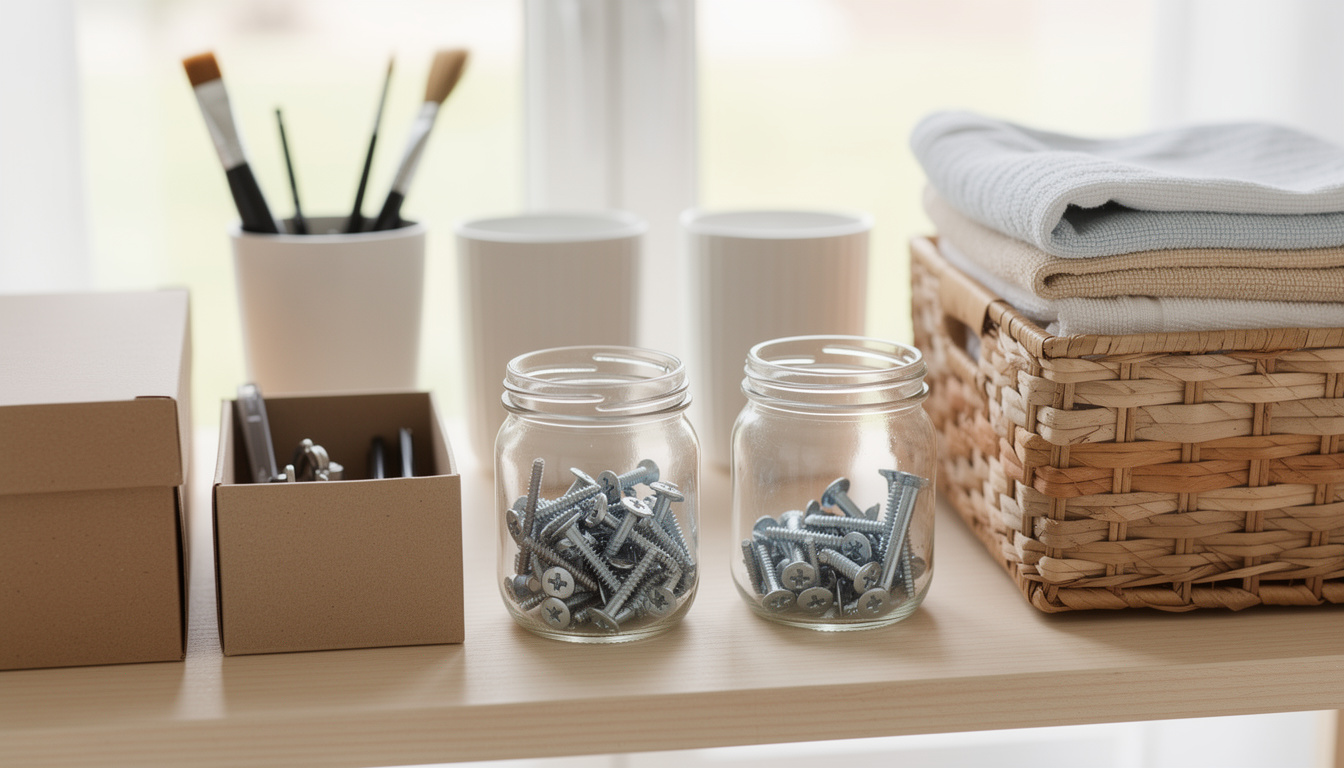
Repurposed Boxes and Containers: Before buying expensive storage bins, look around your home for containers you already own. Shoe boxes can be covered with wrapping paper or contact paper to create attractive drawer organizers. Ice cube trays work perfectly for storing small jewelry items. Wine boxes with dividers are excellent for organizing clutches or folded scarves.
Ladder Shelf: An old wooden ladder can be transformed into a chic hanging storage solution. Lean it against the closet wall and use the rungs to drape scarves, hang bags, or display jewelry. This adds visual interest while providing functional storage, and it’s especially useful for utilizing vertical wall space that typically goes unused.
For more inspiration on creative DIY storage approaches, resources like Better Homes & Gardens’ DIY closet organizers offer excellent visual guides and step-by-step instructions for various projects.
Pegboard Walls: Installing a pegboard on your closet wall creates customizable storage for accessories, bags, and jewelry. You can easily move hooks and shelves around as your needs change, and the materials are inexpensive and widely available at hardware stores. Paint the pegboard in a fun color to add personality to your space.
Drawer Dividers from Cardboard: Cut cardboard boxes into strips that fit your drawer dimensions, then arrange them in a grid pattern to create custom dividers. This keeps socks, underwear, and accessories separated and prevents the inevitable jumbled mess that accumulates over time. Cover the cardboard with fabric or decorative paper for a more polished look.
The Container Store’s DIY closet organizer ideas provide additional creative solutions that you can adapt based on your specific space and budget constraints.
Implementing Space-Saving Hacks
Beyond adding new storage solutions, strategic space-saving techniques can dramatically increase your closet’s capacity without requiring any purchases or major projects.
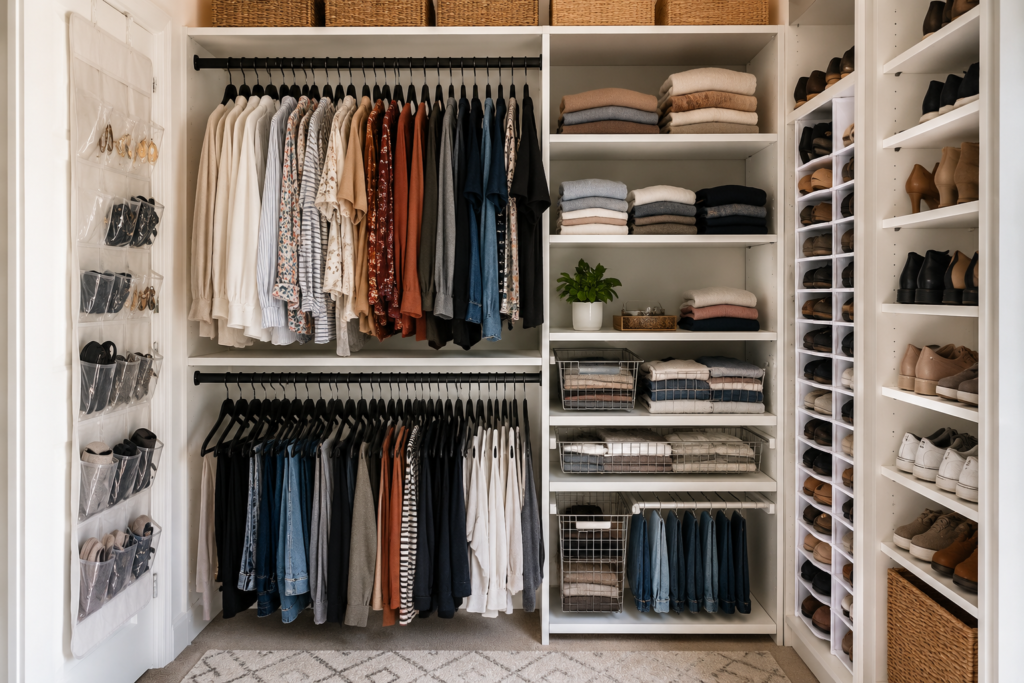
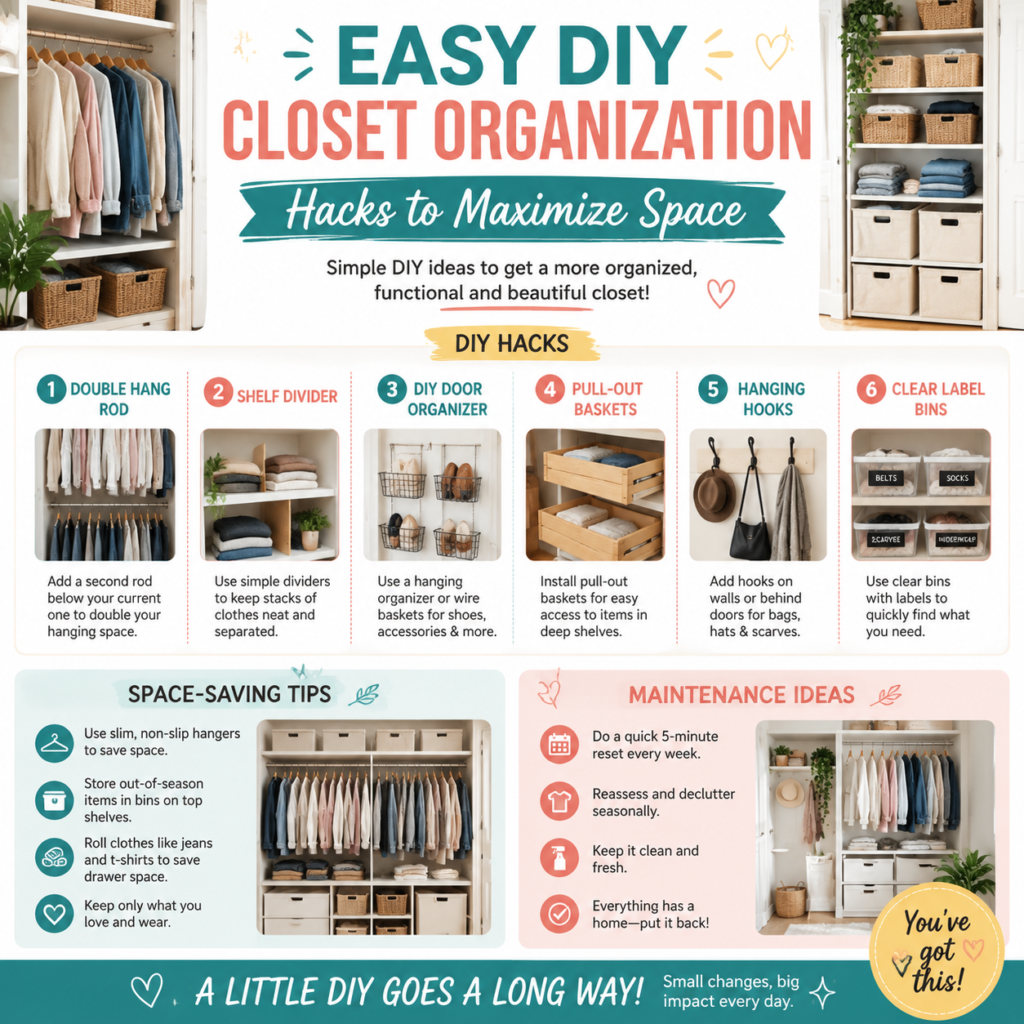
Vertical Space Maximization: Most closets have significant unused space near the ceiling. Install a second hanging rod below your existing one for items like shirts, pants, or skirts that don’t need the full height. You can also add shelving near the ceiling for storing out-of-season clothes in bins or items you rarely access.
Shelf Doubling: Purchase or create simple shelf risers to double your shelf space instantly. You can make these yourself using small wooden boards and supports, or even use sturdy books or boxes as makeshift risers. This allows you to stack items without creating unstable, toppling piles.
The File Folding Method: Instead of stacking clothes horizontally where you can only see the top item, fold clothes and store them vertically like files in a filing cabinet. This technique, popularized by organizing expert Marie Kondo, allows you to see every item at a glance and prevents the avalanche effect when you remove something from the bottom of a stack.
Door Real Estate: The back of your closet door is prime real estate that often goes unused. Install an over-the-door shoe organizer (which can hold much more than just shoes—think accessories, cleaning supplies, or even folded scarves and belts). Adhesive hooks can hold bags, robes, or tomorrow’s outfit. Just be sure not to overload the door to prevent damage to the hinges.
Vacuum Storage Bags: For bulky seasonal items like winter coats, sweaters, or comforters, vacuum storage bags compress items to a fraction of their original size. This is particularly useful for storing out-of-season clothing on high shelves or in areas that would otherwise be wasted.
Cascading Hangers: Hang multiple items on a single hanger using the cascading method. For example, hang several scarves or tank tops on one hanger by looping them through. This keeps similar items together while saving significant horizontal hanging space.
Corner Solutions: Corners are notoriously difficult closet spaces to utilize. Consider installing a tension rod corner shelf or using triangular corner organizers. You can also hang items at an angle in corners to maximize every inch.
Slim Hangers: Replacing bulky plastic or wooden hangers with slim velvet or felt hangers can increase your hanging capacity by up to 50%. The non-slip surface prevents clothes from sliding off, and the uniform appearance creates a more organized, boutique-like aesthetic.
Rolling Instead of Folding: For certain items like t-shirts, pajamas, and workout clothes, rolling instead of folding saves space and prevents wrinkles. Rolled items also pack more efficiently into drawers and bins, allowing you to fit more in the same space.
Under-Bed Extension: If your closet is truly maxed out, consider using under-bed storage as an extension of your closet space. Rolling storage bins make it easy to access out-of-season clothes or items you rarely wear without taking up valuable closet real estate.
Maintaining Organized Closets
Creating an organized closet is an achievement, but maintaining it requires establishing systems and habits that prevent chaos from creeping back in.
The One-In-One-Out Rule: Commit to removing one item every time you bring something new into your closet. This simple rule prevents accumulation and forces you to regularly evaluate what you actually need and use. It’s much easier to maintain organization than to reorganize an overflowing closet repeatedly.
Regular Seasonal Swaps: Every three to six months, conduct a seasonal swap where you rotate out-of-season items to storage and bring current season clothes to the front. This not only keeps your most relevant clothes accessible but also provides regular opportunities to reassess what you’re keeping.
The 30-Second Rule: Implement a policy that anything you take out must be returned within 30 seconds of use (unless you’re actively wearing it). This habit prevents the gradual accumulation of clothes on chairs, floors, or “I’ll deal with it later” piles that eventually migrate back into an already-organized closet.
Weekly 15-Minute Reset: Dedicate 15 minutes each week to tidying your closet. Rehang items that have fallen, return clothes to their designated spots, and address any small organizational issues before they become big problems. This short investment prevents the overwhelming chaos that requires hours to address.
Visible Labeling System: Label shelves, bins, and sections of your closet so everyone in your household knows where things belong. This is especially important if you share closet space with a partner or family members. Clear labels remove guesswork and make maintaining organization a shared responsibility.
Laundry Day Strategy: When putting away clean laundry, immediately return items to their designated spots rather than creating piles or stuffing things wherever they fit. This five extra minutes during laundry day saves hours of reorganization later.
Monthly Donation Bag: Keep a designated bag or box in your closet for items you’ve decided to donate. As you realize you’re not wearing something or it no longer fits, immediately put it in the donation container. When it’s full, take it to a donation center and start a new one.
Avoid Impulse Hanging: When you’re trying on clothes and decide not to wear them, resist the urge to just hang them anywhere. Take the extra second to return them to their proper spot. This small habit prevents the gradual disorganization that happens when we’re rushed.
Photographic Documentation: Take before and after photos of your organized closet. When motivation wanes or things start getting messy, these photos serve as inspiration and a reminder of how good an organized space feels.
Accountability Partner: Share your organization goals with a friend or family member who can check in periodically. Sometimes external accountability helps maintain habits when personal motivation flags.
Frequently Asked Questions
What are the cheapest ways to organize a closet?
The cheapest closet organization methods utilize items you already have at home. Repurpose shoe boxes as drawer dividers, use soda can tabs to double hanging space, employ tension rods you might have in storage, and create dividers from cardboard. The file folding method and cascading hangers cost absolutely nothing but can dramatically improve your storage capacity. Additionally, simply decluttering and removing items you no longer wear is completely free and often the most impactful step.
How can I organize a small closet with too many clothes?
For small closets overflowing with clothes, start by ruthlessly decluttering—you likely need less than you think. Then, maximize vertical space with double hanging rods and high shelves for out-of-season items. Use slim hangers to increase hanging capacity by up to 50%, implement the file folding method for drawer space, and utilize the closet door and walls for additional storage. Consider storing out-of-season clothes under your bed or in another area of your home, keeping only current season essentials in your primary closet.
What DIY materials are best for closet organization?
The most versatile and budget-friendly DIY materials include tension rods (for creating dividers and additional hanging space), PVC pipes (for shoe storage and drawer organization), pegboard (for customizable wall storage), cardboard boxes (for dividers and organizers), shower curtain rings (for hanging accessories), and basic lumber for building simple shelves. Adhesive hooks, zip ties, and binder clips are also incredibly useful for creative storage solutions and cost just pennies.
How do I prevent my closet from getting messy again?
Maintaining an organized closet requires establishing simple daily habits. Implement the one-in-one-out rule to prevent accumulation, dedicate 15 minutes weekly to resetting your space, and follow the 30-second rule of immediately returning items to their designated spots. Create systems that are easy to maintain—if organization is complicated, you won’t stick with it. Label everything clearly, conduct seasonal swaps to reassess what you’re keeping, and keep a donation bag handy for items you’re ready to release.
Can I really organize my closet without buying anything new?
Absolutely! Many highly effective organization strategies require zero purchases. Decluttering alone can free up significant space. Folding clothes vertically instead of stacking horizontally, using soda can tabs to double hangers, repurposing boxes as dividers, reorganizing by category and color, utilizing wall and door space with items you already own, and implementing better hanging strategies all cost nothing. The key is creative thinking about how to maximize your existing space and resources before assuming you need to buy specialized storage products.
Conclusion
Transforming your closet from chaotic to calm doesn’t require a major investment or professional intervention. With these easy DIY closet organization hacks, you can create a functional, accessible space that makes getting dressed a pleasure rather than a frustration. The key is understanding your specific needs, implementing creative solutions that work for your space and budget, and establishing simple maintenance habits that prevent future clutter.
Remember that organization is a journey, not a destination. Your needs will change over time, and your closet organization should evolve accordingly. The beauty of DIY solutions is their flexibility—you can adjust, modify, and improve your system without significant financial investment. Start with the hacks that address your biggest pain points, and gradually implement additional strategies as you discover what works best for your lifestyle.
An organized closet does more than just store your clothes efficiently. It saves you time each morning, reduces stress, helps you maintain your belongings better, and even makes you feel more in control of your space. Whether you’re working with a tiny apartment closet or a spacious walk-in, these practical, affordable hacks will help you maximize every inch and create a system that actually works for your daily life. So roll up your sleeves, grab some basic supplies, and get ready to transform your closet into the organized oasis you deserve.
