You’ve spotted them hovering near your backyard birdbath, drawn to water but struggling to land safely on the slippery surface. Creating a bee watering station protects these essential pollinators while adding a charming, nature-inspired touch to your garden that requires almost no maintenance.
Table of Contents
Why Bees Need Their Own Water Source
Bees aren’t just stopping by for a casual drink. These hardworking pollinators need water to regulate hive temperature, dilute honey for feeding larvae, and stay hydrated during long foraging trips. On hot summer days, worker bees can make dozens of water-collection flights, carrying precious droplets back to the colony in their honey stomachs.
The problem? Most water sources in our yards pose serious risks. Deep birdbaths, ponds, and pet bowls lack shallow landing zones, meaning bees often drown trying to reach the water. Even experienced foragers struggle with smooth ceramic or glass surfaces that offer no grip. This is where a thoughtfully designed pollinator water source becomes essential for supporting your local ecosystem.
Beyond honeybees, native bees, butterflies, and beneficial insects such as lacewings and hoverflies also seek out safe hydration spots. Providing accessible water helps maintain healthy pollinator populations that keep your vegetable garden productive and your flowers blooming beautifully throughout the season.
Why Shells Make the Perfect DIY Bee Waterer
Seashells offer an elegant solution that combines function with natural beauty. Their textured, porous surfaces provide excellent grip for tiny insect feet, while their naturally shallow curves create ideal landing platforms. Unlike synthetic materials that can leach chemicals or overheat in direct sun, shells regulate temperature naturally and blend seamlessly into garden aesthetics.
Larger shells such as scallop, clam, and abalone varieties work exceptionally well for this project. Scallop shells feature ridged interiors that give bees multiple footholds, while their fan shape holds just enough water without creating drowning hazards. Clam shells offer smooth, shallow basins perfect for smaller native bees, and abalone shells bring an iridescent pop of color that catches the eye while serving pollinators.
The porous nature of shells also allows for gradual evaporation, which means the water stays fresher longer compared to stagnant pools. This natural drainage helps prevent mosquito breeding—a common concern with standing water features. Plus, if you’re already incorporating vertical garden elements into your outdoor space, shell-based water stations complement that same eco-conscious, space-smart approach.
Oyster shells deserve special mention for their versatility. Their irregular shapes create varied depths within a single shell, accommodating different pollinator sizes simultaneously. The rough calcium carbonate surface provides superior traction, and their durability means they’ll withstand multiple seasons of use without cracking or deteriorating.
How to Create Your Seashell Bee Watering Station
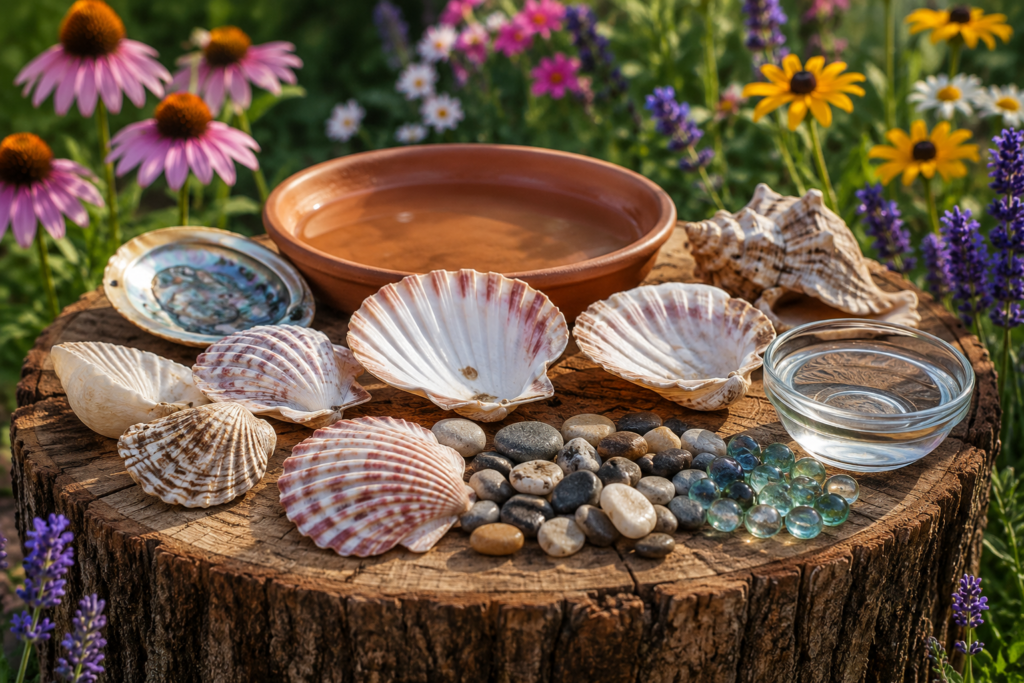
Building this garden feature takes less than fifteen minutes with supplies you probably already have. Start by gathering 5-7 shells in varying sizes, a shallow dish or saucer (terracotta works beautifully), small pebbles or marbles, and fresh water. The combination of shell sizes ensures you’re accommodating everyone from tiny sweat bees to larger bumblebees.
Begin by arranging your shells in the shallow dish, positioning them at slight angles so water pools in the deepest parts while leaving elevated edges dry. Nestle small pebbles or marbles between and inside the shells to create additional landing spots and prevent shells from shifting. These stones also serve as tiny islands that give struggling insects an escape route if they misjudge their landing.
Fill the station with fresh water until it reaches about halfway up the shells, leaving plenty of dry surface area visible. This shallow depth is crucial—bees can’t swim, so they need constant access to dry perches.
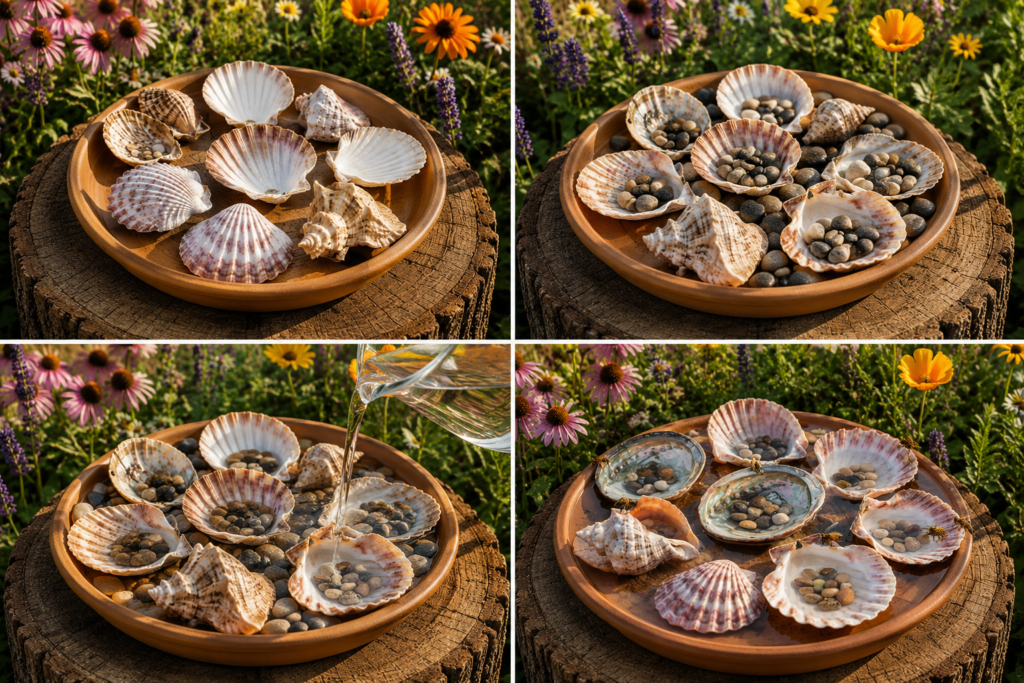
Place your finished station in a spot that receives morning sun but afternoon shade, ideally near flowering plants where pollinators are already active.
For elevated garden beds or balcony spaces, consider creating a hanging version using a macramé plant holder and a shallow bowl. This keeps water accessible while saving precious ground space, similar to how you might approach vertical plant support systems for climbing greenery. Just ensure it’s stable enough that visiting insects won’t cause swinging that could dump them into the water.
Placement and Maintenance Tips
Location matters more than you might think. Position your DIY bee watering station within 10-15 feet of flower beds or vegetable gardens where bees are already foraging. This reduces the energy they expend searching for water and creates a convenient pit stop during their pollination rounds. Avoid placing it directly under bird feeders, as fallen seeds can contaminate the water and attract unwanted pests.
Morning sun exposure helps warm the water to a temperature bees prefer, while afternoon shade prevents rapid evaporation and keeps the station from becoming uncomfortably hot. If your yard lacks natural shade, position it near taller plants or garden structures that provide dappled coverage during peak heat hours.
Daily maintenance is minimal but important. Check water levels each morning and top off as needed—hot, dry weather can deplete your station within 24 hours. Every three to four days, empty the shells completely, rinse them with plain water (no soap), and refill with fresh water. This simple routine prevents algae buildup and bacterial growth that could harm pollinators.
If you notice green algae forming despite regular changes, move your station to a slightly shadier spot or add a few copper pennies to the water. The copper naturally inhibits algae growth without harming insects. For mold prevention, especially in humid climates, ensure shells aren’t sitting in waterlogged soil and allow them to dry completely during your weekly deep clean.
Seasonal Care and Winter Considerations
As temperatures drop in fall, bees still need hydration during their final foraging trips before winter dormancy. Continue maintaining your station until you notice frost forming overnight. At this point, bring shells indoors to prevent freeze-thaw cycles from cracking them, and store them in a dry location until spring.
Early spring marks the perfect time to reestablish your pollinator water source. Queen bumblebees emerge from hibernation as early as February in mild climates, desperately seeking food and water to start new colonies. Having your station ready before blooms appear gives these foundational pollinators the support they need during their most vulnerable period.
Summer brings peak activity and the greatest water demand. During heat waves, check your station twice daily and consider setting up a secondary location on the opposite side of your yard. This reduces competition among different bee species and ensures adequate access even during the busiest foraging hours.
Supporting Other Pollinators and Garden Wildlife
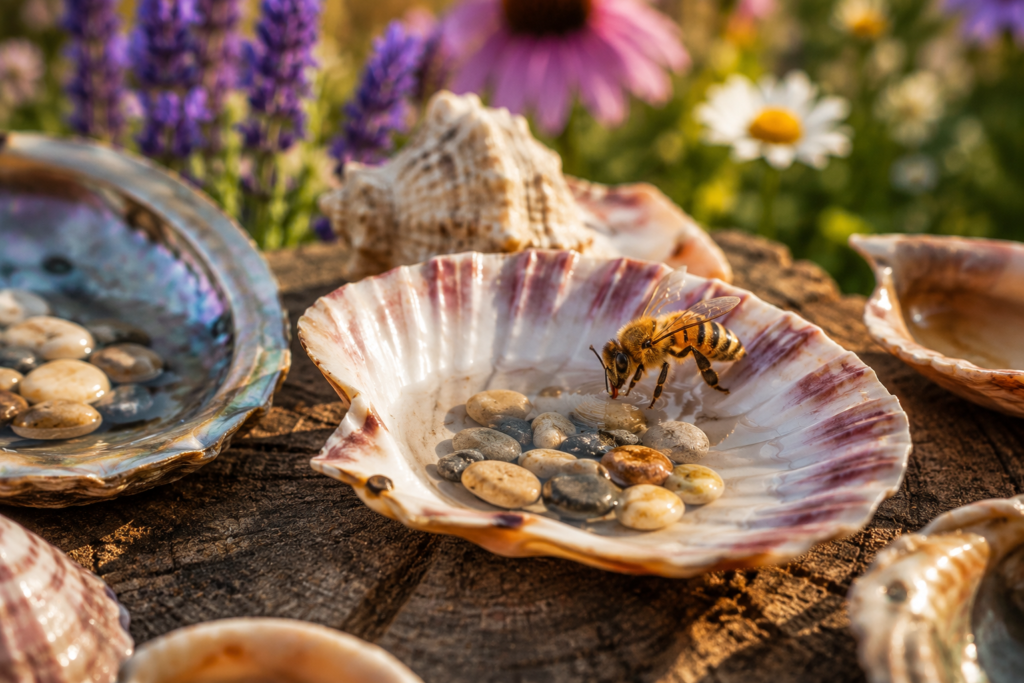
While bees are the star beneficiaries, your shell-based water station attracts a diverse cast of garden helpers. Butterflies, particularly swallowtails and painted ladies, will perch on shell edges to sip water while sunning their wings. Beneficial wasps that prey on garden pests also need regular hydration, and they’ll appreciate the safe access your design provides.
Native solitary bees—the unsung heroes responsible for pollinating many native plants—particularly benefit from backyard water sources. Unlike honeybees with their organized colonies, solitary bees work independently and travel shorter distances, making conveniently located water critical to their survival. Mason bees, leafcutter bees, and mining bees will all become regular visitors once they discover your station.
Hummingbirds might also make an appearance, though they prefer moving water. Some gardeners report success attracting multiple species by combining shell stations with gentle fountain features, creating a multi-level watering oasis that serves everyone from tiny native bees to larger birds.
Enhancing Your Station with Creative Touches
Once you’ve mastered the basic design, personalize your bee watering station to match your garden’s aesthetic. Arrange shells by color gradient for a beachy vibe, or mix in smooth river rocks and beach glass for added visual interest. Pressed flowers or waterproof garden art tucked around the base transform a functional feature into a genuine focal point.
Consider clustering multiple smaller shell stations throughout your garden rather than relying on one large setup. This approach mimics natural water distribution and reduces territorial disputes among different bee species. It also gives you flexibility to experiment with different shell types and observe which ones attract the most visitors in various garden microclimates.
For gardeners passionate about sustainable living projects, this water station represents a perfect intersection of eco-consciousness and practical garden care. You’re repurposing natural materials, supporting biodiversity, and creating habitat—all without plastic, electricity, or ongoing costs.
Troubleshooting Common Challenges
If bees aren’t finding your station within the first week, try adding a few drops of honey or sugar water to the shells initially. This sweet scent acts as a beacon, helping scouts locate the water source and report back to their hive. Once regular traffic establishes, switch back to plain water—bees have excellent memories and will continue visiting known reliable sources.
Ants discovering your water station can become problematic, as they may deter bees from approaching. Create a simple barrier by placing your dish inside a slightly larger, shallow pan filled with water, essentially creating a moat. Ants won’t cross the water barrier, but flying pollinators access the shells without issue.
During extended rainy periods, your station may overflow or become too diluted. Simply tip out excess water and reposition shells as needed. Some gardeners prefer bringing stations under cover during heavy storms, then returning them to their spots once conditions improve.
Creating a bee watering station with shells gives you a front-row seat to the incredible activity happening in your garden ecosystem. These tiny touches of hospitality ripple outward, supporting pollinator health that translates directly to more productive vegetables, more vibrant flowers, and a thriving outdoor space you’ll feel proud to nurture. Your bees will thank you with every blossom they pollinate and every fruit they help produce.
