Your pothos is trailing beautifully across your bookshelf, but imagine it standing tall and lush, commanding attention as a statement piece in your living room. Using tomato cages pothos owners already have in their garage or can pick up for a few dollars transforms sprawling vines into vertical showstoppers that maximize your plant’s growth potential while creating dramatic indoor greenery.
Why Tomato Cages Are Perfect for Pothos Using Tomato Cages Pothos Support Systems
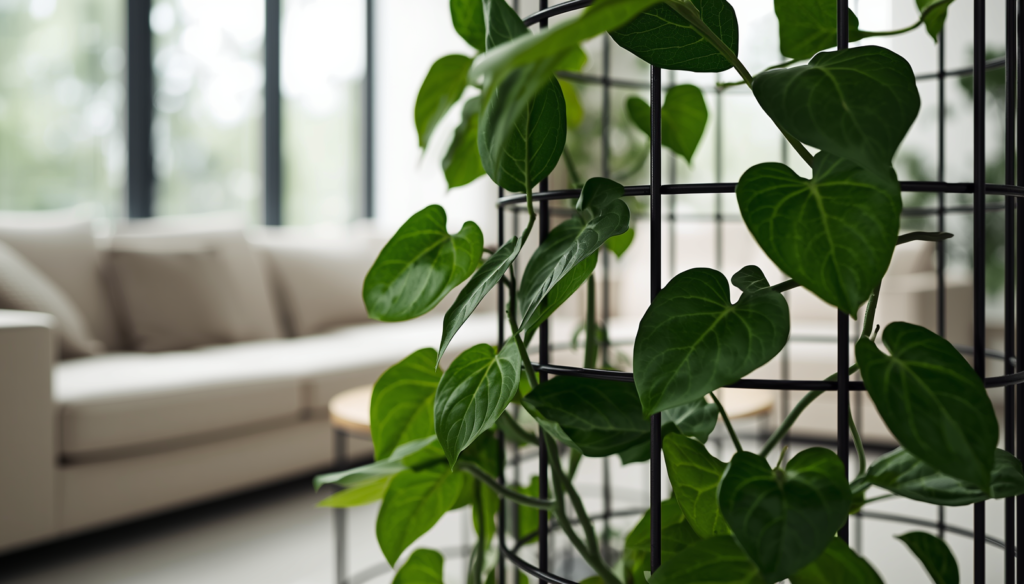
Pothos plants are natural climbers that, in their native tropical habitats, scale trees and rocks using aerial roots. Indoors, they often languish in hanging baskets or crawl along surfaces, but they truly thrive when given vertical support. Tomato cages offer the ideal structure for encouraging upward growth without the hefty price tag of specialty plant stakes or moss poles.
The open wire design allows your pothos vines to weave naturally through the frame, creating a full, sculptural look that fills vertical space. Unlike single-stake supports, tomato cages provide 360-degree climbing opportunities, which means every angle of your plant gets training and your display looks gorgeous from any viewpoint in the room.
This method also promotes healthier growth. When pothos climbs vertically, it receives more even light distribution across its foliage, encouraging larger, more mature leaves with those coveted fenestrations (natural leaf splits) that only appear when the plant is truly thriving. Plus, vertical growth means you can fit more greenery into compact spaces without sacrificing floor or shelf real estate.
Choosing the Right Tomato Cage for Your Pothos
Not all tomato cages work equally well for indoor plant styling. The standard galvanized steel cages you find at garden centers come in various heights, typically ranging from 24 to 54 inches. For most pothos displays, a 36 to 42-inch cage hits the sweet spot, providing substantial height without overwhelming your space.
Consider the cage’s diameter as well. Wider cages (around 14 to 18 inches across) create fuller, more dramatic statements and give your vines plenty of room to fill out. Narrower cages work beautifully for smaller spaces or corner displays where you want height without bulk.
If the industrial look of standard wire cages clashes with your decor aesthetic, you have options. Some crafty plant parents spray paint their cages in matte black, brass, or white to match their interior style. You can also explore creative ways to repurpose tomato cages with decorative wrapping such as jute twine, faux moss sheets, or even macramé cord for a boho vibe.
Wooden tomato cages or bamboo tripod structures offer a more refined look straight out of the box. While slightly pricier, these natural materials blend seamlessly into modern farmhouse or minimalist interiors and provide the same functional support your pothos needs.
Setting Up Your Tomato Cage Pothos Display
Start by selecting a pot that’s proportional to your cage height. A general rule: your pot should be about one-third the height of your cage for visual balance. Make sure your pot has drainage holes and is heavy enough that your towering plant display won’t tip over once those vines get lush and full.
Place the tomato cage directly into the pot before or after planting your pothos. If your plant is already established, gently work the cage legs down into the soil around the root ball, pushing until the legs reach the pot’s bottom. The cage should feel stable and not wobble. If you’re starting with a new planting, position the cage first, add your pothos, then fill in with fresh potting mix around both plant and cage.
For extra stability in larger displays, anchor your cage by threading zip ties through the bottom wire ring and around the pot’s rim, or use floral wire to secure the cage legs to the drainage holes underneath. This prevents any shifting as you train your vines and ensures your statement piece stays put.
Position your newly structured pothos where it will receive bright, indirect light. East or north-facing windows work beautifully, or place it a few feet back from a south or west-facing window where harsh direct sun won’t scorch the leaves. Much like the principles behind creating vertical gardens, strategic placement maximizes both growth and visual impact.
Training Your Pothos to Climb
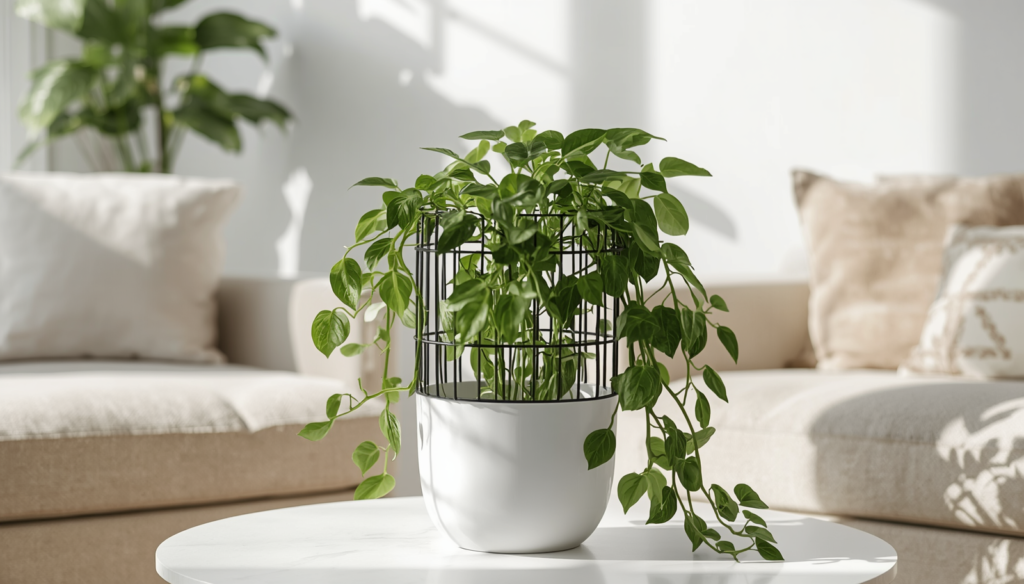
Training pothos vines up a tomato cage is surprisingly simple and oddly satisfying. Start by identifying the longest, healthiest vines on your plant. These will become the framework of your vertical display, so choose ones with vibrant green leaves and no signs of yellowing or damage.
Gently wrap each vine around the cage wires in an upward spiral, tucking growth nodes (the small bumps where leaves emerge) close to the wire. These nodes can produce aerial roots that will eventually grip the structure on their own. Work slowly and support the vine with one hand while guiding it with the other to avoid snapping or stressing the stems.
Use soft plant ties, velcro strips, or even twisted paper ties to secure vines to the cage at several points. Avoid anything too tight or rigid like twist ties or string, which can cut into stems as they grow. Your goal is gentle guidance, not restriction. Space your ties about 6 to 8 inches apart along each vine.
As new growth emerges, continue training it onto the cage every week or two. Pothos grows quickly in favorable conditions, sometimes adding several inches per week during growing season. Regular training sessions keep your display looking intentional rather than wild, though a bit of organized chaos has its charm too.
For a fuller look faster, train multiple vines up different sections of the cage simultaneously. Encourage some vines to spiral clockwise and others counterclockwise to create visual interest and maximize coverage. Within a few months, your tomato cage will be completely concealed by lush foliage.
Tomato Cages vs. Other Plant Support Options
While tomato cages excel for pothos, understanding how they compare to other support structures helps you make the best choice for your space and style. Moss poles, another popular option, provide a natural climbing surface that encourages larger leaf development and more dramatic fenestrations. However, they require regular misting to keep the moss moist, which can be high-maintenance for busy plant parents.
Single bamboo stakes or trellises work well for training pothos in a specific direction, such as up a wall or across a window frame. They’re ideal for creating living curtains or privacy screens but don’t offer the 360-degree fullness that tomato cages provide. Similar to rental-friendly decor solutions, tomato cages are portable and damage-free, perfect if you’re not ready to commit to permanent installations.
Wire or metal trellises mounted on walls create stunning living art installations but require drilling and permanent placement. Tomato cages offer the flexibility to move your plant display as your decor evolves or as you chase seasonal light changes throughout your home.
Cost-wise, tomato cages win hands down. A quality moss pole can run $20 to $40 or more, while tomato cages typically cost $5 to $15 depending on size and material. For plant lovers on a budget or those experimenting with vertical plant styling for the first time, tomato cages offer an accessible entry point with professional-looking results.
Styling Your Tomato Cage Pothos for Maximum Impact
The beauty of tomato cage pothos displays lies in their versatility. In modern or minimalist spaces, a clean wire cage paired with a simple white or concrete pot creates an architectural statement that feels gallery-worthy. The geometric lines of the cage contrast beautifully with the organic flow of the vines.
For bohemian or eclectic interiors, wrap your cage with natural jute twine before training your pothos. This softens the industrial look and adds texture that complements woven baskets, macramé, and other natural fiber decor. You can even weave in dried florals or fairy lights between the vines for seasonal styling.
Painted cages open up endless color possibilities. A matte black cage creates drama and makes the bright green foliage pop, while a brass or gold-toned cage adds warmth and glamour to a room. Soft sage, blush pink, or terracotta cages bring a custom designer look that coordinates with your existing color palette.
Consider grouping multiple tomato cage pothos displays at varying heights to create a living installation. Three cages in graduated sizes (small, medium, large) arranged in a corner transforms a dead space into a lush focal point. This technique works especially well in open-concept spaces where you need to define zones without blocking sightlines.
Place your vertical pothos display on a plant stand to add even more height and presence. A simple wooden stool or mid-century modern plant stand elevates your creation literally and figuratively, making it a true centerpiece that draws the eye upward and makes ceilings feel higher.
Caring for Your Vertical Pothos Display
Caring for pothos trained on tomato cages isn’t dramatically different from standard pothos care, but a few adjustments optimize growth and appearance. Water when the top 2 inches of soil feel dry to the touch, which might be slightly more frequent than trailing pothos since vertical growth and increased foliage mean more transpiration.
Check soil moisture by inserting your finger into the soil or using a moisture meter. Water thoroughly until it drains from the bottom, ensuring the entire root system gets hydrated. Dump any water that collects in the saucer after 15 minutes to prevent root rot.
Feed your pothos monthly during spring and summer with a balanced liquid houseplant fertilizer diluted to half strength. Vertical growth demands more nutrients than trailing growth, and regular feeding keeps foliage vibrant and encourages those larger, mature leaves. Reduce feeding to every 6 to 8 weeks in fall and winter when growth naturally slows.
Rotate your tomato cage pothos display a quarter turn every week or two. This ensures all sides receive equal light exposure and prevents the plant from growing lopsided. It’s a simple habit that makes a dramatic difference in achieving that full, balanced look from every angle.
Dust leaves regularly with a soft, damp cloth or give your plant a gentle shower every month. Clean leaves photosynthesize more efficiently and are better equipped to resist pests. Plus, shiny, dust-free foliage simply looks healthier and more vibrant in your space.
Troubleshooting Common Tomato Cage Training Issues
Even with proper technique, you might encounter a few bumps along the training journey. If vines refuse to stay put on the cage and keep flopping down, your plant ties might be too loose or spaced too far apart. Reassess your tie placement and add more support points, especially near heavy leaf clusters that weigh down stems.
Yellowing leaves on your vertical pothos often signal watering issues. Overwatering is the most common culprit, leading to root rot that travels up the plant. Check that your pot has adequate drainage and that you’re allowing soil to dry appropriately between waterings. Yellow leaves can also indicate your plant needs fertilizer, especially if older, lower leaves are affected first.
If your pothos produces small leaves even with vertical support, light is likely the issue. Pothos tolerates low light but won’t produce those dramatic, mature leaves without sufficient brightness. Move your display closer to a window or supplement with a grow light positioned about 12 inches above the top of the cage.
Pests such as spider mites, mealybugs, or scale can be harder to spot on a densely trained tomato cage display. Make inspection part of your weekly rotation routine, checking the undersides of leaves and along stems where pests typically hide. Catching infestations early prevents them from spreading through your entire plant collection. Discussions on effective trellis methods often highlight the importance of accessibility for ongoing plant maintenance.
Bare or sparse sections on your cage can be filled by redirecting nearby vines or by propagating new pothos cuttings and planting them directly into the pot. Take 4 to 6 inch cuttings with at least two nodes, root them in water for two weeks, then nestle them into the soil near the sparse area and train them up the cage as they grow.
Creative DIY Tomato Cage Alternatives
If you’re feeling crafty or can’t find the perfect cage for your space, DIY alternatives offer customization and personality. Create a simple tripod support using three bamboo stakes or copper pipes bound together at the top with wire or twine. Fan the legs out evenly and push them into the soil, then train your pothos up and around the poles.
Wire mesh or hardware cloth (available at hardware stores) can be shaped into custom cages of any size or shape. Cut a rectangle of mesh, roll it into a cylinder, and secure the edges with wire or zip ties. This allows you to create perfectly sized supports for your specific pots and spaces, and the mesh provides excellent grip for aerial roots.
Repurpose tomato cage components in unexpected ways. Flip a cage upside down for a fountain-like effect where vines cascade down from a central point. Remove the legs from a cage and mount just the wire rings horizontally on a wall for a living wreath display. Stack two cages of different sizes for extra height without purchasing specialty tall supports.
For a truly custom look, wrap a basic tomato cage with decorative materials before training your pothos. Hot glue faux moss sheets around the wire for a moss pole effect without the moisture maintenance. Wrap sections with leather cord for an earthy, masculine vibe, or use metallic washi tape for a modern, geometric pattern that peeks through the foliage.
If you’re exploring indoor gardening more broadly, combining your pothos display with other plant projects creates a cohesive green space. The skills you develop training pothos translate beautifully to cultivating herbs indoors and other climbing or trailing plants that benefit from vertical support.
Taking Your Pothos Display to the Next Level
Once you’ve mastered basic tomato cage training, consider mixing pothos varieties on a single cage for a living tapestry effect. Combine golden pothos with its bright yellow variegation alongside marble queen pothos with cream and white patterns, or add neon pothos for electric lime-green contrast. The different colors create depth and visual interest as they intertwine.
Create seasonal displays by tucking in temporary elements. In autumn, weave in preserved fall leaves or small decorative pumpkins. During the holidays, add tiny ornaments or battery-operated string lights. Spring calls for fresh flowers tucked into small water tubes hidden among the vines. These touches make your plant display feel curated and intentional.
Document your plant’s progress with monthly photos from the same angle. Watching your tomato cage transform from visible structure to lush column of greenery is incredibly rewarding, and the before-and-after transformation makes impressive content if you share your plant journey on social media.
Consider the long game: a well-trained pothos on a tomato cage can become a multi-year project that grows with you. As your plant matures and fills its cage completely, you can upgrade to a taller cage, train vines to cascade down once they reach the top, or propagate sections to create additional displays throughout your home.
Embracing Your Inner Plant Stylist
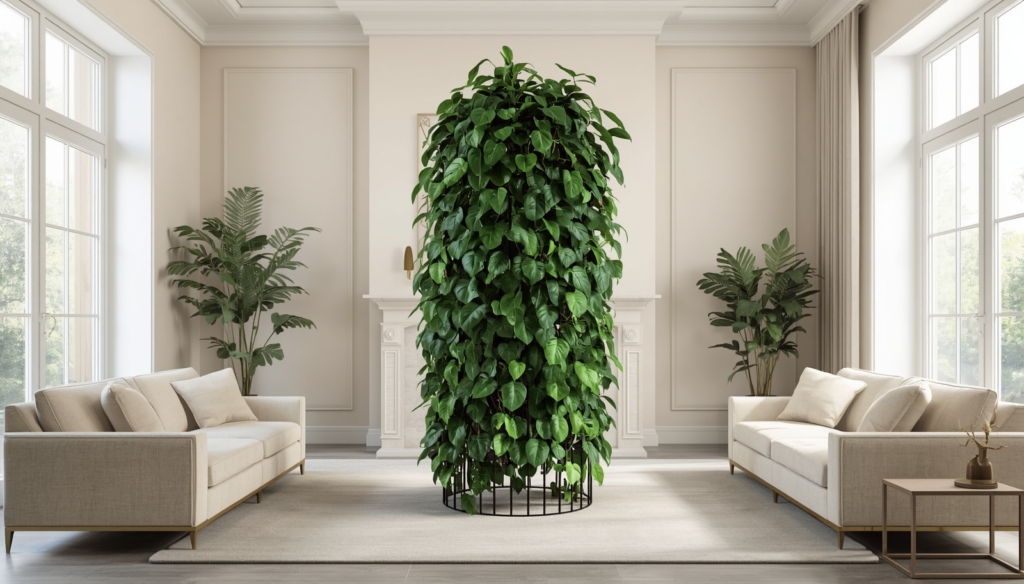
Transforming your pothos with a simple tomato cage proves that stunning plant displays don’t require expensive equipment or expert skills. This approachable technique lets you reimagine the humble trailing plant as an architectural element that anchors your space with living beauty. You’re not just growing a plant; you’re curating an experience that evolves daily, bringing nature’s calming presence into your home in an entirely new dimension. Give your pothos the support it craves, and watch it reward you with growth that’s nothing short of spectacular.
