The air we breathe inside our homes matters just as much as the air outside. Yet many of us unknowingly fill our living spaces with synthetic fragrances and chemical compounds found in conventional air fresheners. If you’re ready to embrace a healthier lifestyle while keeping your home smelling fresh and inviting, learning how to make natural home air freshener is an empowering first step. This comprehensive guide will walk you through creating your own chemical-free air fresheners using simple, natural ingredients that are better for your health, your wallet, and the environment.
Commercial air fresheners often contain phthalates, formaldehyde, and volatile organic compounds (VOCs) that can trigger allergies, respiratory issues, and other health concerns. By crafting your own natural alternatives, you’re not only reducing exposure to these harmful substances but also customizing scents to match your preferences. Whether you prefer citrusy notes, calming lavender, or invigorating peppermint, homemade air fresheners put you in complete control of what you breathe.
Benefits of Natural Air Fresheners
Switching to natural air fresheners offers numerous advantages that extend beyond simply masking unpleasant odors. Understanding these benefits will reinforce why making the transition is worthwhile for your household.
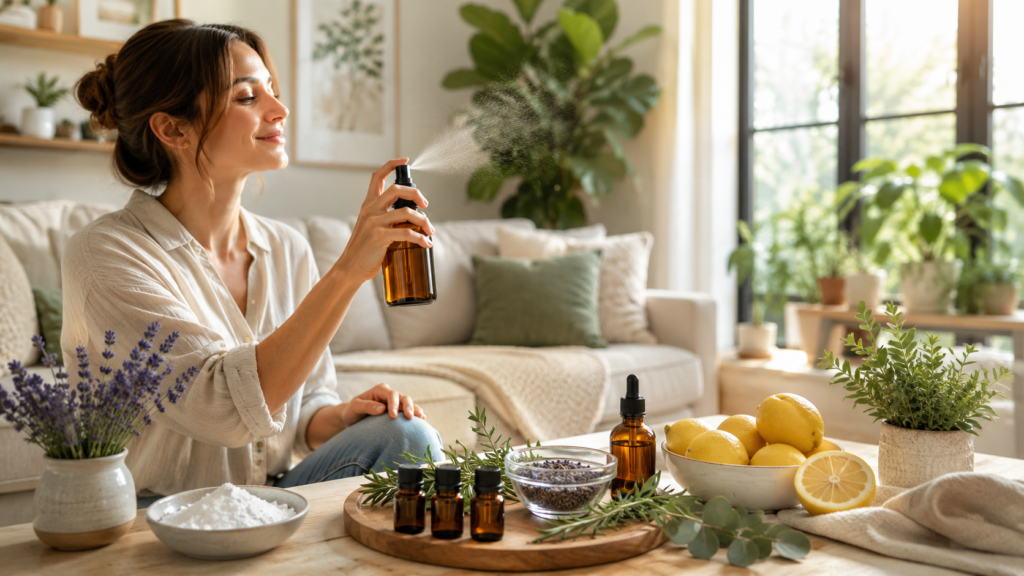
Health and Safety Advantages
Conventional air fresheners contain synthetic chemicals that can compromise indoor air quality. According to research on household cleaners and their health impacts, many commercial products release harmful pollutants into your home environment. The Environmental Working Group (EWG) provides detailed research on the potential health effects of common household cleaning products and indoor pollutants. Natural alternatives eliminate these risks by using plant-based ingredients that won’t irritate respiratory systems or trigger allergic reactions. When you make natural home air freshener using essential oils and other botanical ingredients, you’re creating a product that’s genuinely safe for everyone in your household, including those with sensitivities.
Environmental Impact
Mass-produced air fresheners contribute to environmental degradation through plastic packaging, aerosol propellants, and chemical manufacturing processes. Homemade versions drastically reduce your carbon footprint by minimizing waste and eliminating harmful chemicals that eventually enter waterways and ecosystems. You can reuse glass spray bottles indefinitely and source ingredients in minimal packaging, making this an authentically sustainable choice.
Cost-Effectiveness
Creating your own air fresheners costs significantly less than purchasing commercial products repeatedly. A single bottle of essential oil, though initially pricier, yields dozens of batches of homemade freshener. Combined with inexpensive base ingredients like water, vinegar, and baking soda, you’ll save considerable money over time while maintaining a beautifully scented home.
Customization and Control
Perhaps the most delightful benefit is the ability to customize scents exactly to your liking. You can blend essential oils to create unique fragrances, adjust intensity levels, and even craft seasonal scents that celebrate different times of year. This level of personalization is impossible with store-bought options and allows you to experiment with creative combinations until you discover your perfect signature scent.
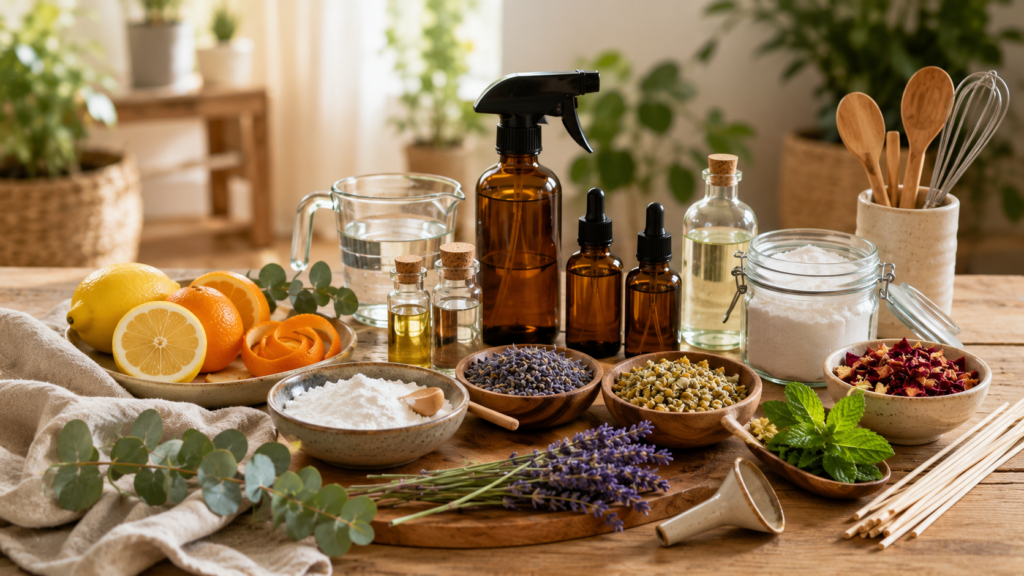
Ingredients and Tools
Gathering the right ingredients and tools before you begin ensures a smooth, enjoyable creation process. The beauty of natural air fresheners lies in their simplicity—you likely already have many items on hand.
Essential Oils
Essential oils form the aromatic foundation of most natural air fresheners. These concentrated plant extracts deliver powerful scents and therapeutic properties. Popular choices include:
- Lavender: Calming and relaxing, perfect for bedrooms
- Lemon: Fresh and uplifting, excellent for kitchens and bathrooms
- Peppermint: Energizing and clarifying, great for workspaces
- Eucalyptus: Refreshing and cleansing, ideal during cold season
- Tea Tree: Antimicrobial properties, beneficial for musty areas
- Orange: Cheerful and warm, wonderful for living areas
- Rosemary: Herbaceous and focusing, suitable for offices
The National Association for Holistic Aromatherapy (https://naha.org/) provides valuable resources for understanding essential oil safety and proper usage. When selecting oils, choose pure, therapeutic-grade options without synthetic additives.
Base Ingredients
Depending on which type of air freshener you’re creating, you’ll need:
- Distilled water: Prevents bacterial growth and extends shelf life
- White vinegar: Acts as a natural deodorizer and helps scents disperse
- Witch hazel or vodka: Serves as an emulsifier to blend oils with water
- Baking soda: Absorbs odors naturally, perfect for solid fresheners
- Dried herbs and flowers: Adds visual appeal and supplementary fragrance
- Fresh citrus peels: Provides natural, bright scent notes
Tools and Containers
Gather these simple items:
- Glass spray bottles (8-16 oz capacity)
- Small glass jars with lids for solid fresheners
- Funnel for easy pouring
- Measuring cups and spoons
- Small decorative bowls for open fresheners
- Labels and markers for identification
- Stirring utensils (wooden or glass preferred)
Glass containers are superior to plastic because they don’t react with essential oils and can be thoroughly cleaned and reused indefinitely, supporting your commitment to sustainable living.
Step-By-Step Making Process
Now for the exciting part—actually creating your natural air fresheners! Here are several methods to suit different preferences and needs.
Method 1: Essential Oil Room Spray
This versatile spray works wonderfully throughout your home and takes just minutes to prepare.
1. Prepare your bottle: Ensure your glass spray bottle is clean and completely dry.
2. Add witch hazel or vodka: Pour 2 tablespoons into the bottle. This helps the essential oils disperse throughout the water rather than floating on top.
3. Add essential oils: Add 20-30 drops of your chosen essential oil or blend. For beginners, try 15 drops lemon and 15 drops lavender for a balanced, universally appealing scent.
4. Fill with water: Top off the bottle with distilled water, leaving about half an inch of space at the top.
5. Shake well: Secure the spray top and shake vigorously for 30 seconds to combine all ingredients.
6. Label your creation: Note the scent blend and date on a label.
7. Test and use: Shake before each use and spray into the air, avoiding direct contact with fabrics until you’ve tested for staining.
Method 2: Simmering Stovetop Potpourri
This method fills your entire home with natural fragrance while adding humidity to dry air.
1. Fill a small pot: Add 2-3 cups of water to a small saucepan.
2. Add natural ingredients: Combine sliced citrus fruits (lemon, orange, or grapefruit), fresh herbs (rosemary, thyme, or mint), whole spices (cinnamon sticks, cloves, or star anise), and a few drops of essential oil if desired.
3. Bring to a boil: Heat on the stovetop until the mixture boils.
4. Reduce to simmer: Lower heat and maintain a gentle simmer, adding water as needed.
5. Enjoy for hours: This method provides continuous fragrance for several hours. Never leave unattended, and turn off when leaving home.
Method 3: Baking Soda Air Freshener
Perfect for closets, bathrooms, and small spaces, this solid freshener absorbs odors while releasing pleasant scents.
1. Choose a container: Select a small glass jar or decorative bowl.
2. Add baking soda: Fill the container about three-quarters full with baking soda.
3. Add essential oils: Drop 15-20 drops of essential oil onto the baking soda.
4. Mix thoroughly: Stir well to distribute the oils throughout the powder.
5. Cover with decorative material: If desired, cover the opening with breathable fabric secured with a ribbon, or leave open for maximum effectiveness.
6. Place strategically: Position in areas needing odor control. Refresh with additional essential oils weekly.
Method 4: Reed Diffuser
For continuous, subtle fragrance without electricity or flames, reed diffusers offer an elegant solution.
1. Select a narrow-neck bottle: Choose a small glass bottle or vase with a narrow opening.
2. Create the base: Mix 1/4 cup carrier oil (sweet almond, safflower, or fractionated coconut oil) with 2 tablespoons vodka or witch hazel.
3. Add essential oils: Incorporate 25-30 drops of essential oils into the mixture.
4. Pour into bottle: Transfer the liquid to your chosen container.
5. Insert reeds: Place 5-8 rattan reeds or bamboo skewers into the bottle.
6. Flip reeds: After an hour, flip the reeds to saturate both ends. Continue flipping weekly for continuous scent.
Method 5: Fabric Refresher Spray
Keep upholstered furniture, curtains, and linens smelling fresh with this gentle spray.
1. Combine ingredients: In a spray bottle, mix 2 cups distilled water, 2 tablespoons witch hazel, and 10-15 drops essential oils.
2. Add optional ingredients: Consider 1 teaspoon of natural fabric softener for extra softness.
3. Shake thoroughly: Ensure all ingredients are well combined.
4. Test first: Always spray a small, inconspicuous area first to check for discoloration.
5. Spray lightly: Mist fabrics from 6-8 inches away, avoiding saturation.
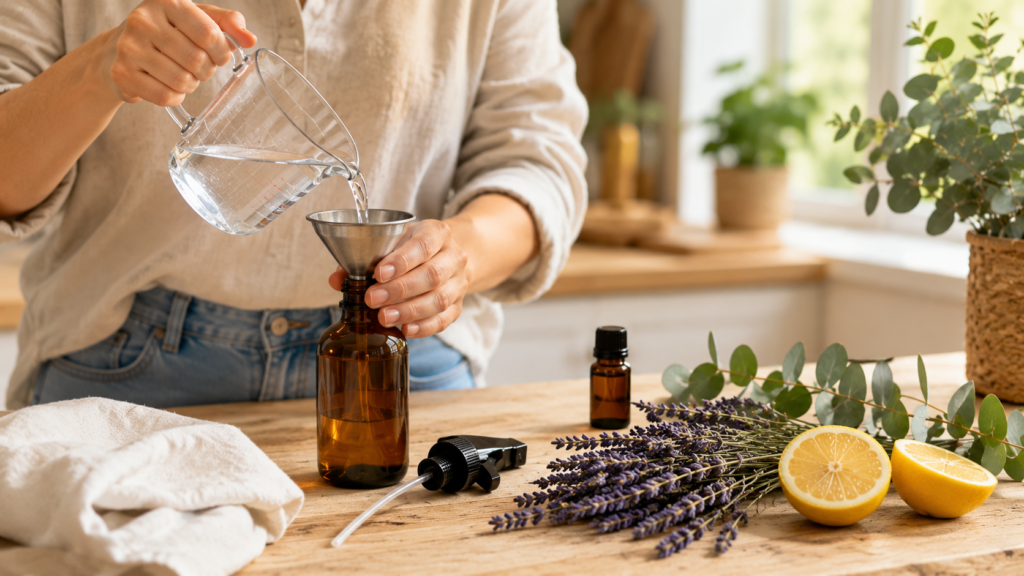
Remember that learning how to make natural home air freshener involves some experimentation, so don’t be discouraged if your first batch isn’t perfect. Adjust ratios and scent combinations until you find your ideal formulation.
Tips for Long-Lasting Scents
Maximizing the longevity and effectiveness of your homemade air fresheners ensures you get the most value and enjoyment from your efforts.
Choose Quality Essential Oils
The potency of your air freshener depends heavily on essential oil quality. Pure, therapeutic-grade oils contain higher concentrations of aromatic compounds, meaning they last longer and smell more authentic. While initially more expensive, quality oils prove more economical because you’ll use less per batch.
Store Properly
Light and heat degrade essential oils and diminish their fragrance. Store your homemade air fresheners in cool, dark places when not in use. Dark glass bottles provide additional protection from light exposure. Proper storage can extend the effective lifespan of your creations by several months.
Use Appropriate Concentrations
More isn’t always better with essential oils. Using excessive amounts won’t necessarily create stronger scents and can be overwhelming or even irritating. Follow recommended dilution ratios, typically 20-30 drops per 8 ounces of liquid for room sprays. For solid fresheners, 15-20 drops per cup of baking soda provides optimal results.
Refresh Regularly
Natural air fresheners don’t contain synthetic fixatives that make commercial products last for months. Expect to refresh solid fresheners weekly and remake spray versions every 2-3 weeks. This regular renewal ensures maximum effectiveness and allows you to experiment with seasonal scents throughout the year.
Layer Scents Throughout Your Home
Rather than relying on a single air freshener type, combine methods for comprehensive coverage. Use reed diffusers in entryways, solid fresheners in closets, and room sprays in living areas. This layered approach creates a cohesive, welcoming atmosphere throughout your entire home.
Combine with Good Ventilation
No air freshener can replace proper ventilation. Open windows regularly to allow fresh air circulation, which prevents odor buildup and reduces the need for intensive freshening. Natural air fresheners work best when complementing good airflow rather than masking poor ventilation.
Target Odor Sources
Address the root causes of unpleasant smells rather than simply covering them. Clean thoroughly, take out garbage regularly, wash fabrics, and identify any mold or mildew issues. Natural air fresheners perform optimally when used in already-clean spaces.
Experiment with Scent Combinations
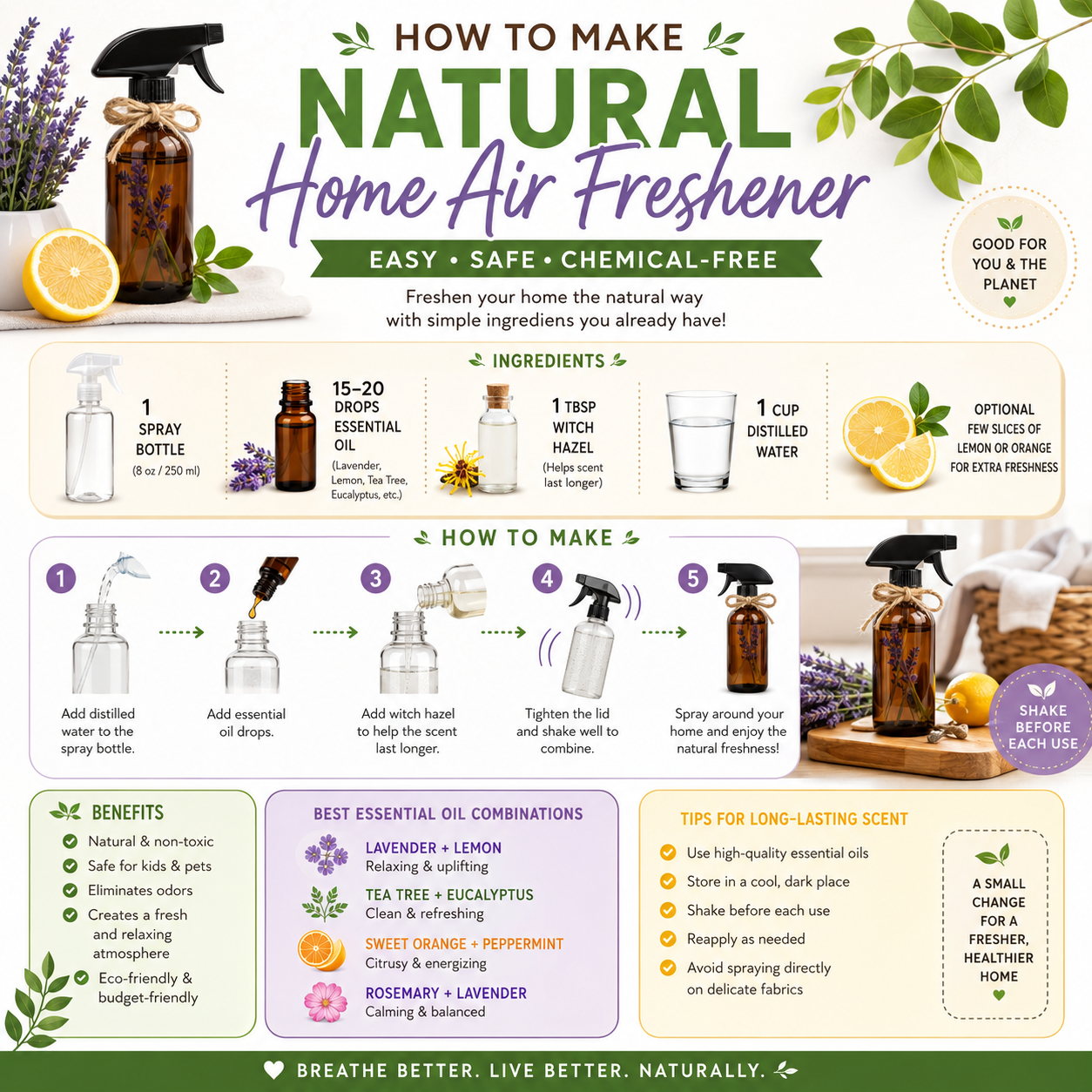
Create complexity and interest by blending multiple essential oils. Try these harmonious combinations:
- Citrus Fresh: 10 drops lemon, 10 drops orange, 5 drops grapefruit
- Herbal Garden: 10 drops rosemary, 10 drops lavender, 5 drops mint
- Forest Walk: 10 drops pine, 10 drops cedarwood, 5 drops eucalyptus
- Spiced Comfort: 10 drops cinnamon, 10 drops orange, 5 drops clove
- Floral Meadow: 15 drops lavender, 10 drops geranium, 5 drops ylang-ylang
Keep a journal documenting your favorite blends and ratios so you can recreate successful combinations.
Frequently Asked Questions
Are natural air fresheners effective for strong odors?
Yes, natural air fresheners can effectively address strong odors when used correctly. However, they work differently than commercial products. Rather than chemically masking smells, natural fresheners neutralize odors through ingredients like baking soda and vinegar while adding pleasant scents through essential oils. For particularly strong odors like cooking smells or pet accidents, first clean the source thoroughly, then use concentrated natural fresheners like baking soda mixed with essential oils placed directly in the affected area. Simmering stovetop potpourri is especially effective for pervasive odors throughout your home.
How long do homemade essential oil sprays last?
Homemade essential oil sprays typically remain effective for 2-3 weeks when stored properly in a cool, dark place. The scent potency gradually diminishes over time as essential oils naturally volatilize. Using distilled water rather than tap water extends shelf life by preventing bacterial growth. Adding witch hazel or vodka also acts as a natural preservative. If you notice the scent weakening, you can add a few more drops of essential oil to revitalize the spray. Make smaller batches initially until you determine how quickly your household uses the product.
Can I use any essential oil for homemade air fresheners?
While most essential oils work well in air fresheners, some considerations apply. Choose oils that you personally find pleasant and that suit your space’s purpose—relaxing scents for bedrooms, energizing ones for workspaces. Avoid photosensitizing oils like bergamot on fabrics that might contact skin. Some oils, such as tea tree and eucalyptus, can be irritating to pets, so research pet safety before use in homes with animals. Always purchase pure essential oils rather than synthetic fragrance oils, which defeat the purpose of creating natural products. Start with popular, versatile oils like lavender, lemon, and peppermint before expanding your collection.
What household ingredients can I use to absorb bad smells?
Several common household ingredients naturally absorb odors without added fragrances. Baking soda is the most effective and versatile option—place open boxes in refrigerators, closets, and musty areas to neutralize smells. Activated charcoal works exceptionally well, especially for moisture-related odors. White vinegar absorbs odors and can be placed in small bowls around rooms (the vinegar smell dissipates as it dries). Fresh coffee grounds excel at absorbing strong odors in refrigerators and freezers. Zeolite rocks offer reusable odor absorption and can be refreshed by placing in sunlight. These odor absorbers work excellently alongside scented air fresheners for comprehensive freshness.
Are natural air fresheners safe for pets and children?
Natural air fresheners are generally safer than commercial alternatives, but precautions remain important. Some essential oils are toxic to pets, particularly cats, who cannot metabolize certain compounds. Tea tree, eucalyptus, peppermint, and citrus oils can be problematic for cats and dogs in high concentrations. Use essential oils in well-ventilated areas, keep concentrations low, and never apply directly to pets. Solid fresheners should be placed where curious children and pets cannot access them. Reed diffusers should be positioned securely to prevent spills. When used thoughtfully with appropriate dilutions and placements, natural air fresheners create a safer environment than synthetic alternatives. Consult your veterinarian if you have specific concerns about particular essential oils and your pets.
Conclusion
Learning how to make natural home air freshener empowers you to take control of your indoor air quality while creating a beautifully fragrant living space. By choosing natural ingredients over synthetic chemicals, you’re protecting your family’s health, reducing environmental impact, and saving money—all while enjoying customized scents that perfectly match your preferences.
The methods outlined in this guide offer versatility for every room and situation, from quick-to-make sprays to elegant reed diffusers. Start with simple recipes as you build confidence, then experiment with creative scent combinations that reflect your personality and the seasons. Remember that transitioning to natural products is a journey, and each small change contributes to a healthier, more sustainable lifestyle.
Your home should be a sanctuary where every breath feels fresh and clean. With these natural air freshener techniques, you’re creating exactly that—a space filled with genuine botanical fragrances rather than synthetic chemicals. Embrace the process, enjoy the aromatherapy benefits, and breathe easier knowing you’ve made a positive choice for your household and the planet.
