DIY Natural Cleaning Products You Can Make at Home
DIY natural cleaning products for home are a simple and affordable way to keep every room fresh without relying on harsh chemicals. Making your own cleaners gives you complete control over the ingredients you use while helping reduce plastic waste, save money, and create a healthier indoor environment. From all-purpose sprays and bathroom cleaners to kitchen solutions and natural laundry care, common ingredients like white vinegar, baking soda, castile soap, lemon juice, and essential oils can handle everyday cleaning tasks effectively. This guide shares practical recipes, expert tips, and easy methods to help you make safe, effective natural cleaning products for every area of your home.
Why Choose DIY Natural Cleaning?
The decision to switch to DIY natural cleaning products represents more than just a lifestyle choice—it’s an investment in your health, your budget, and the planet’s future. Commercial cleaning products often contain volatile organic compounds (VOCs), synthetic fragrances, and harsh chemicals that can trigger allergies, respiratory issues, and skin sensitivities. According to the EPA, indoor air can be two to five times more polluted than outdoor air, largely due to household cleaning products. By creating your own cleaners, you gain complete transparency about what you’re exposing your family to daily.
The economic benefits are equally compelling. A typical household spends hundreds of dollars annually on specialized cleaning products, each promising to tackle one specific job. With DIY natural cleaners, you’ll invest in just a handful of versatile ingredients that cost a fraction of commercial products and last significantly longer. A gallon of white vinegar costs just a few dollars and can create dozens of cleaning solutions.
Environmentally, DIY cleaning dramatically reduces plastic waste since you’ll reuse the same spray bottles and containers indefinitely. You’ll also eliminate the environmental impact of manufacturing, packaging, and transporting multiple commercial products. The ingredients themselves are biodegradable and don’t introduce harmful chemicals into waterways. Perhaps most satisfying is the creative control—you can customize scents, adjust concentrations for your specific needs, and experiment with combinations that work perfectly for your home’s unique cleaning challenges.
Essential Ingredients for Your Natural Cleaning Arsenal
Building your natural cleaning toolkit requires surprisingly few ingredients, most of which you likely already have. Understanding each ingredient’s properties helps you create targeted solutions for every cleaning challenge while making natural cleaners recipes your home safer and more environmentally friendly.
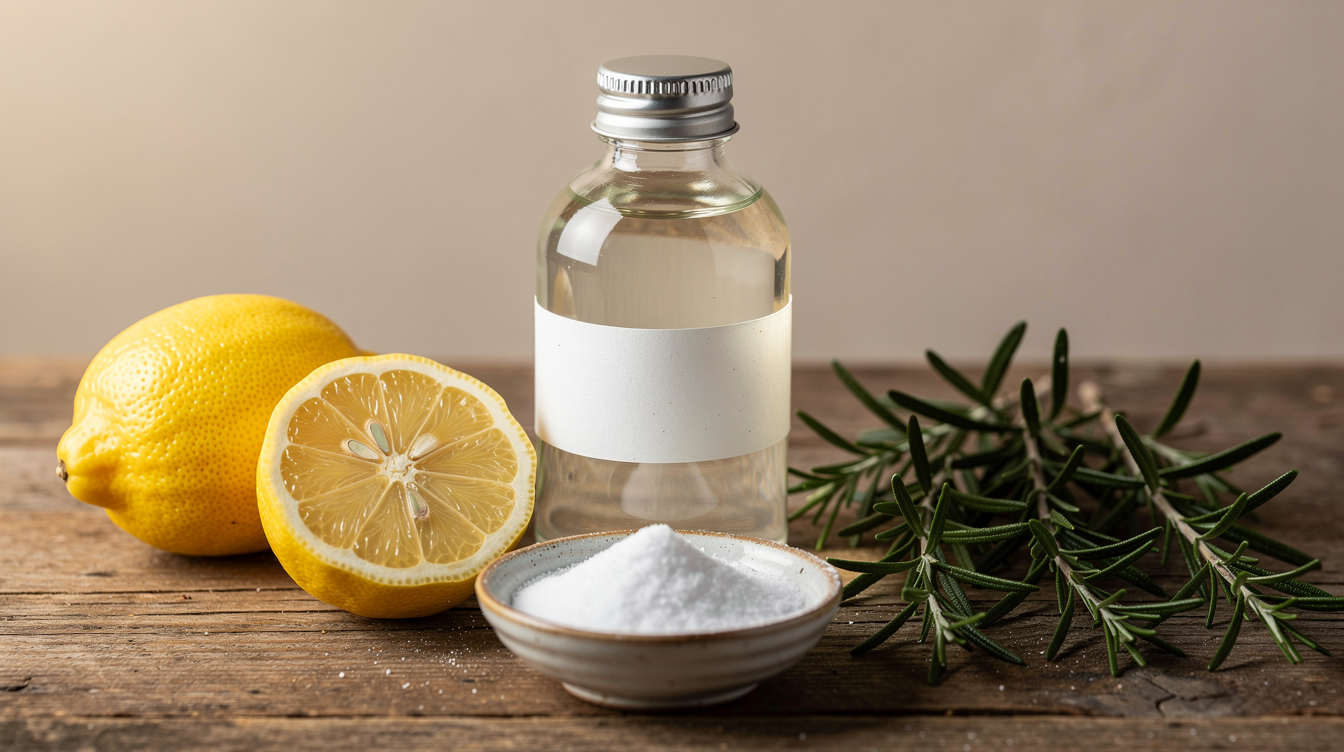
White Vinegar serves as the foundation of natural cleaning. Its acetic acid content (typically 5%) cuts through grease, dissolves mineral deposits, and acts as a mild disinfectant. Vinegar excels at removing soap scum, hard water stains, and can even eliminate odors rather than just masking them. Always use distilled white vinegar for cleaning rather than apple cider or other varieties.
Baking Soda (sodium bicarbonate) is a gentle abrasive that deodorizes and lifts stains without scratching surfaces. It works beautifully as a scouring powder, neutralizes acidic odors, and when combined with vinegar, creates a fizzing reaction that helps dislodge stubborn grime. It’s particularly effective on stainless steel, porcelain, and tile.
Castile Soap, made from vegetable oils, provides powerful cleaning action without synthetic detergents. This biodegradable soap creates rich lather, cuts through grease, and can be diluted for various applications from dish soap to floor cleaner. A little goes a long way, making it economical despite higher upfront costs.
Essential Oils offer more than pleasant scents—many possess antimicrobial properties. Tea tree oil provides antifungal and antibacterial benefits, lemon oil cuts grease and adds fresh fragrance, lavender offers calming aromatherapy while cleaning, and eucalyptus helps with respiratory health. Use pure essential oils rather than synthetic fragrance oils for maximum benefits.
Lemon Juice contains citric acid that naturally bleaches, disinfects, and deodorizes. Fresh lemon juice works best for cleaning, though bottled organic lemon juice can substitute. It’s particularly effective on cutting boards, copper, and brass.
Hydrogen Peroxide (3% solution) serves as a natural alternative to chlorine bleach. Research published in the National Center for Biotechnology Information confirms its effectiveness against bacteria and viruses. It whitens, removes stains, and disinfects without toxic fumes, though it must be stored in dark bottles to maintain potency.
All-Purpose Cleaners and Surface Solutions
Every natural cleaning arsenal needs versatile all-purpose cleaners that handle daily messes across multiple surfaces. These fundamental recipes form the backbone of your cleaning routine.
Basic All-Purpose Spray combines equal parts water and white vinegar in a spray bottle with 10-15 drops of essential oil. This simple solution cleans countertops, appliances, mirrors, and most hard surfaces. For enhanced cleaning power, add 1 teaspoon of castile soap per 16 ounces of solution. Shake well before each use as castile soap can settle.
Surface-Specific Variations ensure optimal results without damage. For wood surfaces, reduce vinegar concentration to 1 part vinegar to 3 parts water, adding several drops of olive oil for conditioning. Never use excessive water on wood. For tile and sealed stone, the basic formula works perfectly, though avoid vinegar on unsealed marble or granite as acid can etch surfaces. Instead, use castile soap diluted in water (1 tablespoon per quart).
Streak-Free Glass Cleaner requires 2 cups water, 1/4 cup vinegar, and 1/2 teaspoon castile soap. The key to streak-free results lies in proper technique: clean windows on cloudy days to prevent rapid drying, use microfiber cloths or newspaper, and buff in circular motions followed by vertical then horizontal strokes.
Heavy-Duty Degreaser combines 2 cups warm water, 1 tablespoon castile soap, 1 tablespoon baking soda, and 20 drops of lemon essential oil. This powerful formula tackles kitchen grease, sticky residues, and stubborn grime. Apply, let sit for several minutes, then wipe clean.
Floor Cleaning Solutions vary by flooring type. For tile or linoleum, add 1/2 cup vinegar and 1 tablespoon castile soap to a gallon of hot water. For hardwood, use only 1/4 cup vinegar per gallon with just a drop of castile soap, ensuring the mop is well-wrung to minimize moisture exposure.
Bathroom Brilliance: Tackling Grime Naturally
Bathrooms present unique cleaning challenges with soap scum, hard water deposits, mold, and mildew requiring targeted natural solutions that work as effectively as harsh chemical cleaners.
Toilet Bowl Cleaner utilizes baking soda’s abrasive properties and vinegar’s acidity. Sprinkle 1 cup baking soda around the bowl, let sit for 10 minutes, then spray with undiluted vinegar. Scrub thoroughly with a toilet brush, allowing the fizzing action to loosen deposits. For stubborn stains, add 10 drops of tea tree oil to the vinegar for enhanced antimicrobial action. For weekly maintenance, this method keeps toilets sparkling without toxic fumes.
Shower and Tub Scrub addresses soap scum and mildew effectively. Create a paste using 1 cup baking soda, 1/4 cup castile soap, and water to achieve thick consistency. Add 10 drops of eucalyptus or tea tree oil for antifungal properties. Apply with a sponge, scrub in circular motions, and rinse thoroughly. For glass shower doors, spray with undiluted vinegar, let sit 5 minutes, then wipe with a microfiber cloth.
Mold and Mildew Prevention requires proactive measures. Mix 2 cups water with 2 teaspoons tea tree oil in a spray bottle. Spray affected areas after showering and don’t rinse—the tea tree oil continues working as surfaces dry. This prevents mold establishment without DIY carpet cleaner solution toxic chemicals damaging indoor air quality.
Hard Water Stain Treatment demands patience with natural methods. For faucets and fixtures, soak paper towels in undiluted vinegar and wrap around affected areas. Leave for 30 minutes to several hours depending on severity, then scrub with baking soda paste. For shower heads, remove and soak overnight in vinegar. Rinse thoroughly and buff dry.
Grout Cleaning combines baking soda and hydrogen peroxide into a paste. Apply to grout lines, let sit 10 minutes, scrub with an old toothbrush, then rinse. For heavily stained grout, increase contact time to 30 minutes. Regular maintenance prevents deep staining that natural methods struggle to address.
Kitchen Cleanup: From Grease to Gunk
Kitchen cleaning demands solutions that safely tackle food residue, grease, and odors while remaining non-toxic near food preparation areas. These natural recipes handle every kitchen challenge effectively.
Oven Cleaner works overnight for effortless cleaning. Create a thick paste using 1 cup baking soda with enough water to achieve spreadable consistency. Coat oven interior completely, avoiding heating elements. Let sit overnight, then spray with vinegar to reactivate the baking soda. Wipe clean with damp cloths. For baked-on grease, repeat the process or add 1 tablespoon castile soap to the initial paste.
Microwave Steam Cleaner simplifies this tedious task. Combine 1 cup water, 1/4 cup vinegar, and lemon slices in a microwave-safe bowl. Microwave on high for 3-5 minutes until mixture boils and steams. Keep door closed for 5 additional minutes, allowing steam to loosen food particles. Wipe interior effortlessly with a cloth.
Dishwasher Cleaner maintains machine efficiency naturally. Place a cup of vinegar on the top rack and run an empty hot cycle. This dissolves mineral deposits, removes odors, and sanitizes. Monthly treatments prevent buildup and extend appliance life.
Grease-Cutting Dish Soap requires 1 cup castile soap, 1 tablespoon washing soda (not baking soda), 1 tablespoon vegetable glycerin, and 20 drops of lemon essential oil. Store in a pump dispenser. This formula cuts grease effectively while remaining gentle on hands.
Garbage Disposal Refresher eliminates odors using frozen vinegar cubes with lemon peel pieces. Run disposal with cold water while dropping in several cubes. The ice sharpens blades while vinegar and lemon freshen.
Produce Wash safely removes pesticide residues and dirt. Mix 1 cup water, 1 cup vinegar, and 2 tablespoons baking soda in a spray bottle. Spray produce, let sit 5 minutes, rinse thoroughly under cold water. This simple solution enhances food safety naturally.
Laundry Care and Fabric Fresheners
Natural laundry solutions clean effectively while protecting fabric integrity and sensitive skin from harsh chemical residues that linger on clothing.
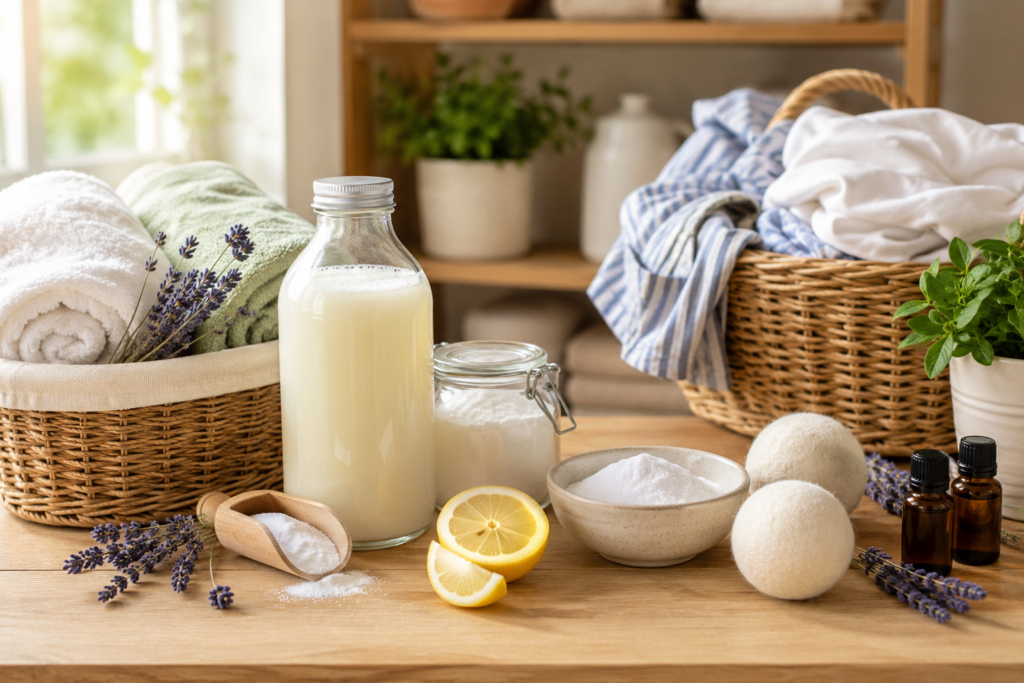
Liquid Laundry Detergent combines 1 cup castile soap, 1 cup washing soda, 1/2 cup baking soda, and 1/2 cup salt. Dissolve in warm water, stirring until combined. Use 1/4 cup per load. Add 10-15 drops of lavender or eucalyptus essential oil for scent. This formula cleans thoroughly in cold water, saving energy.
Fabric Softener and Static Reducer uses simple white vinegar. Add 1/4 cup to the rinse cycle or fabric softener dispenser. Vinegar softens fabrics, reduces static, and removes detergent residue without leaving vinegar scent on dried clothes. For added fragrance, infuse vinegar with lavender or citrus peels for two weeks before use.
Natural Stain Remover tackles most stains with hydrogen peroxide and dish soap. Mix equal parts 3% hydrogen peroxide and natural dish soap, apply directly to stains, let sit 5-10 minutes, then launder as usual. For grease stains, sprinkle baking soda first, then apply the mixture. For DIY sustainable living projects protein-based stains like blood, use cold water only.
Wool Dryer Balls with essential oils replace dryer sheets completely. Add 3-5 drops of preferred essential oil to wool dryer balls before each load. These reduce drying time, soften fabrics naturally, and eliminate static without chemical residue. They last years, dramatically reducing waste and cost.
Advanced Tips & Troubleshooting Your Natural Cleaners
Mastering natural cleaning involves understanding how to optimize formulas and solve common challenges that arise when transitioning from commercial products.
Addressing Streaking Issues often stems from too much soap in formulas. Reduce castile soap concentration by half and ensure thorough rinsing. For glass, buff immediately after cleaning with dry microfiber cloths. Hard water also causes streaking—add a water softener or increase vinegar concentration.
Enhancing Disinfection requires proper ingredient selection and contact time. While vinegar offers mild antimicrobial properties, hydrogen peroxide or tea tree oil provides stronger disinfection. For maximum effectiveness, spray surfaces and leave solutions for 5-10 minutes before wiping. Hydrogen peroxide requires contact time to kill pathogens effectively.
Shelf Life Considerations vary by recipe. Water-based solutions last 2-3 months when stored properly in cool, dark places. Solutions without water (like pure castile soap or vinegar) last indefinitely. Add a few drops of vitamin E oil or grapefruit seed extract to extend shelf life. Always label products with creation dates.
Custom Scent Blending elevates cleaning from chore to aromatherapy. Create signature scents by combining complementary essential oils: citrus and mint for energizing, lavender and chamomile for calming, or eucalyptus and rosemary for respiratory benefits. Use 15-20 drops total per 16-ounce cleaning solution, adjusting ratios to achieve desired fragrance.
Tackling Tough Jobs sometimes requires advanced combinations. For extreme mildew, combine equal parts hydrogen peroxide and water with tea tree oil. For burnt cookware, boil water with baking soda directly in the pan. For carpet stains, combine hydrogen peroxide, dish soap, and baking soda into a paste, working into fibers before vacuuming.
Frequently Asked Questions
Are natural cleaning products truly as effective as commercial cleaners?
Yes, natural cleaning products effectively clean most household surfaces and messes. While they may require slightly longer contact time or more physical scrubbing for heavily soiled areas, their cleaning power rivals commercial products for everyday tasks. The key difference is that natural cleaners work through physical and chemical processes (acids, abrasives, surfactants) rather than harsh synthetic chemicals. For disinfection specifically, hydrogen peroxide and certain essential oils like tea tree oil demonstrate proven antimicrobial efficacy. The perception that commercial cleaners work better often stems from powerful fragrances that suggest cleanliness rather than actual superior performance.
How long do homemade natural cleaning products last?
Shelf life varies depending on ingredients and storage conditions. Water-based solutions typically last 2-3 months when stored in cool, dark places. Vinegar-based cleaners without added water last significantly longer—up to 6 months or more. Pure concentrated ingredients like vinegar, castile soap, and essential oils remain effective for years when properly stored. To maximize shelf life, use distilled water in recipes, store products away from heat and direct sunlight, and consider adding natural preservatives like vitamin E oil. Always label products with creation dates and discard if you notice separation that doesn’t resolve with shaking, cloudiness, or off odors.
Are essential oils safe to use in cleaning products around pets and children?
Essential oils require careful consideration around pets and children due to their concentrated nature. Most essential oils used in proper dilution (10-20 drops per 16 ounces) pose minimal risk to children and dogs. However, cats lack enzymes to metabolize certain compounds in essential oils, making tea tree, eucalyptus, and citrus oils potentially harmful. For homes with cats, omit essential oils or use only heavily diluted lavender. Always ensure proper ventilation when using essential oil-containing cleaners, store bottles securely out of reach, and never apply undiluted essential oils to surfaces children or pets frequently contact. When in doubt, fragrance-free cleaning solutions work just as effectively.
What are the best natural disinfectants for home use?
The most effective natural disinfectants include hydrogen peroxide (3% solution), white vinegar (though less potent than hydrogen peroxide), and tea tree essential oil. Hydrogen peroxide demonstrates broad-spectrum antimicrobial activity against bacteria, viruses, and fungi when allowed proper contact time (5-10 minutes on surfaces). For maximum disinfection, apply hydrogen peroxide, let sit, then follow with vinegar application—never mix them together as this creates peracetic acid. Tea tree oil offers powerful antifungal properties, making it ideal for mold and mildew. For daily disinfection needs, these natural options effectively reduce pathogens without toxic chemical exposure, though they may not meet EPA standards for sanitizers required in commercial settings.
Can I mix different natural cleaning ingredients together?
While many natural ingredients combine safely and effectively, certain combinations should be avoided. Never mix vinegar and hydrogen peroxide in the same bottle—this creates peracetic acid, which can be corrosive. However, applying them sequentially (spray one, wipe, then spray the other) is safe and effective. Baking soda and vinegar can be combined for their fizzing action, though this reaction neutralizes both ingredients’ individual effectiveness—best used immediately for physical cleaning action rather than chemical cleaning. Castile soap and vinegar shouldn’t be mixed as the acid breaks down the soap. Generally, create simple formulas with 2-3 complementary ingredients rather than complex mixtures. Test new combinations on inconspicuous areas first and research any unfamiliar ingredient interactions before mixing.
Conclusion
Embracing DIY natural cleaning products represents a powerful step toward healthier living and environmental stewardship. With just a handful of versatile ingredients, you can create effective, customizable cleaning solutions that handle every household challenge while eliminating exposure to harsh chemicals and reducing plastic waste. The recipes and techniques outlined in this guide provide everything needed to maintain a sparkling clean home naturally, from everyday surface cleaning to tackling stubborn bathroom grime and kitchen grease.
The journey to natural cleaning begins with a single homemade solution. Start with an all-purpose cleaner, experience the effectiveness firsthand, and gradually expand your natural cleaning arsenal. You’ll discover that these simple ingredients deliver remarkable results while offering the satisfaction of knowing exactly what you’re using in your home. The economic savings, health benefits, and environmental impact make DIY natural cleaning an investment that pays dividends far beyond cleanliness—it’s a commitment to a healthier, more sustainable lifestyle that benefits your family and the planet for years to come.
