20-Minute Beginner Home Workout With No Equipment
Starting a fitness journey can feel overwhelming, especially when you’re not sure where to begin. The good news? You don’t need a gym membership, fancy equipment, or hours of free time to build strength and improve your health. This complete 20-minute beginner home workout is designed specifically for those taking their first steps into fitness, requiring nothing but your body weight and a small space in your home.
Whether you’re new to exercise entirely or returning after a long break, this low-impact routine focuses on proper form and sustainable progress. According to the CDC’s physical activity guidelines, adults should aim for at least 150 minutes of moderate-intensity aerobic activity per week, and this beginner home workout provides an excellent foundation for reaching that goal. With clear instructions, modifications for different fitness levels, and a practical weekly plan, you’ll have everything you need to start building a healthier, stronger body from the comfort of your own home.
Warm-Up
Every effective beginner home workout starts with a proper warm-up to prepare your muscles, increase blood flow, and reduce injury risk. Spend 3-4 minutes on these movements before diving into the main workout.
Marching in Place (1 minute) Stand tall with your feet hip-width apart. Lift your right knee to hip height while swinging your left arm forward naturally. Alternate sides in a controlled, rhythmic motion. Focus on maintaining good posture with your shoulders back and core engaged.
Arm Circles (30 seconds) Extend both arms out to your sides at shoulder height. Make small circular motions forward for 15 seconds, then reverse the direction for another 15 seconds. Gradually increase the size of the circles to warm up your shoulder joints.
Hip Circles (30 seconds) Place your hands on your hips and stand with feet shoulder-width apart. Rotate your hips in a circular motion, making 5 circles in one direction, then 5 circles in the opposite direction. This mobilizes your hip joints and lower back.
Shoulder Rolls (30 seconds) Roll your shoulders backward in a circular motion for 15 seconds, then forward for 15 seconds. This releases tension and prepares your upper body for exercise.
Gentle Torso Twists (1 minute) Stand with feet shoulder-width apart and arms bent at chest height. Gently rotate your upper body from side to side, allowing your arms to swing naturally. Keep your hips facing forward while your torso twists. This warms up your core and spine.
Lower-Body Exercises
Your lower body contains some of the largest muscle groups, making these exercises essential for any beginner home workout routine. Complete each exercise with proper form, taking a 30-second rest between exercises.
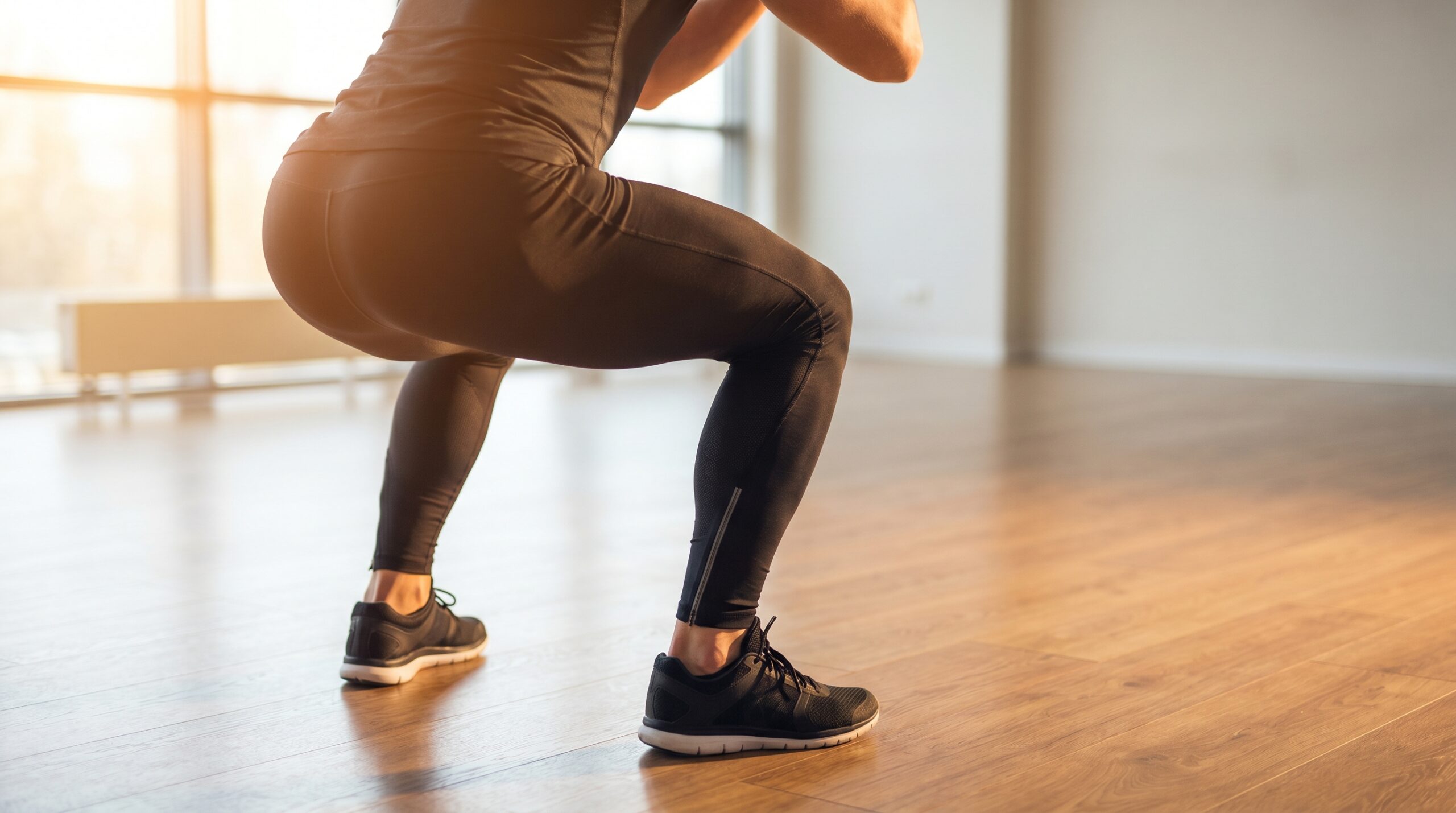
Bodyweight Squats (3 sets of 10 repetitions) Stand with feet slightly wider than shoulder-width apart, toes pointed slightly outward. Keep your chest up and core engaged as you bend your knees and push your hips back, as if sitting into a chair. Lower down until your thighs are parallel to the floor (or as far as comfortable), ensuring your knees track over your toes without extending past them. Push through your heels to return to standing.
Easier modification: Perform quarter squats by only lowering down a few inches, or hold onto a chair for balance.
Harder modification: Pause for 2 seconds at the bottom of each squat, or perform 15 repetitions instead of 10.
Static Lunges (2 sets of 8 repetitions per leg) Step your right foot forward about 2-3 feet, keeping both feet hip-width apart for balance. Lower your back knee toward the floor until both knees form roughly 90-degree angles. Your front knee should stay behind your toes, and your torso should remain upright. Push through your front heel to return to the starting position. Complete all repetitions on one leg before switching.
Easier modification: Hold onto a wall or chair for balance, or reduce the range of motion by not lowering as deeply.
Harder modification: Increase to 12 repetitions per leg, or add a pulse at the bottom of each lunge.
Glute Bridges (3 sets of 12 repetitions) Lie on your back with knees bent and feet flat on the floor, positioned hip-width apart and close to your glutes. Press through your heels to lift your hips toward the ceiling, squeezing your glutes at the top. Your body should form a straight line from shoulders to knees. Lower back down with control, without letting your hips touch the floor between repetitions.
Easier modification: Reduce to 8 repetitions per set.
Harder modification: Hold the top position for 3 seconds on each repetition, or perform single-leg bridges.
Upper-Body Exercises
Building upper-body strength is crucial for daily activities and overall fitness. These exercises require no equipment while effectively targeting your chest, shoulders, arms, and back. Rest for 30-45 seconds between exercises.
Wall Push-Ups (3 sets of 10 repetitions) Stand about 2 feet from a wall and place your hands flat against it at shoulder height and width. Keep your body in a straight line from head to heels as you bend your elbows to bring your chest toward the wall. Push back to the starting position with control. This is an excellent entry point for anyone working toward traditional push-ups in their beginner home workout journey.
Easier modification: Move your feet closer to the wall to reduce the angle and resistance.
Harder modification: Move your feet further from the wall, or transition to incline push-ups using a sturdy chair or bench.
Tricep Dips Using a Chair (2 sets of 8 repetitions) Sit on the edge of a sturdy chair and place your hands next to your hips, fingers pointing forward. Slide your hips off the chair and walk your feet forward slightly. Bend your elbows to lower your body toward the floor, keeping your elbows pointing backward rather than flaring out to the sides. Lower until your elbows reach about 90 degrees, then press back up.
Easier modification: Keep your feet closer to your body with knees bent at 90 degrees, or reduce the range of motion.
Harder modification: Extend your legs further out with only heels on the floor, or increase to 12 repetitions.
Core Exercises
A strong core is foundational for virtually every movement pattern and helps protect your spine during daily activities. These exercises specifically best exercises to lose weight target your abdominal muscles, obliques, and lower back with appropriate intensity for beginners.
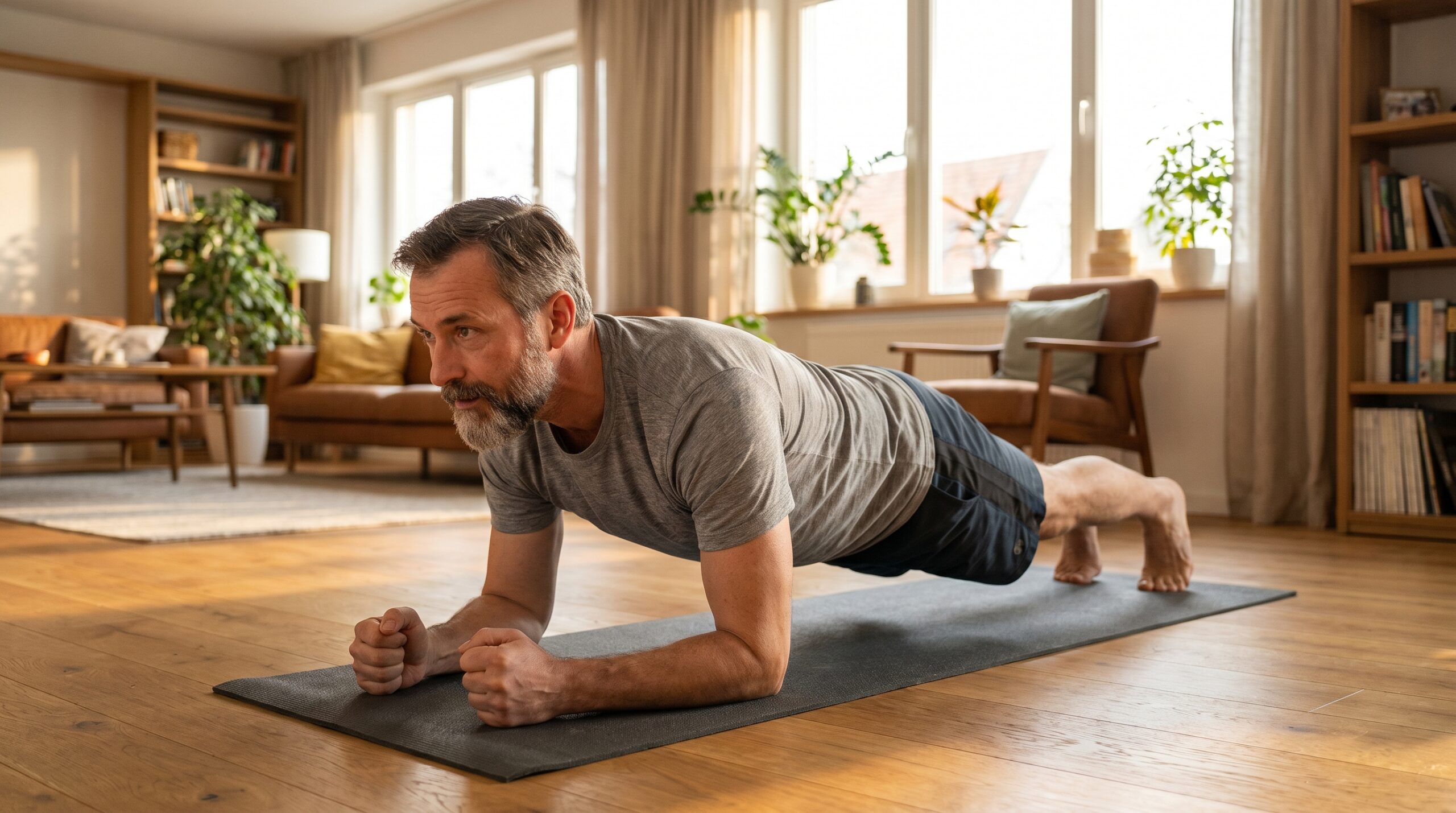
Modified Plank (3 sets of 15-20 seconds) Start on your hands and knees, positioning your hands directly under your shoulders. Step your feet back to create a straight line from your head to your heels (or keep your knees on the ground for a modified version). Engage your core by pulling your belly button toward your spine. Hold this position without letting your hips sag or pike upward.
Easier modification: Perform the plank from your knees, maintaining a straight line from head to knees.
Harder modification: Hold for 30 seconds, or lift one foot slightly off the ground for 5 seconds before alternating.
Dead Bug (3 sets of 8 repetitions per side) Lie on your back with arms extended straight up toward the ceiling and knees bent at 90 degrees, shins parallel to the floor. Slowly lower your right arm overhead while simultaneously straightening and lowering your left leg, keeping both hovering just above the floor. Return to the starting position and alternate sides. Keep your lower back pressed against the floor throughout the movement.
Easier modification: Only lower your arms or legs separately, not simultaneously.
Harder modification: Slow down the movement, taking 3 seconds to lower and 3 seconds to return.
Bird Dog (2 sets of 10 repetitions per side) Start on your hands and knees with a neutral spine. Simultaneously extend your right arm forward and left leg backward until both are parallel to the floor. Hold for 2 seconds, then return to start. Alternate sides with each repetition. Focus on maintaining stability through your core without rotating your hips or shoulders.
Easier modification: Only extend your arm or leg separately until you build stability.
Harder modification: Hold each extension for 5 seconds before alternating.
Low-Impact Alternatives
Not everyone can or should perform high-impact exercises, especially when beginning a fitness journey. These low-impact alternatives provide excellent cardiovascular benefits while being gentle on your joints, making them perfect additions to any beginner home workout routine.
Step-Touches (2 minutes) Step your right foot out to the side, then bring your left foot to meet it. Step your left foot out to the side, then bring your right foot to meet it. Continue alternating sides in a rhythmic pattern. Add arm movements by raising your arms overhead as you step for increased intensity.
Heel Digs (1 minute) Stand with feet together. Alternate exercises to lose weight tapping your right heel forward while bringing your arms back, then your left heel forward. Keep a steady pace and maintain good posture throughout the movement.
Seated Marching (1 minute) Sit on the edge of a chair with good posture. Lift your right knee up as high as comfortable, then lower it. Alternate legs in a marching motion. Swing your opposite arm forward with each knee lift to engage your upper body.
According to Mayo Clinic’s fitness guidelines, low-impact exercise can be just as effective as high-impact alternatives for improving health and building fitness, particularly for beginners or those with joint concerns.
Cool-Down
Cooling down properly helps your heart rate return to normal gradually and reduces muscle soreness. Spend 3-4 minutes on these gentle stretches, holding each for 20-30 seconds.
Standing Quad Stretch Stand on your left leg (hold a wall for balance if needed) and bend your right knee, bringing your right heel toward your glutes. Hold your right ankle with your right hand and gently pull. Keep your knees together and your standing leg slightly bent. Switch sides.
Calf Stretch Step your right foot back about 2 feet, keeping both feet pointing forward. Press your right heel into the floor while bending your left knee slightly. You should feel a stretch in your right calf. Switch sides.
Chest Stretch Clasp your hands behind your back and straighten your arms. Lift your hands slightly away from your body while opening your chest and pulling your shoulder blades together.
Shoulder Stretch Bring your right arm across your body at chest height. Use your left hand to gently pull your right arm closer to your chest. Switch sides.
Seated Forward Fold Sit on the floor with legs extended. Keeping a slight bend in your knees, hinge at your hips and reach toward your toes. You should feel a stretch in your hamstrings and lower back.
Child’s Pose Kneel on the floor, touch your big toes together, and sit back on your heels. Lower your torso between your thighs and extend your arms forward on the floor. Rest here for 30-60 seconds, breathing deeply.
Weekly Workout Plan
Consistency is key to seeing results from your beginner home workout routine. This sustainable weekly plan gradually builds your fitness while allowing adequate recovery time.
Week 1-2: Foundation Phase
Week 3-4: Building Phase
Week 5+: Progression Phase
As you become stronger and more comfortable with these movements, gradually incorporate the harder modifications and consider adding a fourth workout day. Listen to your body and adjust the plan as needed to suit your individual recovery needs.
Safety Tips
Before starting any beginner home workout program, it’s essential to prioritize safety and proper technique. Here are crucial guidelines to follow:
Consult a Healthcare Professional If you have any pre-existing health conditions, injuries, or concerns, consult with a doctor or qualified healthcare provider before beginning this or any exercise program. This is especially important if you’ve been sedentary for an extended period, have cardiovascular issues, joint problems, or are pregnant.
Focus on Form Over Speed Proper form is always more important than completing more repetitions or working faster. Poor form increases injury risk and reduces exercise effectiveness. If you find yourself unable to maintain proper form, reduce the number of repetitions or choose an easier modification.
Listen to Your Body You should feel challenged during your beginner home workout, but never experience sharp or sudden pain. Muscle fatigue and mild discomfort are normal, but joint pain, sharp pains, or dizziness are warning signs to stop immediately. Learn to distinguish between productive discomfort and problematic pain.
Stay Hydrated Keep water nearby and drink before, during, and after your workout. Proper hydration supports performance and recovery.
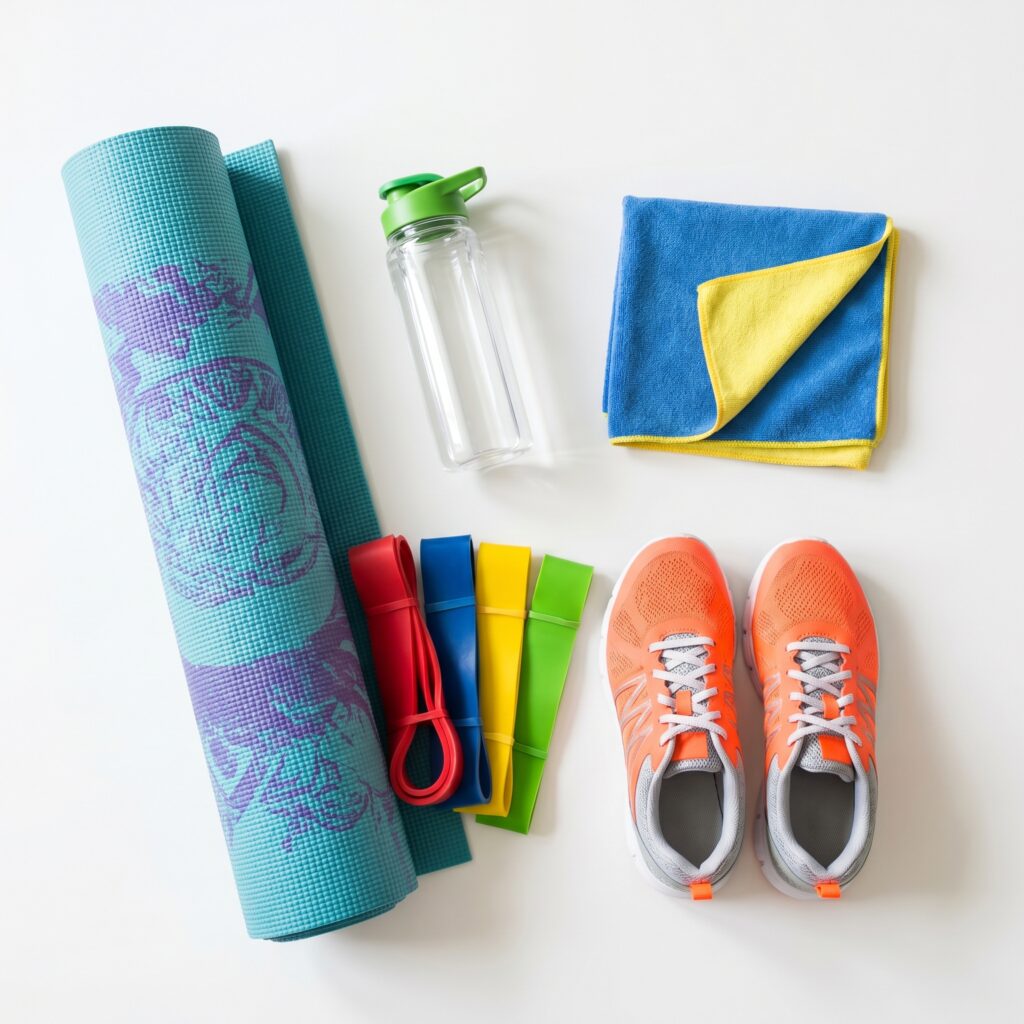
Create a Safe Space Ensure you have enough room to move freely without obstacles. Use a yoga mat or towel for floor exercises if desired, and wear supportive athletic shoes or workout barefoot on a non-slip surface.
Breathe Properly Never hold your breath during exercises. Generally, exhale during the exertion phase (like pushing up from a squat) and inhale during the easier phase (like lowering down). Proper breathing ensures adequate oxygen delivery to your muscles.
Progress Gradually Resist the temptation to do too much too soon. This beginner home workout is designed with appropriate volume for those new to exercise. Adding too many repetitions, sets, or workout days too quickly increases injury risk and burnout.
Warm Up and Cool Down Never skip these essential components. Warming up prepares your body for exercise, while cooling down aids recovery and flexibility.
Frequently Asked Questions
How often should a beginner do a home workout?
As a beginner, aim to complete this workout 3 times per week on non-consecutive days, such as Monday, Wednesday, and Friday. This schedule provides adequate recovery time between sessions, which is when your muscles actually grow stronger. The rest days are crucial for preventing overtraining and reducing injury risk. After 4-6 weeks of consistent training, you can consider adding a fourth day if your body feels recovered and ready. Remember that more isn’t always better—quality and consistency trump quantity when building a sustainable fitness habit.
What if I can’t do all the repetitions or complete the full workout?
This is completely normal and nothing to worry about! Every fitness journey starts somewhere, and it’s far better to complete fewer repetitions with proper form than to rush through with poor technique. If you need to stop and rest, do so. If you can only complete half the recommended repetitions, that’s your starting point.
Use the easier modifications provided for each exercise, and gradually lose weight at home work toward the standard version over time. Progress isn’t linear—some days will feel easier than others, and that’s okay. The goal is consistent effort, not perfection. Within a few weeks, you’ll likely notice significant improvements in your ability to complete the full workout.
Do I need any equipment for this workout?
No equipment is required for this beginner home workout routine. All exercises use your body weight as resistance, making this workout accessible to everyone regardless of budget or available space. The only optional items that might enhance comfort are a yoga mat or towel for floor exercises and a sturdy chair for tricep dips and balance support if needed. As you progress, you may eventually want to add resistance bands or light dumbbells to increase intensity, but these aren’t necessary to start building strength and improving fitness.
How can I make these exercises easier or harder?
Each exercise in this guide includes specific modifications for both easier and harder variations. To make exercises easier, you can reduce the range of motion (like doing quarter squats instead of full squats), decrease repetitions, perform movements from your knees instead of toes, or use support like a wall or chair for balance.
To increase difficulty, extend hold times, add pauses at the challenging point of each movement, increase repetitions or sets, or progress to more advanced positions (like moving from wall push-ups to incline push-ups). The key is finding the appropriate challenge level where you can complete the exercise with proper form while feeling adequately challenged by the final few repetitions.
When can I expect to see results from home workouts?
While individual results vary based on factors like starting fitness level, diet, consistency, and genetics, most beginners notice initial changes within 2-4 weeks. You’ll likely feel stronger and have more energy within the first two weeks, even if visible changes aren’t yet apparent. Improvements in strength, endurance, and form typically become noticeable around week 3-4. Visible physical changes like muscle definition and body composition shifts usually take 6-8 weeks of consistent training combined with proper nutrition.
Remember that progress isn’t just about appearance—improved mood, better sleep, increased energy, and enhanced daily function are equally valuable results. Tracking these non-visual improvements can help maintain motivation during your beginner home workout journey. Taking photos and keeping a workout journal helps you recognize progress that might not be immediately obvious day-to-day.
—
Starting your fitness journey with this 20-minute beginner home workout sets the foundation for a healthier, stronger future. By focusing on proper form, listening to your body, and following the progressive weekly plan, you’ll build sustainable habits that extend far beyond these initial workouts. Remember that everyone starts somewhere, and consistency matters more than intensity when you’re beginning. Stay patient with your progress, celebrate small victories, and trust the process.
Your commitment to showing up and completing these workouts three times per week will compound into significant improvements in strength, endurance, and overall wellbeing. Now you have everything you need to get started—no gym required, no excuses needed, just you and your determination to build a better, healthier version of yourself.
