Making the switch to eco-friendly cleaning doesn’t mean compromising on cleanliness or breaking the bank. In fact, DIY eco friendly home cleaning solutions offer a powerful combination of effectiveness, affordability, and safety that commercial cleaners struggle to match. Whether you’re concerned about indoor air quality, reducing plastic waste, or simply want to know exactly what you’re using around your family and pets, creating your own natural cleaning products puts you in control.
The beauty of homemade cleaning solutions lies in their simplicity. With just a handful of versatile ingredients, you can tackle virtually every cleaning challenge in your home—from cutting through kitchen grease to banishing bathroom mildew. These solutions work with nature rather than against it, harnessing the natural properties of common household ingredients to break down dirt, eliminate odors, and sanitize surfaces without harsh chemicals.
Benefits of Eco Friendly Cleaning
Transitioning to eco-friendly cleaning solutions delivers remarkable advantages that extend far beyond environmental stewardship. Understanding these benefits can help you make informed decisions about the products you bring into your home.
Health and Safety Advantages
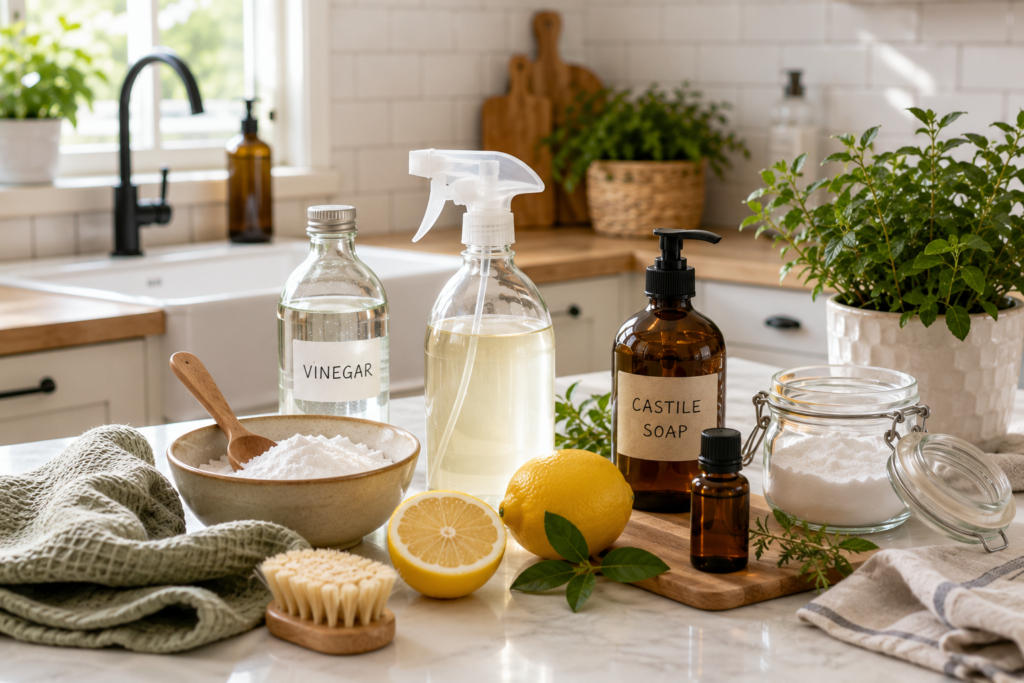
Conventional cleaning products often contain volatile organic compounds (VOCs), ammonia, chlorine bleach, and synthetic fragrances that can irritate respiratory systems, trigger allergies, and cause skin sensitivities. According to the EPA’s Safer Choice program, many traditional cleaners contribute to indoor air pollution at levels two to five times higher than outdoor air. By switching to DIY eco friendly home cleaning solutions, you eliminate exposure to these potentially harmful chemicals while maintaining a spotless home.
Natural cleaning ingredients like vinegar, baking soda, and castile soap have been used safely for generations. They don’t leave behind toxic residues on surfaces where children play or pets roam, making them ideal for cleaning hacks for home families with young children or sensitive individuals. The transparency of knowing exactly what’s in your cleaning products provides invaluable peace of mind.
Environmental Impact
Every bottle of commercial cleaner you replace with a homemade version reduces plastic waste, chemical runoff into waterways, and the carbon footprint associated with manufacturing and transportation. Natural ingredients biodegrade quickly and safely, minimizing ecosystem disruption. When you consider that the average household uses dozens of cleaning products annually, the cumulative environmental benefit becomes substantial.
Cost-Effectiveness
One of the most compelling reasons to embrace DIY cleaning solutions is the dramatic cost savings. A gallon of white vinegar costs a fraction of specialized commercial cleaners, yet it can replace multiple products in your cleaning arsenal. Basic ingredients like baking soda, castile soap, and hydrogen peroxide are incredibly affordable, especially when purchased in bulk. Most homeowners find they spend 60-80% less on cleaning supplies after making the switch, with a typical investment of $20-30 providing enough ingredients for six months to a year of regular cleaning.
Versatility and Customization
Unlike single-purpose commercial cleaners that clutter cabinets, DIY solutions can be adapted for multiple uses. You can customize scents with essential oils, adjust concentration for different cleaning challenges, and create specialized formulas for specific surfaces. This flexibility means fewer bottles to store and greater control over organize your home your cleaning routine.
Essential Ingredients Overview
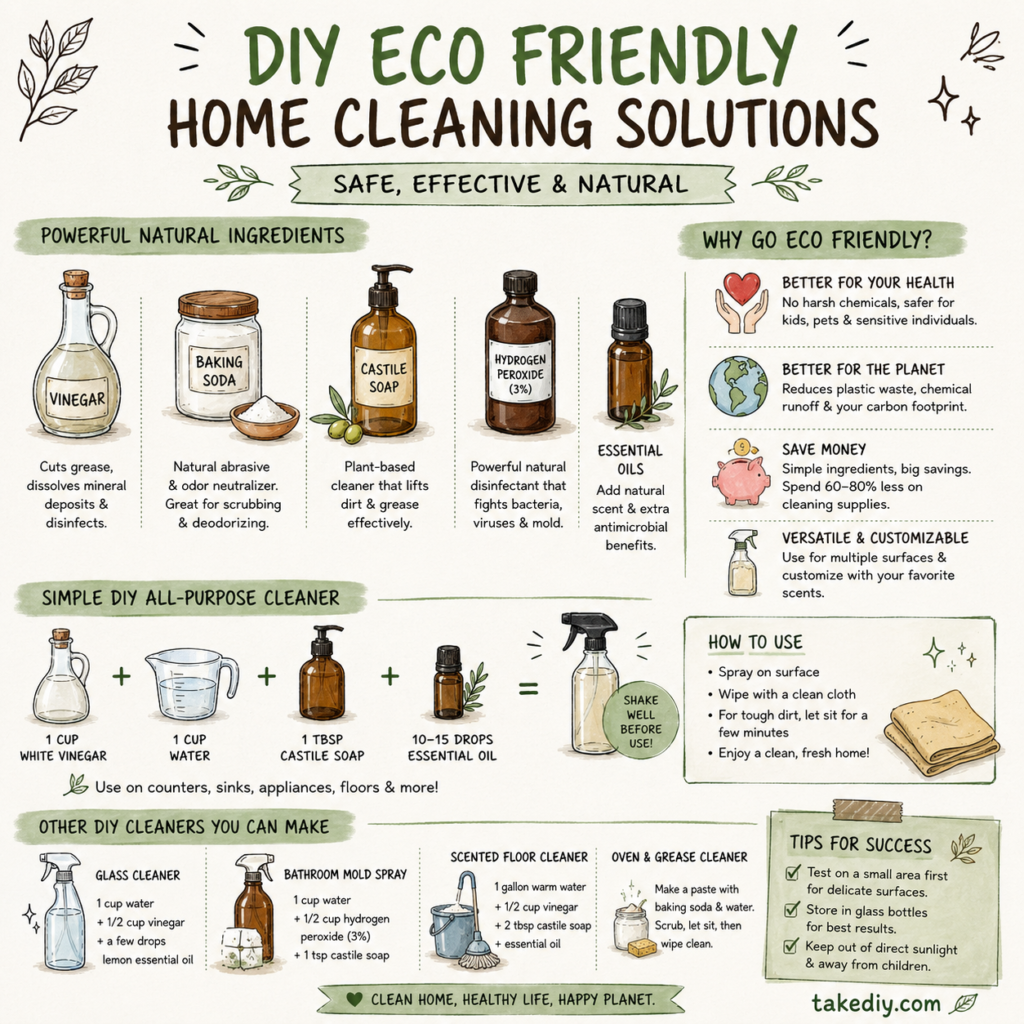
The foundation of effective eco-friendly cleaning lies in understanding a small collection of powerhouse ingredients. Each brings unique properties that, when properly utilized, create cleaning solutions as effective as their chemical-laden counterparts.
White Distilled Vinegar
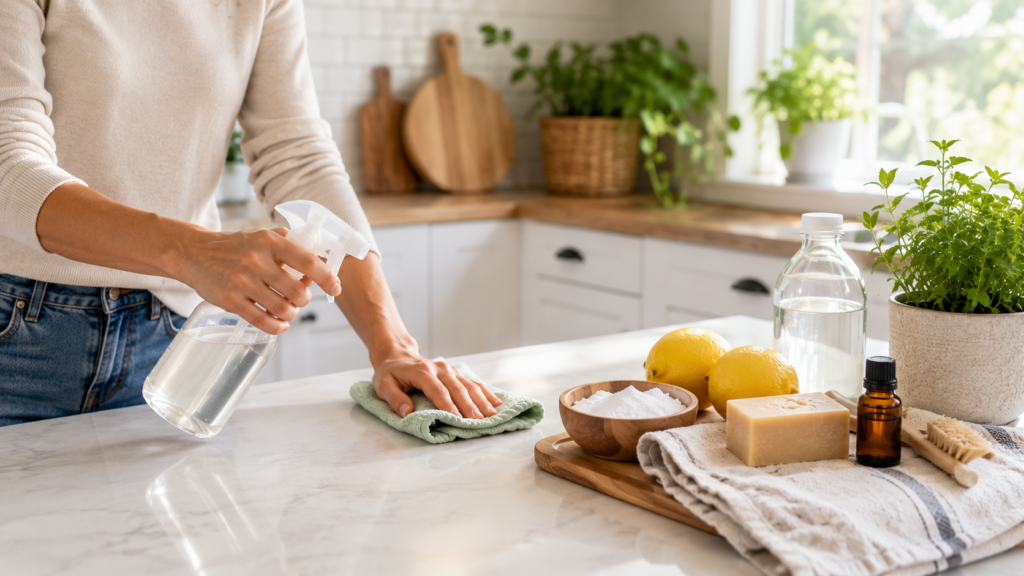
Vinegar’s acetic acid content (typically 5%) makes it a natural disinfectant, deodorizer, and descaler. The acid breaks down mineral deposits, cuts through grease, and kills many common bacteria and mold species. Research shows vinegar can eliminate up to 90% of bacteria and 80% of viruses, making it a legitimate sanitizer for most household purposes. It’s particularly effective on glass, countertops, and hard floors. Never use vinegar on natural stone surfaces like marble or granite, as the acid can etch and damage the finish.
Baking Soda (Sodium Bicarbonate)
This mild alkaline compound is nature’s gentle abrasive and odor neutralizer. Baking soda works through a process called adsorption, where odor molecules physically attach to its porous surface, eliminating rather than masking smells. Its soft crystalline structure provides just enough abrasive power to scrub without scratching most surfaces. The alkaline nature also helps break down acidic stains and grease, making it invaluable for kitchen and bathroom cleaning.
Castile Soap
Derived from vegetable oils rather than synthetic detergents, castile soap is a concentrated, biodegradable cleaner effective on virtually any surface. It works by lowering water’s surface tension, allowing it to penetrate and lift away dirt and oils. A little goes a long way—typically just a tablespoon per quart of water suffices for general cleaning. Choose unscented versions for maximum versatility, or select naturally scented varieties for added aromatherapy benefits.
Hydrogen Peroxide (3% Solution)
This mild antiseptic breaks down into water and oxygen, making it completely non-toxic while providing powerful disinfecting properties. Hydrogen peroxide is particularly effective against bacteria, viruses, and mold spores. It works through oxidation, destroying microorganisms at the cellular level. Always store hydrogen peroxide in its original opaque bottle, as light breaks down its effectiveness. It’s safe for most surfaces but can bleach fabrics and some materials, so test in inconspicuous areas first.
Essential Oils
Beyond their pleasant aromas, many essential oils possess genuine antimicrobial properties. Tea tree oil, for instance, has been extensively studied for its antifungal and antibacterial effects. Lemon oil cuts grease and provides a fresh scent, while lavender offers calming aromatherapy benefits alongside mild antiseptic properties. Use essential oils sparingly—usually 10-20 drops per batch of cleaner suffices.
Lemon Juice
The citric acid in lemon juice provides similar benefits to vinegar, including antibacterial properties and descaling ability. It’s particularly effective on copper and brass, and its fresh scent makes it ideal for kitchen applications. Lemon juice also acts as a natural bleaching agent for stains.
Salt
Coarse salt serves as an excellent abrasive for scrubbing stubborn stains and can enhance the scouring power of other ingredients. It also has mild antiseptic properties and can help absorb fresh spills.
According to Penn State Extension’s guide on https://extension.psu.edu/cleaning-with-less-toxic-products, these simple ingredients form the basis of comprehensive home cleaning when used correctly and combined strategically.
Step-By-Step Recipes
These tested formulas provide effective, safe cleaning for every area of your home. Always label your creations clearly with contents and date prepared.
All-Purpose Cleaner
This versatile formula handles countertops, appliances, walls, and most hard surfaces.
Ingredients:
- 1 cup white distilled vinegar
- 1 cup water
- 20 drops essential oil (lemon, tea tree, or lavender)
- 1 teaspoon castile soap (optional for extra cleaning power)
Instructions: 1. Combine vinegar and water in a spray bottle 2. Add essential oils and shake well 3. Add castile soap last if using, and gently swirl to avoid excessive foam 4. Spray on surfaces, let sit for 1-2 minutes, then wipe clean with a microfiber cloth 5. For heavily soiled areas, spray and let sit for 5-10 minutes before wiping
Shelf Life: 3-6 months when stored in a cool, dark place
Scouring Powder
Perfect for sinks, tubs, tile, and stovetops requiring gentle abrasive action.
Ingredients:
- 1 cup baking soda
- 1/4 cup salt
- 10 drops tea tree or lemon essential oil
Instructions: 1. Mix baking soda and salt in an airtight container 2. Add essential oil drops and stir thoroughly to distribute evenly 3. Let mixture sit for 24 hours to allow oils to fully incorporate 4. To use, sprinkle powder on surface, spray with water or vinegar solution, scrub with a sponge, then rinse thoroughly 5. For extra tough stains, make a paste with a small amount of water
Shelf Life: Indefinite when kept dry
Glass and Mirror Cleaner
Achieves streak-free shine on windows, mirrors, and glass surfaces.
Ingredients:
- 1 cup water
- 1 cup rubbing alcohol (70% isopropyl) or white vinegar
- 1 tablespoon cornstarch
Instructions: 1. Combine all ingredients in a spray bottle 2. Shake vigorously until cornstarch dissolves (shake before each use) 3. Spray on glass surfaces 4. Wipe with newspaper, microfiber cloth, or coffee filters for best streak-free results 5. Buff dry in circular motions
Shelf Life: 2-3 months
Disinfecting Spray
Provides sanitizing power for bathrooms, kitchen surfaces, and high-touch areas.
Ingredients:
- 1 cup water
- 1/4 cup hydrogen peroxide (3%)
- 1/4 cup rubbing alcohol
- 10 drops tea tree essential oil
- 10 drops eucalyptus essential oil
Instructions: 1. Mix all ingredients in an opaque spray bottle (hydrogen peroxide degrades in light) 2. Shake well before each use 3. Spray surfaces thoroughly and let sit for 5-10 minutes for maximum disinfecting effect 4. Wipe clean or allow to air dry 5. Use weekly in bathrooms and daily on high-touch surfaces like doorknobs and light switches
Shelf Life: 1-2 months
Floor Cleaner
Safe and effective for tile, vinyl, and sealed hardwood floors.
Ingredients:
- 1 gallon warm water
- 1/4 cup white vinegar
- 1/4 cup rubbing alcohol
- 3-4 drops dish soap or castile soap
- 10 drops essential oil (optional)
Instructions: 1. Combine all ingredients in a bucket 2. Mop floors as usual, wringing mop well to avoid oversaturation 3. No rinsing necessary 4. For sealed hardwood, reduce soap to 1-2 drops and ensure mop is barely damp
Shelf Life: Make fresh for each use
Bathroom Mold and Mildew Spray
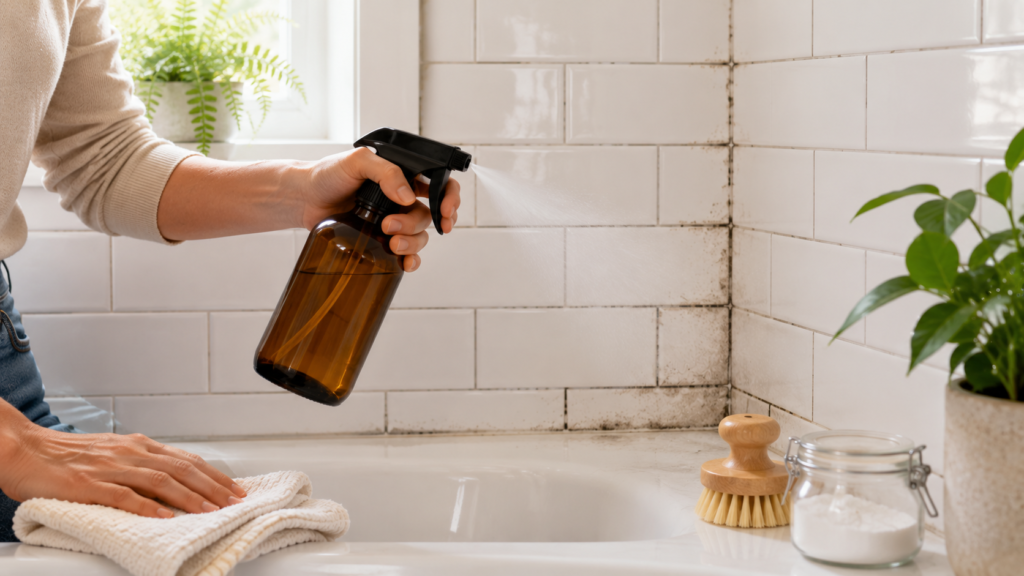
Targets fungal growth in damp areas while preventing recurrence.
Ingredients:
- 1 cup hydrogen peroxide (3%)
- 1 cup water
- 2 tablespoons boric acid (optional, for heavy mold)
- 10 drops tea tree oil
Instructions: 1. Mix ingredients in a dark spray bottle 2. Spray affected areas generously 3. Let sit for at least 10 minutes (up to 1 hour for heavy mold) 4. Scrub with a brush and rinse thoroughly 5. For prevention, spray weekly in moisture-prone areas
Shelf Life: 1 month
Furniture Polish
Nourishes wood while creating a beautiful, natural shine.
Ingredients:
- 1/4 cup olive oil or jojoba oil
- 1/4 cup white vinegar or lemon juice
- 10 drops lemon essential oil (optional)
Instructions: 1. Combine ingredients in a glass jar or bottle 2. Shake vigorously before each use 3. Apply small amount to a soft cloth (never directly on furniture) 4. Rub into wood following the grain 5. Buff with a clean, dry cloth for shine
Shelf Life: 6 months
Drain Cleaner and Deodorizer
Maintains clear drains and eliminates odors naturally.
Ingredients:
- 1/2 cup baking soda
- 1 cup white vinegar
- 1 kettle of boiling water
Instructions: 1. Pour baking soda directly into drain 2. Follow with vinegar (it will foam vigorously) 3. Let sit for 15-30 minutes 4. Flush with boiling water 5. Use monthly for maintenance
Note: This method works for maintenance, not severe clogs
Oven Cleaner Paste
Tackles baked-on grease and grime without harsh fumes.
Ingredients:
- 1 cup baking soda
- 1/4 cup salt
- Water (enough to form paste)
- 1/2 cup vinegar (for final rinse)
Instructions: 1. Mix baking soda and salt, adding water gradually to form thick paste 2. Apply generously to oven surfaces, avoiding heating elements 3. Let sit overnight or for at least 12 hours 4. Spray with vinegar to activate cleaning action 5. Scrub with a sponge or scraper 6. Wipe clean with damp cloths until all residue is removed
Shelf Life: Make fresh for each use
Best Uses and Safety Tips
Maximizing the effectiveness of your DIY eco friendly home cleaning solutions requires understanding proper application techniques and observing important safety precautions.
Surface-Specific Guidelines
Different materials require different approaches. For granite and marble countertops, avoid vinegar and lemon juice entirely—use castile soap diluted in water instead. Wood surfaces benefit from minimal moisture and oil-based polishes. Stainless steel responds well to vinegar solutions but should be wiped in the direction of the grain to avoid streaking. Always test new practical life hacks cleaning solutions on inconspicuous areas before applying to entire surfaces.
Proper Storage Practices
Store all homemade cleaners in clearly labeled containers with preparation dates. Use glass containers when possible, especially for solutions containing essential oils, as these can degrade plastic over time. Keep hydrogen peroxide-based solutions in opaque bottles to prevent light degradation. Store all cleaning products away from direct sunlight and heat, and keep them out of reach of children and pets despite their natural composition.
Application Techniques
For spray cleaners, allow solutions to dwell on surfaces for the recommended time—this contact time is crucial for breaking down dirt and killing germs. Use microfiber cloths instead of paper towels for better cleaning action and reduced waste. When scrubbing, work in circular motions for even coverage, and always rinse thoroughly after using abrasive cleaners to prevent residue buildup.
Critical Safety Warnings
Never mix vinegar with hydrogen peroxide in the same bottle—this creates peracetic acid, which can irritate skin, eyes, and respiratory systems. You can use them sequentially (spray one, wipe, then spray the other) but never combine them in advance.
Never mix vinegar or lemon juice with baking soda for storage—while the fizzing reaction is useful for immediate cleaning (like drains), storing them together neutralizes both ingredients, leaving you with ineffective salt water.
Never add vinegar to castile soap-based cleaners in high concentrations—the acid breaks down the soap, creating clumpy, ineffective mixtures. Small amounts work fine, but maintain proper ratios.
Never use undiluted essential oils on surfaces or skin—always dilute them in carrier solutions. Some essential oils can be toxic to pets, particularly cats (see FAQ section).
Enhancing Effectiveness
For stubborn stains, try sequential cleaning: apply baking soda paste first, let it sit, scrub, then follow with vinegar spray for a dual-action approach. Warm or hot solutions generally clean better than cold ones—heat helps break down grease and activates ingredients. Increase essential oil concentrations slightly for rooms requiring extra disinfection, but never exceed 30-40 drops per cup of solution.
Maintenance Schedule
Establish a regular cleaning routine with your homemade solutions. Daily: wipe counters and high-touch surfaces with all-purpose cleaner. Weekly: clean bathrooms thoroughly with disinfecting spray, mop floors, clean glass surfaces. Monthly: deep clean appliances, treat drains, polish furniture. This consistency prevents buildup and makes each cleaning session easier.
Complementing Commercial Products
While DIY solutions handle most household cleaning, you might choose EPA Safer Choice certified products for specific challenging applications. These certified products meet strict safety standards and can complement your eco-friendly cleaning routine without compromising your health or environmental values.
Frequently Asked Questions
Are DIY eco-friendly cleaners as effective as commercial cleaners?
Yes, when properly formulated and used correctly, DIY eco-friendly cleaners are equally effective for most household cleaning tasks. The acetic acid in vinegar, for example, kills 90% of bacteria and 80% of viruses—comparable to many commercial disinfectants. However, commercial cleaners certified for specific pathogens (like hospital-grade disinfectants) may be stronger for extreme situations. For everyday household cleaning, natural ingredients provide excellent results. The key is allowing adequate contact time and using appropriate concentrations for each task. Many people find DIY cleaners actually work better because they can customize formulas for specific needs and aren’t diluted with unnecessary fillers.
How long do homemade cleaning solutions last?
Shelf life varies by formula. Vinegar-based cleaners last 3-6 months when properly stored. Hydrogen peroxide solutions should be used within 1-2 months as the peroxide gradually breaks down into water. Dry ingredients like baking soda powder last indefinitely when kept dry. Solutions containing water can develop bacteria over time, so it’s best to make smaller batches and refresh them every few months. Always smell solutions before using—if they’ve developed an off odor, discard them. Adding a small amount of rubbing alcohol to water-based formulas can extend shelf life. Dating your bottles helps track freshness, and storing them in cool, dark locations maximizes longevity.
Can I use essential oils if I have pets or allergies?
This requires careful consideration. For allergies, test essential oils individually before incorporating them into cleaners—apply a diluted drop to your skin and wait 24 hours to check for reactions. If you’re sensitive, you can omit essential oils entirely; the base ingredients still clean effectively. For pets, especially cats, extra caution is necessary.
Cats lack certain liver enzymes needed to metabolize many essential oils, making tea tree, eucalyptus, peppermint, citrus, and pine oils potentially toxic. Dogs generally tolerate essential oils better but can still be sensitive. If you have pets, either skip essential oils, use pet-safe options like cedarwood or chamomile in very low concentrations, or use cleaners only in well-ventilated areas where pets won’t contact wet surfaces. Always allow surfaces to dry completely before pet access.
What ingredients should I never mix when making DIY cleaners?
Several combinations create dangerous reactions. Never mix vinegar (or any acid) with hydrogen peroxide in a bottle—this creates peracetic acid, which can harm respiratory systems and irritate skin severely. Never mix hydrogen peroxide with chlorine bleach—this produces toxic chlorine gas. Never combine vinegar with bleach either—this also creates chlorine gas, which can be fatal in enclosed spaces. Don’t mix ammonia-based products with bleach—another source of toxic gas.
Avoid combining castile soap with undiluted vinegar or lemon juice in stored solutions, as acids break down the soap’s effectiveness. While baking soda and vinegar together create the famous fizzing reaction useful for immediate cleaning, storing them combined neutralizes both ingredients. When using multiple natural ingredients, either combine them immediately before use or research their compatibility first.
Where can I find affordable ingredients for homemade cleaning solutions?
Most DIY cleaning ingredients are available at grocery stores, but bulk retailers offer the best value. Purchase white vinegar in gallon jugs from warehouse stores or discount grocers—you’ll pay a fraction of the price of buying multiple small bottles. Large boxes of baking soda from the baking aisle cost significantly less per ounce than small boxes. Buy castile soap concentrate online or at health food stores; one bottle lasts months since you use only small amounts. Hydrogen peroxide comes cheaply at pharmacies in standard brown bottles.
Essential oils require a slightly larger initial investment but last a long time—look for reputable brands online or at natural food stores, avoiding synthetic fragrance oils which lack therapeutic properties. Rubbing alcohol costs very little at drugstores. Salt is universally affordable. Many people spend just $20-30 initially to stock their natural cleaning pantry, with ingredients lasting 6-12 months for an average household.
Conclusion
Embracing DIY eco friendly home cleaning solutions represents a meaningful step toward a healthier home and planet. These simple, effective recipes prove that powerful cleaning doesn’t require harsh chemicals, excessive plastic packaging, or expensive specialty products. Armed with just a few versatile ingredients—vinegar, baking soda, castile soap, hydrogen peroxide, and essential oils—you can create a complete cleaning system that addresses every household need from sparkling windows to sanitized bathrooms.
The benefits extend far beyond environmental consciousness. Your indoor air quality improves immediately when you eliminate volatile organic compounds and synthetic fragrances. Your family’s exposure to potentially harmful chemicals decreases dramatically. Your budget stretches further with affordable ingredients that replace dozens of single-purpose products. And you gain the satisfaction and empowerment of knowing exactly what you’re using in your home.
Transitioning to natural cleaning solutions doesn’t require perfection. Start with one or two recipes that address your most frequent cleaning tasks—perhaps the all-purpose cleaner and glass cleaner. As you gain confidence and see results, gradually expand your repertoire. Keep notes on what works best in your home, adjust ratios to suit your preferences, and experiment with different essential oil combinations.
Remember that consistency matters more than intensity. Regular maintenance with gentle, natural cleaners prevents the buildup that requires aggressive products. By making eco-friendly cleaning a habit rather than an occasional effort, you’ll discover that natural approaches actually simplify your routine while delivering professional-level results.
Your choice to use DIY eco friendly home cleaning solutions creates ripples of positive impact—cleaner water systems, reduced plastic waste, fewer manufacturing emissions, and a healthier environment for future generations. Every spray bottle you refill with homemade cleaner instead of purchasing a new commercial product represents a small victory for sustainability. Collectively, these choices matter.
The path to a cleaner, greener home starts with a single batch of homemade cleaner. With the recipes, knowledge, and confidence you’ve gained from this guide, you’re fully equipped to transform your cleaning routine into an eco-friendly practice that benefits your family, your budget, and the planet we all share.
