Small Space Home Office: 10 Smart Ideas
Working from home has become the new normal for millions of people, but not everyone has the luxury of a dedicated office room. Whether you’re living in a studio apartment, sharing space with roommates, or simply don’t have an extra bedroom to spare, creating a functional home office in a small space is entirely possible—and you don’t need to break the bank to do it. With a budget under $200 and some creative thinking, you can transform even the tiniest corner into a productive workspace that keeps you organized and motivated throughout the workday.
The key to success lies in maximizing every inch of available space while keeping things functional and aesthetically pleasing. From utilizing vertical storage to choosing multi-functional furniture, small space home offices require thoughtful planning and smart product choices. This guide will walk you through ten actionable, budget-friendly ideas that will help you create an efficient workspace without sacrificing style or comfort.
Why Space Matters
The physical environment where you work has a profound impact on your productivity, mental health, and overall job satisfaction. Research suggests that a well-designed home office setup can improve focus, enhance productivity, and help reduce stress levels. Employees who work in organized, comfortable environments often report higher motivation and better overall work performance. Creating a workspace that supports both productivity and well-being can make a noticeable difference in your daily routine and long-term job satisfaction.
Even in small spaces, having a designated work area helps your brain distinguish between “work mode” and “home mode.” This psychological boundary is crucial for maintaining work-life balance, especially when your office and living room occupy the same physical space. Without this separation, many people struggle with overworking or, conversely, with constant distractions that tank productivity.
Small space home offices also force you to be intentional about what you keep in your workspace. Clutter accumulates quickly in tight quarters, and small living room decor excess items can create visual chaos that makes it harder to focus. By carefully selecting only the essentials and organizing them efficiently, you create a cleaner, more professional environment that supports better work habits. The constraint of limited space actually becomes an advantage when it pushes you toward minimalism and purposeful design.
Beyond productivity, your workspace affects your physical health. Poor ergonomics in cramped quarters can lead to neck pain, back problems, and eye strain. Taking the time to set up your small office correctly—with proper desk height, appropriate lighting, and adequate storage—protects your body from the repetitive strain injuries that plague remote workers.
Desk Choices
Choosing the right desk is the foundation of any home office, and for small spaces, this decision becomes even more critical. Traditional bulky desks simply won’t work, but fortunately, there are numerous compact and multi-functional options available that fit perfectly within a $200 budget.
Wall-Mounted Fold-Down Desks: These space-saving marvels attach directly to your wall and fold up when not in use, freeing up valuable floor space. The Homfa Wall Mounted Table (around $70-90) provides a sturdy work surface that disappears completely when you’re done for the day. Installation is straightforward, and the desk can hold a laptop, notebook, and coffee cup comfortably. This option works particularly well in bedrooms or living rooms where you need the space to serve multiple purposes.
Corner Desks: Corners are often underutilized in small spaces, making them perfect for a compact workstation. The Bestier L-Shaped Desk (approximately $90-110) fits snugly into corners and provides surprising surface area without eating up the middle of your room. The L-shape gives you distinct zones for your computer and paperwork, helping keep things organized even in tight quarters.
Floating Shelves as Desks: For ultra-small spaces, consider mounting a deep floating shelf renter friendly decor ideas as your desk surface. A sturdy 36-inch floating shelf from Home Depot or Lowe’s costs around $30-50 and can support a laptop and small accessories. Pair it with a wall-mounted shelf above for additional storage, and you’ve created a minimalist workstation for under $100.
Lap Desks and Portable Options: If permanent installation isn’t possible (rental restrictions, for instance), consider a high-quality lap desk like the LapGear Designer Lap Desk ($40-50). While not a replacement for a proper desk, it offers flexibility and can be stored easily when not needed. Pair it with a comfortable floor cushion or use it while sitting on your couch or bed.
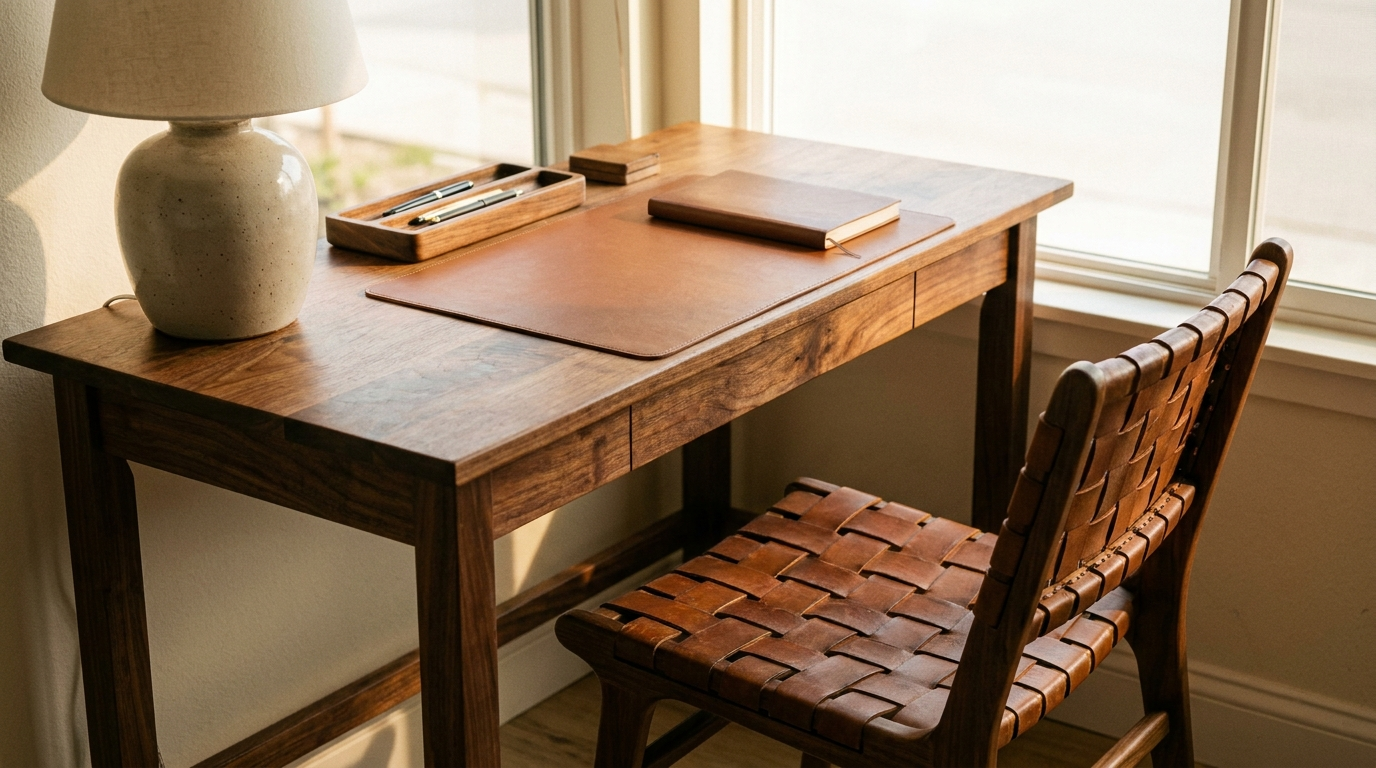
Narrow Console Tables: Don’t overlook narrow console tables, which typically measure only 10-14 inches deep but provide a legitimate work surface. The Convenience Concepts American Heritage Console Table (around $80-100) offers a slim profile with additional shelf space underneath, making it perfect for tight hallways or behind sofas.
Storage Solutions
Storage challenges multiply in small home offices where every item needs a designated home to prevent overwhelming clutter. The secret is thinking vertically and choosing multi-functional pieces that work harder for your space.
Vertical Wall Organizers: Mount pegboards, wall grids, or magnetic boards to take advantage of unused wall space. A basic pegboard setup costs around $20-30 and can hold everything from office supplies to charging cables. The Wallniture Punch Metal Wall File Organizer (set of 4 for about $25) mounts directly to walls and keeps papers, folders, and magazines off your desk surface.
Rolling Carts: A small rolling cart serves multiple purposes—it stores supplies, wheels under your desk when not needed, and can even function as a mobile standing desk converter. The IKEA RÅSKOG cart ($30-40) has become an iconic small-space solution, offering three tiers of storage in a compact footprint. Use it for printer paper, office supplies, books, or even as a mini coffee station.
Over-Door Organizers: The back of your door is prime real estate for storage. Over-door organizers designed for shoes or accessories work beautifully for office supplies. A 24-pocket hanging organizer costs around $15-20 and can hold scissors, pens, sticky notes, chargers, and more—all within easy reach but out of sight.
Desk Organizers with Charging Stations: Consolidate your tech accessories with an organizer that includes built-in charging capabilities. The Marbrasse Bamboo Desk Organizer ($25-35) combines storage compartments with a phone stand and charging station, reducing cable clutter while keeping everything accessible.
Under-Desk Storage: Maximize the space beneath your work surface with rolling drawer units or hanging baskets. The Iris USA Storage Cart with Drawers ($35-45) fits under most desks and provides three drawers for files, supplies, and personal items. Alternatively, install adhesive hooks under your desk to hang headphones, bags, or cable organizers.
File Boxes and Magazine Holders: Cardboard file boxes and magazine holders cost just a few dollars each but provide excellent vertical storage for papers, notebooks, and folders. Line them up on a shelf or under your desk to create an organized filing system without the bulk of a traditional filing cabinet.
Lighting Tips
Proper lighting is non-negotiable for a functional home office, yet it’s often overlooked in small spaces where natural light may be limited. Poor lighting causes eye strain, headaches, and fatigue—problems that compound when you’re working in close quarters.
Layer Your Lighting: The best lighting schemes combine three types: ambient (overall room lighting), task (directed at your work surface), and accent (decorative or mood lighting). In a small space home office, you need at least two of these layers to reduce eye strain and create visual interest.
Clamp Lamps: These space-savers attach directly to your desk or shelf edge, providing focused task lighting without taking up precious surface area. The Simple Designs Clamp Light ($15-20) offers adjustable positioning and works with LED bulbs to reduce energy costs. Position it to illuminate your keyboard and documents without creating screen glare.
LED Desk Lamps with Dimming: Invest in an LED desk lamp with adjustable brightness and color temperature. The TaoTronics LED Desk Lamp ($35-45) offers multiple brightness levels and color modes, allowing you to customize your lighting throughout the day. Cooler light (5000-6500K) promotes alertness during morning work sessions, while warmer tones (3000-4000K) reduce eye strain in the afternoon.
Historic Preservation Standards for Modern Spaces: While typically applied to older buildings, the principles outlined by the National Park Service regarding appropriate lighting design can inform even modern small-space setups. The key takeaway is that lighting should be functional without being intrusive, and in small spaces, this means avoiding harsh overhead fixtures that create shadows and choosing directed task lighting instead. Thoughtful lighting design principles can help create a more comfortable and efficient workspace.
String Lights and Strip Lights: For ambient lighting on a budget, LED string lights ($10-15) or adhesive LED strip lights ($12-20) add gentle illumination without requiring floor or desk space. Mount LED strips under floating shelves to illuminate your work surface or along the top edge of walls to create soft overhead lighting that doesn’t feel oppressive in tight quarters.
Natural Light Optimization: If you have a window, position your desk perpendicular to it rather than facing it directly. This prevents screen glare while maximizing natural light. Keep window treatments simple—sheer curtains or adjustable blinds allow you to control light levels throughout the day. A small desk mirror ($10-15) positioned strategically can also help bounce natural light deeper into your workspace.
Before After
Transformations speak louder than theory, so let’s walk through three real-world small space home office makeovers that demonstrate these principles in action—all completed for under $200.
Bedroom Corner Transformation: Before, a client had a cramped bedroom corner with clothes piled on a chair and no dedicated workspace. After installing a wall-mounted fold-down desk ($85), adding a wall grid organizer ($20), a clamp lamp ($18), and a small rolling cart ($35), the corner became a functional office that disappeared completely when folded up. Total investment: $158. The key was utilizing vertical space and choosing furniture that folded away, allowing the bedroom to maintain its primary function while accommodating work needs.
Closet Office Conversion: Another creative solution involved converting a small reach-in closet into a “cloffice.” By removing the closet doors, installing a narrow floating shelf as a desk ($45), mounting a pegboard on the back wall ($22), adding affordable LED strip lighting ($15), and using wall-mounted magazine holders ($12), this previously wasted space became a secluded workstation. A small cushion ($20) made the basic folding chair more comfortable. The closet’s natural alcove provided excellent privacy and noise reduction during video calls. Total cost: $114. The advantage here was creating a truly separate workspace that could be curtained off during non-work hours.
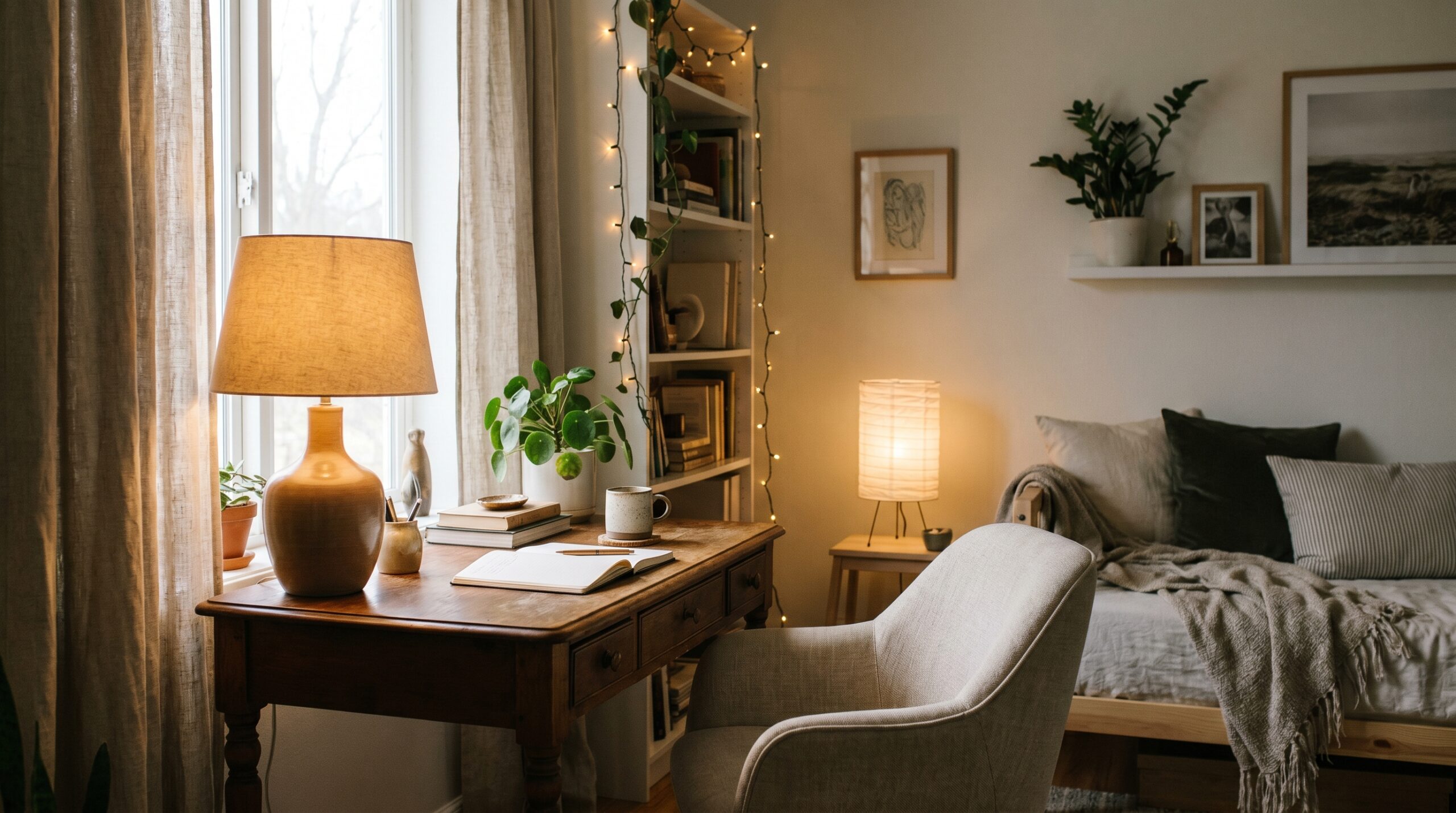
Living Room Multi-Function Zone: A third transformation addressed the common challenge of incorporating a workspace boot storage hacks into an active living room. Using a narrow console table ($95) placed behind the sofa, adding matching storage boxes ($25) that doubled as decor on the lower shelf, a stylish desk lamp ($30), and over-door organizers ($15) hidden on the nearby coat closet door, this setup maintained the room’s aesthetic while providing full office functionality. The console table looked intentional as a decorative piece while secretly serving as a full-time desk. Total investment: $165. This approach worked because the furniture complemented the existing decor rather than announcing itself as “office equipment.”
The common threads in these transformations include maximizing vertical space, choosing multi-functional furniture, investing in proper lighting, and keeping aesthetics in mind. Each space felt larger after the transformation because clutter was contained and every item had a purpose. The psychological impact of these changes was immediate—all three individuals reported feeling more motivated and productive once their spaces were properly organized.
10 Smart Ideas Summarized
Let’s consolidate everything into ten actionable strategies you can implement today:
1. Use Wall-Mounted Desks: Save floor space with fold-down desks that disappear when not in use ($70-90).
2. Exploit Corners: Corner desks maximize awkward spaces that usually go unused ($90-110).
3. Go Vertical: Install pegboards, wall grids, and floating shelves to move storage off your desk ($20-40).
4. Choose Rolling Storage: Mobile carts slide under desks and provide flexible storage options ($30-45).
5. Convert Closets: Transform unused closets into secluded “cloffices” with minimal investment ($100-150).
6. Layer Your Lighting: Combine task lighting with ambient options to reduce eye strain ($25-60).
7. Utilize Door Space: Over-door organizers provide hidden storage for supplies ($15-20).
8. Select Multi-Function Furniture: Console tables, benches with storage, and desks with shelves work double duty ($80-100).
9. Think Portable: High-quality lap desks and folding options provide flexibility for the smallest spaces ($40-50).
10. Contain Clutter: Invest in attractive storage boxes and organizers that maintain your room’s aesthetic ($20-40).
Each of these ideas costs well under $200 individually, and even combining several still keeps you within budget. The key is starting with your biggest pain point—whether that’s lack of desk space, inadequate lighting, or overwhelming clutter—and addressing it first. Build from there as budget allows.
Frequently Asked Questions
How do I create a home office if I don’t have a spare room?
You don’t need a dedicated room to create an effective home office. Look for underutilized spaces throughout your home: bedroom corners, closets, wide hallways, areas under stairs, or even sections of your kitchen or dining room. The key is defining the space with purpose—use a specific desk or table, add task lighting, and create visual boundaries with furniture placement or room dividers. Many people successfully work from bedroom corners using wall-mounted desks that fold away after hours, maintaining the room’s primary function while accommodating work needs. Even a well-organized cart that you roll out daily can serve as a mobile office when permanent space isn’t available.
What are the best desk options for a very small corner?
For tiny corners, consider triangular corner desks that fit snugly into 90-degree angles, wall-mounted fold-down desks that collapse when not in use, or floating shelves installed at desk height (typically 28-30 inches from the floor). The Homfa Wall Mounted Desk and similar fold-down options are particularly effective because they provide a legitimate work surface without permanently claiming floor space. Alternatively, a narrow console table (10-12 inches deep) placed diagonally across a corner can create a surprisingly functional workspace. If installation isn’t possible, a lap desk combined with a comfortable floor cushion or low chair can turn floor corners into workable spaces.
How can I hide office clutter in a living room setup?
The best strategy for hiding office clutter in shared spaces is choosing furniture that doesn’t look like office equipment. Use console tables or attractive writing desks instead of traditional office desks. Store supplies in decorative boxes, woven baskets, or magazine holders that complement your living room decor.
Install a decorative room screen or bookshelf to partially shield your workspace from the rest of the room. Keep frequently-used items in a portable caddy or rolling cart that can be wheeled into a closet at day’s end. Cable management is crucial—use cord covers, cable boxes, and velcro ties to keep wires hidden. Finally, maintain a strict end-of-day cleanup routine where you put away papers and supplies, leaving only decorative or neutral items visible.
Is vertical storage always the best solution for small spaces?
While vertical storage is often ideal for small spaces, it’s not universally the best solution. Consider ceiling height—in rooms with low ceilings, tall storage can make the space feel more cramped. Also consider accessibility; if you have mobility limitations, reaching overhead storage repeatedly throughout the day isn’t practical. Vertical storage works brilliantly for items you don’t need constant access to, but frequently-used supplies should remain within arm’s reach at desk level.
The best approach combines vertical storage for reference materials and occasional-use items with horizontal desktop organizers for daily essentials. Also consider that some people find wall-mounted storage visually cluttered; if open shelving stresses you out, closed cabinet storage might be better even if it takes up more floor space.
What’s the ideal lighting setup for a small home office to prevent eye strain?
The ideal setup combines three elements: adequate ambient lighting (overall room brightness), focused task lighting (directed at your work surface), and proper screen positioning to minimize glare. Aim for 300-500 lumens of ambient light in the room, then add a desk lamp providing 400-800 lumens of focused light on your keyboard and documents. Position your desk lamp to the side opposite your dominant hand to prevent shadows (lamp on the left if you’re right-handed).
Use LED bulbs with adjustable color temperature—cooler light (5000K-6500K) for morning alertness and warmer light (3000K-4000K) for afternoon work. Position your computer monitor perpendicular to windows rather than facing them directly to reduce glare. Keep your screen at arm’s length away and slightly below eye level. Take regular breaks using the 20-20-20 rule: every 20 minutes, look at something 20 feet away for 20 seconds. If possible, add a small plant or decorative element in your sightline to give your eyes an alternative focal point.
Conclusion
Creating a functional, comfortable home office in a small space doesn’t require a massive budget or professional interior design skills. With thoughtful planning, creative use of vertical space, and smart product choices, you can transform even the tiniest corner into a productive workspace for under $200. The key principles—maximizing vertical storage, choosing multi-functional furniture, investing in proper lighting, and maintaining organization—apply regardless of your specific space constraints.
Remember that your home office is a living space that will evolve with your needs. Start with the basics (a stable work surface and proper lighting), then gradually add storage and organizational elements as you discover what works for your workflow. The constraint of limited space actually becomes an advantage when it forces you to be intentional about what you keep and how you arrange it.
Your workspace significantly impacts your mental health, productivity, and work-life balance. By investing time and a modest budget into creating a dedicated work area—even if it’s just a small corner—you’re investing in your professional success and personal well-being. The transformation doesn’t happen overnight, but with the actionable ideas outlined here, you can start today and see immediate improvements in both your space and your work experience.
